
Skyroot Aerospace Becomes Unicorn After $60 Million Funding Round Ahead Of Vikram-1 Launch
Skyroot Aerospace has secured $60 million in capital at a pre-money valuation of $1.1 billion, pushing the Hyderabad-based launch vehicle startup into unicorn area and...
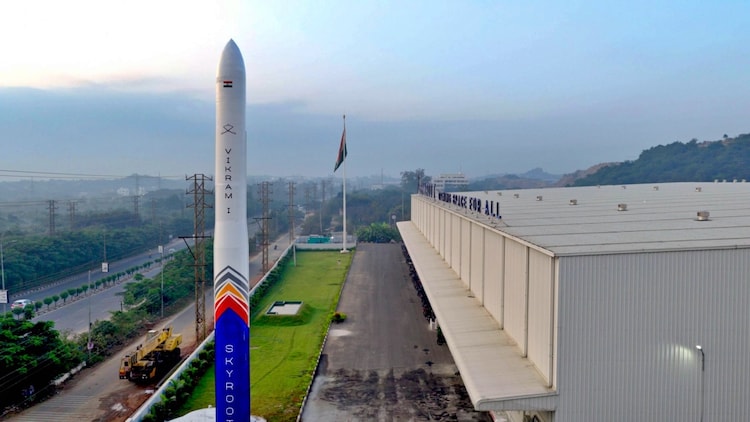
India’s private space race has entered a new phase as Skyroot Aerospace secured $60 million in fresh funding, pushing the Hyderabad-based startup’s valuation to $1.1 billion and officially placing it in the unicorn club.
The funding round comes at a crucial time as Skyroot prepares for the launch of Vikram-1, which could become India’s first privately built orbital-class rocket to reach orbit. The development reflects growing global investor confidence in India’s rapidly expanding private spacetech ecosystem.
Top Summary
- What happened: Skyroot Aerospace raised $60 million at a $1.1 billion valuation.
- Why it matters now: The company is preparing to launch Vikram-1, India’s first private orbital rocket.
- What changes for people: India’s private space sector is attracting global capital and creating new opportunities in manufacturing, research, satellite services and deep-tech jobs.
- Who is affected: Indian spacetech startups, investors, aerospace engineers, satellite operators and the broader private space ecosystem.
India’s spacetech ambitions received a major boost after the funding round was co-led by Singapore sovereign wealth fund GIC and Sherpalo Ventures, the investment firm led by Silicon Valley veteran Ram Shriram.
Shriram, who was among Google’s earliest investors, will also join Skyroot’s board, signaling long-term strategic backing for the company.
In a statement, Shriram praised the startup’s progress and said his confidence in the company has only strengthened as it approaches the Vikram-1 launch mission.
According to Skyroot, the company recently flagged off Vikram-1 flight hardware from Hyderabad to the Satish Dhawan Space Centre, marking a major operational milestone before launch preparations begin.
The latest fundraising round has doubled Skyroot’s valuation from around $550 million three years ago. The timing is significant because Vikram-1 could position India among a limited group of nations with privately developed orbital launch capabilities.
India’s private space industry has seen rapid momentum after regulatory reforms opened the sector to private participation. Venture capital investments in Indian spacetech reportedly reached $276 million across 33 deals in 2025, exceeding the combined total of the previous two years.
The investor interest is also widening beyond launch rockets. Firms are increasingly exploring areas such as earth observation, in-orbit servicing, space situational awareness and satellite intelligence systems.
New investors participating in Skyroot’s cap table include founders of the Greenko Group, the Shanghvi Family Office and Playbook Partners. Existing backers include Arkam Ventures and BlackRock.
Skyroot had earlier made headlines in 2022 after launching Vikram-S, which became India’s first privately built rocket to reach space.
The company now plans to use the new capital to accelerate Vikram-1 launches, expand manufacturing capabilities and develop its next-generation launch vehicle, Vikram-2.
Skyroot co-founder and CEO Pawan Kumar Chandana described the upcoming Vikram-1 mission as a defining milestone not only for the company but also for India’s private space ambitions.
Meanwhile, rival startup Agnikul Cosmos is also preparing for its own launch campaign after raising funding last year at a reported valuation of around $500 million.
The competition between Indian private launch startups is now drawing attention from global investors, especially as demand rises for affordable satellite launches and low-cost orbital access.
Industry experts believe the next wave of investment may increasingly target downstream spacetech sectors instead of only launch systems. Venture funds including Arkam Ventures and Zerodha-backed Rainmatter Capital are reportedly exploring opportunities in satellite analytics, earth observation data and space infrastructure technologies.
Bottom line
Skyroot Aerospace becoming a unicorn marks a major turning point for India’s private space industry. With Vikram-1 nearing launch readiness, the company is now positioned at the center of India’s ambition to emerge as a global commercial space power.
What to watch next
- Vikram-1’s official launch timeline and mission readiness
- Growth in private Indian spacetech investments
- Competition between Skyroot and Agnikul Cosmos
- Expansion into satellite and in-orbit service markets
- Future policy support for India’s commercial space sector