
Skill Ministry allocation jumps nearly fourfold in Budget 2026; ITI upgrades under PM SETU take centre stage
What happened: The Skill Ministry’s allocation surged to ₹9,885.80 crore in Budget 2026–27—nearly four times last year’s revised spend. Why it matters: Signals a decisive...
-
What happened: The Skill Ministry’s allocation surged to ₹9,885.80 crore in Budget 2026–27—nearly four times last year’s revised spend.
-
Why it matters: Signals a decisive shift toward employment-oriented skilling and services-led growth.
-
What changes for people: Massive funding for modernised ITIs, industry-aligned courses, and better placements, especially in Tier-II and Tier-III cities.
-
Who is affected: Youth, ITI students, state governments, industry partners, and sectors facing skill shortages.
After years of underwhelming outcomes from fragmented training programmes, the Union Budget 2026–27 has delivered a clear reset. Skilling is no longer peripheral—it is central. With a near fourfold jump in funding, the government has placed human capital and employability at the core of its economic strategy.
What happened
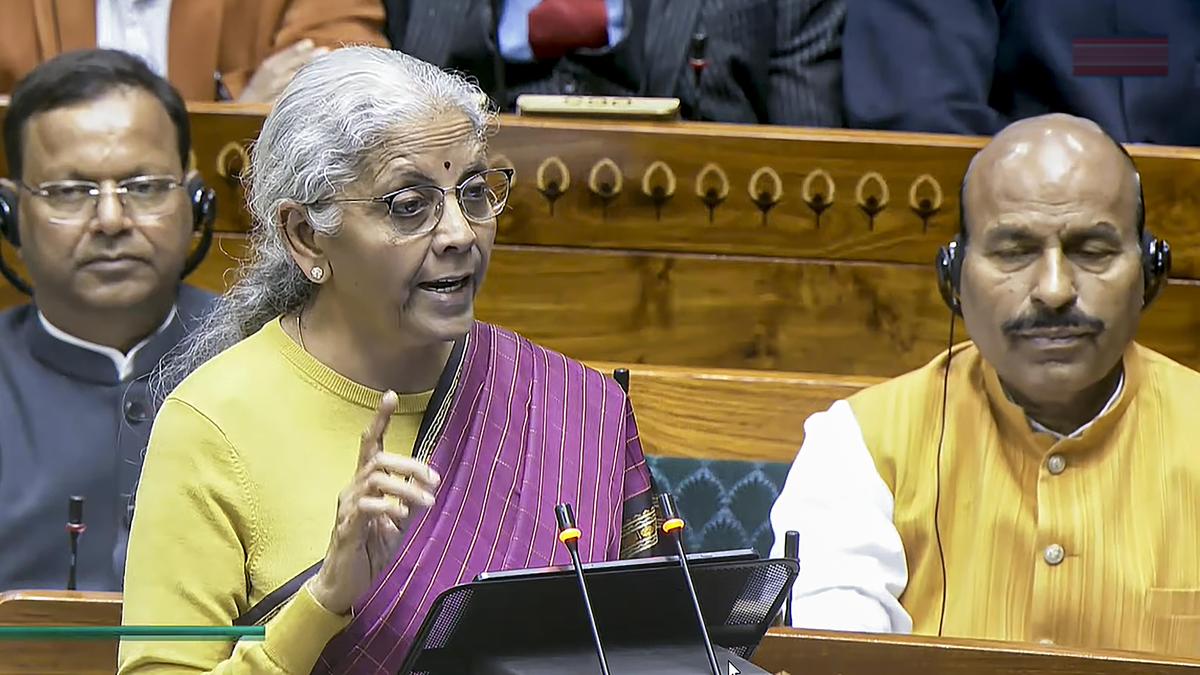
In the Union Budget presented on Sunday, Nirmala Sitharaman sharply increased funding for the Ministry of Skill Development and Entrepreneurship to ₹9,885.80 crore.
-
2025–26 Revised Estimates: ₹2,703.54 crore
-
2025–26 Budget Estimates: ₹6,100 crore
-
2026–27 Budget Estimates: ₹9,885.80 crore
The spike reflects a recalibration toward jobs, not just training numbers.
Why the jump is significant
The increase follows a year of curtailed spending, suggesting a strategic course correction.
-
Skilling is now framed as a key enabler of India’s demographic dividend
-
Strong linkage with employment, services growth, and productivity
-
Complements continued capital expenditure with people-centric investment
In policy terms, skills have moved from “supporting act” to “main engine.”
PM SETU dominates the skilling push
The single biggest beneficiary is the Pradhan Mantri Skilling and Employability Transformation through Upgraded ITIs (PM SETU).
-
Allocation: ₹6,140.50 crore
-
Share of Skill Ministry budget: Over 60%
PM SETU focuses on:
-
Modernising ITI infrastructure
-
Aligning courses with industry demand
-
Improving placement outcomes
-
Strengthening state–industry partnerships
ITI reform—long flagged as India’s weakest link in skilling—now sits at the centre of the Budget.
Sector-wise skilling focus
Beyond ITIs, the Budget expands support for:
-
NSQF-aligned programmes
-
Caregiver and allied health training
-
Textiles and handicrafts
-
Tourism, logistics, AVGC, healthcare, and the care economy
-
Sports- and services-linked skill ecosystems
Most funding flows through centrally sponsored schemes, signalling stronger Centre–State coordination to deliver outcomes on the ground.
Government’s message: ‘Yuva Shakti first’
Welcoming the allocation, Jayant Chaudhary described the Budget as “Yuva Shakti-driven” and aligned with Viksit Bharat 2047.
He said the enhanced funding affirms the government’s resolve to place skills and human capital at the centre of economic transformation.
A shift in philosophy
According to policy analysts, the Budget marks a move away from:
-
Short-term training targets
-
Certificate-heavy programmes with weak job outcomes
Toward:
-
Sector-specific skilling pipelines
-
Employment-linked training
-
Focus on Tier-II and Tier-III cities, where labour supply is high but opportunities are limited
The emphasis is no longer “how many trained,” but “how many employed.”