
Sharks Are Smarter Than You Think: Mind-Blowing Facts Revealed
Discover the surprising intelligence, social lives, and ancient lineage of sharks in this fascinating look at ocean predators.
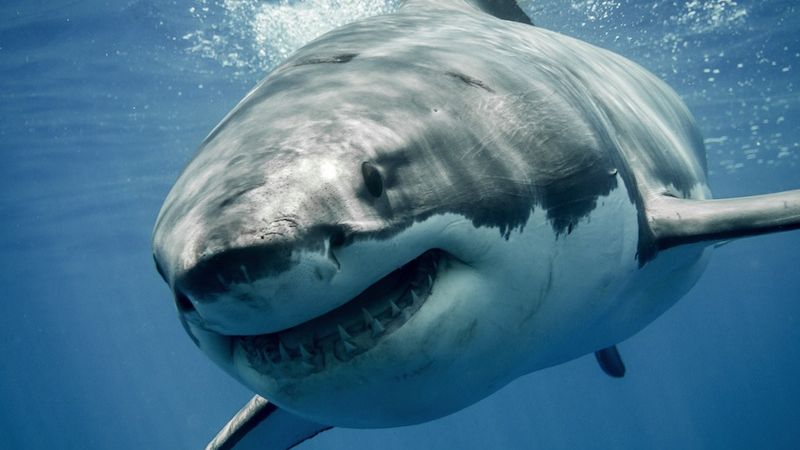
Top Summary
- What happened: New research reveals sharks possess advanced cognitive abilities, complex social structures, and an ancient evolutionary history.
- Why it matters: This challenges common perceptions of sharks as simple predators, highlighting their adaptability and intelligence, crucial for conservation efforts.
- What changes: Our understanding of marine ecosystems and these apex predators shifts, potentially influencing how we interact with and protect them.
- Who is affected: Marine biologists, conservationists, and the general public will gain new insights into these vital ocean inhabitants.
Sharks' Unexpected Intelligence
Contrary to their often-portrayed image, sharks are remarkably intelligent and capable learners. Studies show they can differentiate between various abstract patterns and geometric shapes.
Remarkably, some young sharks have demonstrated the ability to remember visual information, such as shapes and optical illusions, for nearly a year. They can also perform basic mathematical tasks, distinguishing between quantities.
A Surprising Taste for Jazz
While instinct drives many of their actions, sharks exhibit surprising preferences. Certain species have shown a distinct liking for specific music genres.
Port Jackson sharks, for instance, were trained to associate a feeding spot with music. They consistently favoured jazz music over classical, indicating a capacity for learned association.
Ancient Lineage and Unique Biology
Sharks are among Earth's most ancient vertebrates, having survived all five major mass extinctions, including the devastating Permian-Triassic event.
Many shark species possess belly buttons, a result of placental mammals. This is because some sharks, like bull sharks and hammerheads, nourish their young via an umbilical cord.
Intrauterine Competition and Social Bonds
In a stark display of survival, sand tiger shark embryos engage in intrauterine cannibalism, consuming their siblings in the womb. This intense competition ensures only the strongest survive.
Furthermore, sharks are not solitary creatures as often believed. Grey reef sharks form stable social groups, and young lemon sharks learn vital skills from their peers.
Astonishing Adaptations
Shark skin is a marvel of natural engineering. Covered in tiny, tooth-like structures called denticles, it reduces drag and aids in speed and maneuverability.
Sharks possess an extraordinary sensory array, including electroreceptors that detect the electrical fields generated by prey, even a beating heart. This allows them to hunt effectively in any condition.
An Evolutionary Masterpiece
The ancestors of today's sharks date back an astonishing 450 million years, predating trees and dinosaurs. Their evolutionary journey is a testament to resilience.
Around 500 species of sharks inhabit our oceans today, a number far below their peak diversity. Ongoing discoveries continue to reveal the complexity of this ancient group.
What to Watch Next
Future research will likely delve deeper into the cognitive abilities and social structures of various shark species. Understanding these aspects is crucial for effective conservation strategies in a changing ocean environment.