
Serbia's Student Movement Upends Politics With Experts
A student-backed movement has secured a landmark election victory in Serbia, ushering in a new era of governance led by professionals rather than traditional politicians.
The Cliff News | 27 October 2026
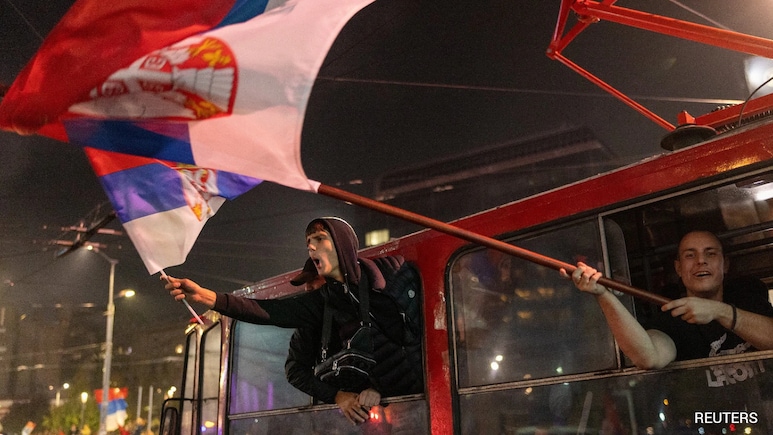
Serbia's political landscape has undergone a seismic shift following a landmark election result that saw a student-backed movement secure a decisive victory, ending Aleksandar Vucic's 14-year political dominance. The movement, known as the Student List, is projected to have won 53 per cent of the vote, translating into 141 seats in the 250-member parliament, according to the Centre for Free Elections and Democracy.
This electoral triumph is notable not just for its scale but for the unconventional composition of the winning list. Eschewing traditional political experience, the Student List prioritised academic qualifications, professional expertise, and public standing in its candidate selection. More than 160 of its 250 candidates hold PhDs, highlighting a profound emphasis on intellectual capital.
A New Breed of Parliamentarians
The Student List's candidates hail from a diverse array of professions rarely seen together on a single electoral platform. Leading the movement is Ilija Srdanovic, a distinguished cardiologist and professor at the University of Novi Sad. The list also includes Dejan Soskic, an economist who previously served as the governor of Serbia's central bank from 2010 to 2012.
Further bolstering the movement's intellectual and professional weight are figures such as Radomir Saicic, a chemistry professor at the University of Belgrade and a member of the prestigious Serbian Academy of Sciences and Arts. Adding a celebrated public profile, the list features former Serbian basketball star Dejan Bodiroga, who now presides over EuroLeague Basketball. Sociologist Jovo Bakic, a known critic of the outgoing administration, also joins the ranks.
Beyond Conventional Politics
The broader candidate pool reflects a deliberate strategy to forge a political alternative unbound by conventional party structures. It encompasses university academics, lawyers, doctors, artists, farmers, and activists, aiming to represent a wide spectrum of societal expertise and experience. In a striking departure from typical political formations, the movement has consciously avoided centring itself around a single leader.
This deliberate decentralisation extends to the absence of a publicly declared candidate for prime minister, leaving the future leadership of the government and the dynamics of power-sharing open questions. The Student List's approach starkly contrasts with the candidate selection processes within established parliamentary democracies, where senior politicians and experienced lawmakers typically dominate.
Roots in Public Outcry
The genesis of the Student List movement can be traced back to widespread protests that erupted following a tragic incident in November 2024. The collapse of a concrete canopy at a railway station in Novi Sad, which resulted in the deaths of 16 people, ignited public anger over alleged corruption, substandard construction, and a perceived lack of accountability among public officials.
In the wake of the tragedy, students initiated demonstrations and campus blockades, demanding a transparent inquiry and greater responsibility from those in power. These initial protests evolved into a more comprehensive challenge to the administration led by Aleksandar Vucic, which had held sway over Serbian politics since 2014. While the government refuted claims of corruption and repression, the movement pressed for greater independence and accountability within public institutions.
A New Model of Governance?
The Student List's victory presents a unique experiment in governance, where a mandate has been granted to a group prioritising expertise over political lineage. The movement's non-hierarchical structure and emphasis on collective decision-making, focused on combating corruption and revitalising public institutions, represent a significant departure from traditional political models.
While the exact composition of the elected parliamentary group and the specific qualifications of all those who will ultimately take seats are yet to be confirmed, the incoming contingent is poised to be one of Europe's most highly educated. The Student List's success underscores a potential shift in voter sentiment, favouring competence and integrity in public service.
The movement's core objective appears to be the rebuilding of trust in public institutions and ensuring greater transparency in governance. The influx of professionals and academics into parliament may herald an era where policy-making is driven more by evidence-based approaches and less by partisan politics. The coming months will be crucial in observing how this novel political force translates its academic and professional strengths into effective governance and policy implementation.