
Second Earth-like World Suspected Beyond Neptune
Astronomers have identified compelling evidence suggesting a second Earth-sized world, dubbed Planet X2, may exist in the outer Solar System.
The Cliff News | 23 November 2026
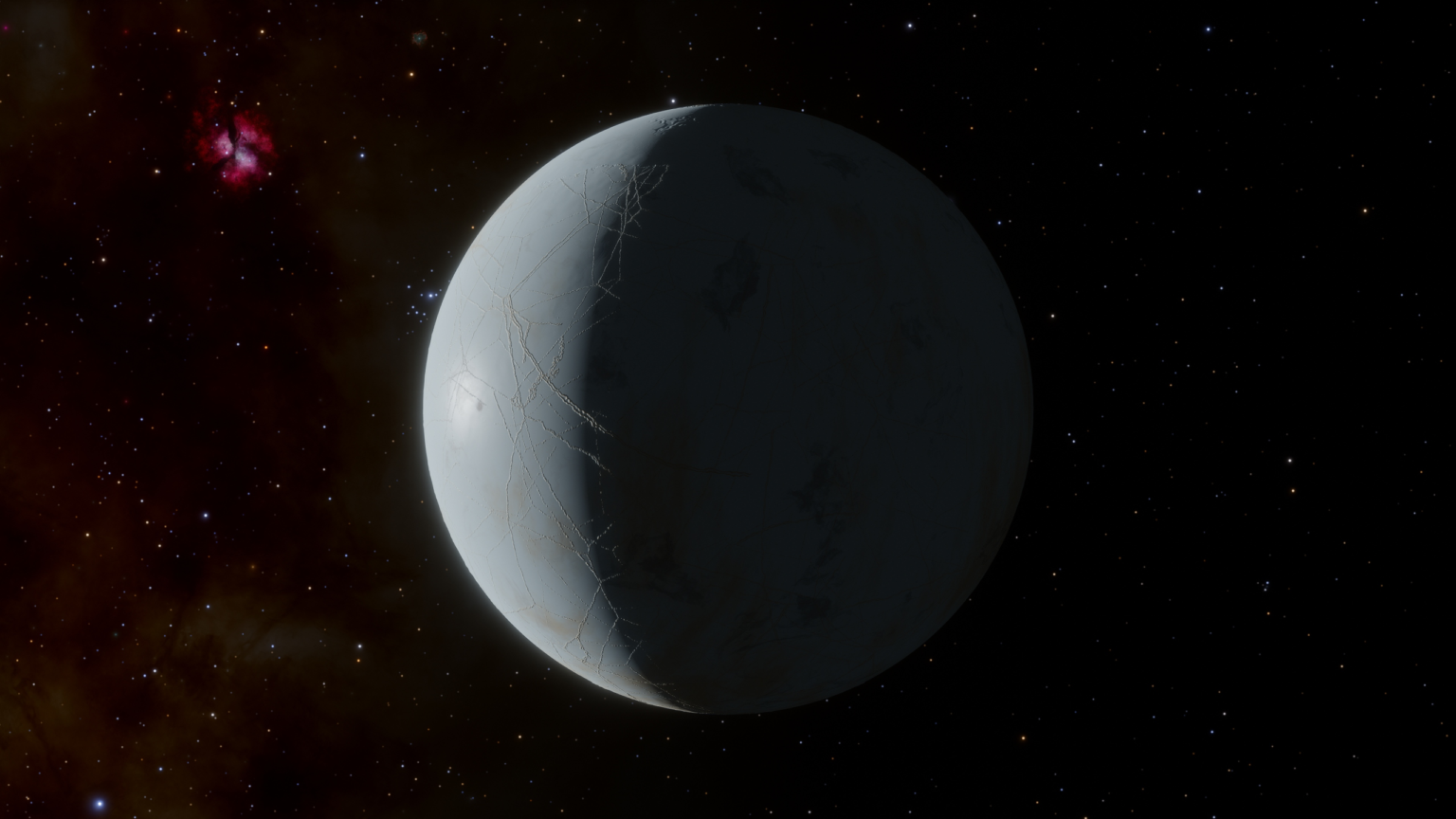
Astronomers have detected strong indicators pointing to the existence of a second, previously unknown Earth-sized world lurking in the distant reaches of our Solar System, beyond the orbit of Neptune. This mysterious celestial body, provisionally named Planet X2, is theorized to be a super-Earth and its presence is inferred from unusual orbital patterns of objects in the Kuiper Belt.
The vast expanse beyond Neptune is largely a frozen frontier, sparsely cataloged and poorly understood. The prevailing model of this region, known as the trans-Neptunian space, posits a belt of small, icy objects orbiting the Sun in a predictable manner. However, recent observations have revealed anomalies that defy this conventional view.
Unusual Orbital Clues
The evidence for Planet X2 stems from the peculiar orbits of two distinct groups of distant objects. One population exhibits orbits tilted at extreme angles, while another displays the closest approach to the Sun significantly farther out than Pluto's orbit. These patterns are difficult to reconcile with the gravitational influence of the known giant planets alone.
Planetary scientist Jonti Horner of the University of Southern Queensland, Australia, likened the situation to finding footprints in the snow, suggesting the presence of an unexpected entity. "It's telling you that somebody's been there that you didn't expect," Horner commented on the findings.
Revisiting Solar System Evolution
Simulations of the Solar System's evolution, incorporating only the known giant planets, have failed to replicate the observed distributions of these distant objects. This discrepancy strongly suggests that an additional, massive gravitational influence is at play, shaping the orbits in these remote regions.
The discovery builds upon, but is distinct from, the earlier hypothesis of Planet Nine, another hypothetical world proposed to explain different orbital anomalies in the outer Solar System. The latest research, detailed in the Astrophysical Journal, highlights a separate set of clues that point to a second hidden body.
The Challenge of Detection
Detecting objects so far from the Sun presents a significant challenge. Sunlight at Neptune's distance, an average of 30.1 astronomical units (AU) from Earth, is 900 times weaker than what reaches our planet. The faint light reflected off these distant objects requires highly sensitive telescopes to be observed.
However, advancements in telescope technology and the increasing number of cataloged objects in the outer Solar System have allowed astronomers to map their orbital distributions with greater precision, revealing these subtle gravitational fingerprints. While the existence of Planet X2 remains hypothetical, the compelling nature of the observed orbital anomalies makes it a prime candidate for future investigation.