
Scientists rethink memory after brain study finds overlap between episodic and semantic recall
New neuroimaging research challenges decades-old theory that different memories live in separate brain systems A breakthrough neuroscience study suggests the brain may not separate memories...
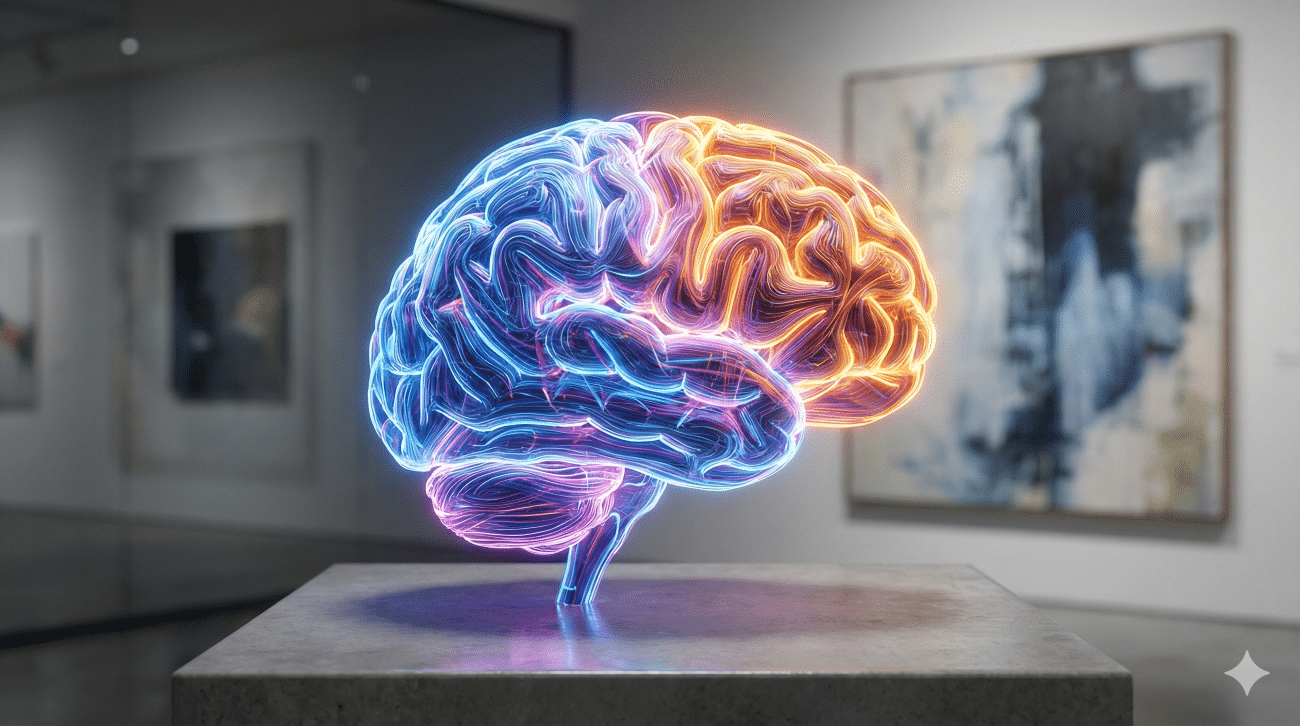
New neuroimaging research challenges decades-old theory that different memories live in separate brain systems
A breakthrough neuroscience study suggests the brain may not separate memories as neatly as scientists once believed — potentially reshaping how memory, learning, and diseases like Alzheimer’s are understood.
Top Summary
-
What happened: A study in Nature Human Behaviour found episodic and semantic memories activate overlapping brain regions, not separate systems.
-
Why it matters: This challenges a long-standing neuroscience model that treated memory types as distinct neural pathways.
-
What changes for people: Future therapies for dementia and memory loss may target whole-brain networks instead of isolated regions.
-
Who is affected: Neuroscientists, clinicians studying Alzheimer’s, and anyone interested in how the brain stores experiences and knowledge.
What happened:
Researchers from the University of Nottingham and the University of Cambridge used task-based experiments combined with fMRI scans to examine how humans recall different types of memories.
Participants performed two kinds of recall tasks:
-
Episodic memory: remembering specific experiences linked to time and place
-
Semantic memory: recalling general facts and knowledge
Contrary to expectations, scans showed no measurable difference in brain activity between the two when retrieval was successful.
Bold finding:
Different types of remembering appear to rely on shared neural networks rather than separate brain systems.
Why it matters now:
For decades, textbooks divided memory into neat categories — episodic memories as personal “mental time travel,” and semantic memories as stored facts.
This research suggests that separation may be more conceptual than biological.
If memories share overlapping brain circuits, then traditional models of memory organisation may need rewriting.
Lead researcher Dr. Roni Tibon said the team expected clear differences — but instead found “considerable overlap” in brain activation patterns.
What changes for people:
-
Neuroscience may shift from studying memory types separately to studying integrated memory networks
-
Treatments for conditions like Alzheimer’s could focus on supporting broader brain connectivity
-
Education and learning research may explore how experiences and knowledge interact neurologically
Future therapies may target memory as a unified system rather than isolated modules.
Who is affected:
-
Patients with dementia or memory disorders
-
Clinical researchers designing cognitive therapies
-
Psychologists studying learning and recall
-
Students and educators interested in memory science
Powerful lead insight
Memory might not be a set of isolated “folders” in the brain — it could be more like a web, where facts and experiences are intertwined.
This shift matters because many neurological diseases damage networks, not single regions.
How scientists tested the brain
To compare memory types directly, researchers designed closely matched tasks involving logos and brand names.
-
Some pairings relied on real-world knowledge (semantic memory)
-
Others were learned during the experiment (episodic memory)
Forty participants completed the tasks inside an fMRI scanner.
Functional MRI tracks changes in blood flow — allowing scientists to see which brain areas become active during thinking or remembering.
Unexpected neuroimaging results
Traditional theory predicted:
-
Episodic recall → one set of brain regions
-
Semantic recall → another distinct set
Instead, the scans revealed:
-
Overlapping activity patterns
-
Only subtle differences, not clear separation
Dr. Tibon said the results could redirect future research toward understanding how different memories cooperate rather than compete.
What this means for Alzheimer’s and dementia
The discovery may reshape approaches to memory-related diseases.
If the brain processes memories as a network:
-
Damage in one area could ripple across multiple memory functions
-
Treatments may need to focus on strengthening overall neural connectivity
The findings hint that memory loss may not be about losing one type of memory — but weakening an entire system.