
Scientists Map Staggering 110 Quadrillion Km Fungal Network Beneath Earth
Researchers mapped a colossal 110 quadrillion km fungal network under Earth, crucial for plants, carbon storage, and climate regulation.
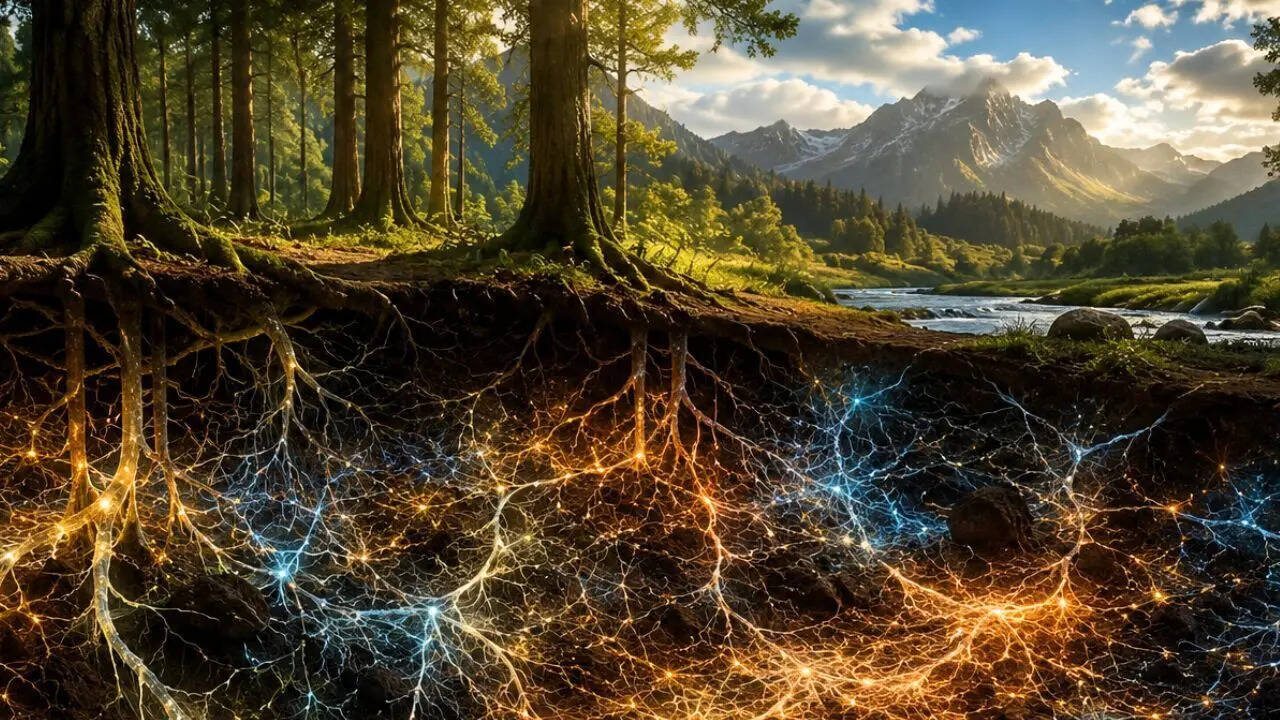
Top Summary
- What happened: Scientists, led by the Society for the Protection of Underground Networks (SPUN), mapped a vast underground network of microscopic fungi, estimated to stretch 110 quadrillion kilometres beneath Earth's topsoil using over 16,000 soil samples.
- Why it matters: This 'wood wide web' of arbuscular mycorrhizal fungi supports 70% of land plants, stores 300 megatons of carbon, and helps sequester one billion metric tons annually, critically impacting climate regulation and ecosystem health.
- What changes: Understanding these networks can improve food security by strengthening plant resilience, potentially reducing the need for synthetic fertilisers, and aiding global climate efforts.
- Who is affected: All life on Earth, particularly plants and ecosystems reliant on these fungi; agricultural sectors are impacted by declining fungal health, while conservation efforts gain new focus.
Earth's Hidden Biological Giant Revealed
An extraordinary hidden world beneath our feet has been brought to light by a major international study. Scientists have mapped a vast underground network of microscopic fungi, stretching an estimated 110 quadrillion kilometres across Earth's topsoil.
This immense distance could reach the Sun nearly a billion times, revealing one of the largest biological systems on Earth. The discovery has been metaphorically likened to Astrophage from Andy Weir's science-fiction novel 'Project Hail Mary'.
Researchers clarified that while the comparison captures the immense scale, these fungi are not alien organisms. They have, in reality, been quietly supporting much of life on Earth for hundreds of millions of years.
Mapping the 'Wood Wide Web'
The groundbreaking discovery comes from a study led by researchers associated with the Society for the Protection of Underground Networks (SPUN). They utilized more than 16,000 soil samples and advanced computer modelling.
This effort created the most detailed global map yet of arbuscular mycorrhizal fungi (AM fungi). These fungi live in a mutually beneficial partnership with plant roots, forming what is often called the 'wood wide web'.
The collective length of these microscopic fungal threads, known as hyphae, forms a sprawling underground extension of plant root systems. They allow plants to access water and essential nutrients like phosphorus and nitrogen that would otherwise be out of reach.
Crucial Ally in Climate Change Fight
One of the most significant findings concerns the fungi's role in carbon storage. Researchers estimate that Earth's topsoils contain approximately 300 megatons of carbon locked within these fungal networks.
This figure represents roughly four to six times the total mass of all humans on the planet. The fungi also actively move carbon-rich compounds from plants into the soil, helping to sequester up to one billion metric tons of carbon each year.
By storing carbon underground, these healthy fungal networks significantly reduce the amount of carbon dioxide entering the atmosphere. This makes them a vital natural ally in regulating Earth's climate.
Hotspots and Agricultural Concerns
The study pinpointed the densest fungal networks in natural ecosystems. These include grasslands, wetlands, and floodplains.
Large wetland systems, such as Florida's Everglades and South Sudan's Sudd wetlands, emerged as critical hotspots for rich fungal communities. Protecting these ecosystems offers benefits far beyond visible wildlife conservation.
However, the research also highlighted a worrying decline. Intensively farmed croplands were found to contain significantly fewer fungal networks, with concentrations nearly 50% lower than in undisturbed environments.
Practices like deep tilling, excessive fertiliser use, and soil disturbance damage these crucial fungal communities. This loss can make crops more reliant on synthetic fertilisers and less resilient to environmental stresses.
What to Watch Next
The new global map of fungal networks is expected to guide future conservation and restoration efforts, identifying areas most in need of protection. This shift could enhance food security and plant resilience globally. Observers will be keen to see if conservation strategies begin to expand their focus to include these vital, yet often overlooked, underground ecosystems.