
Scientists Discover 30 New Deep-Sea Species in the Southern Ocean, Including a Carnivorous “Death-Ball” Sponge
In a groundbreaking discovery, scientists have identified 30 previously unknown deep-sea species in one of the planet’s most remote and least explored regions — the...
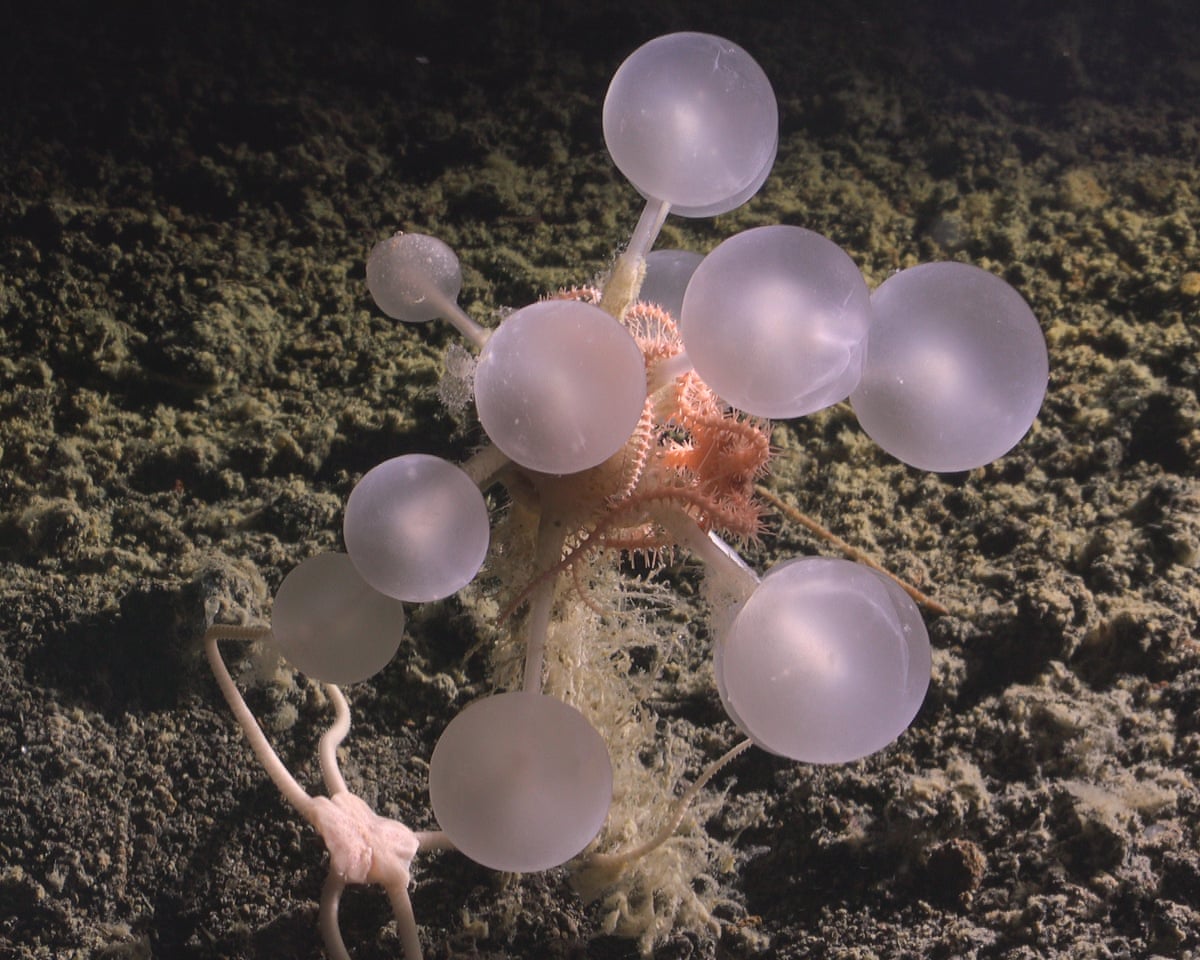
In a groundbreaking discovery, scientists have identified 30 previously unknown deep-sea species in one of the planet’s most remote and least explored regions — the Southern Ocean. The discoveries include a carnivorous “death-ball” sponge, found among volcanic calderas, the South Sandwich Trench, and seafloor habitats near Montagu and Saunders Islands.
The discoveries were made by researchers from The Nippon Foundation–Nekton Ocean Census, in collaboration with the Schmidt Ocean Institute, during two major 2025 research expeditions.
🧽 The “Death-Ball” Sponge: Nature’s Deep-Sea Predator
Unlike most sponges that filter-feed gently, the death-ball sponge is a spherical predator armed with tiny hooks across its surface that trap unsuspecting prey. Scientists described it as a “carnivorous sponge,” capable of ensnaring small creatures that drift too close — a chilling adaptation to life in the nutrient-scarce deep sea.
“This unique form of carnivory sets it apart from nearly all other sponges,” the team noted, calling it one of the most fascinating finds of the expedition.
The researchers also observed ‘zombie worms’ (Osedax sp.), known for feeding on the bones of whales and large marine animals using symbiotic bacteria. These worms have no mouth or gut, relying entirely on microbes to digest fats from bones.
🌊 Expedition Highlights
The mission surveyed volcanic calderas, hydrothermal vents, and deep trenches around the South Sandwich Islands, areas rarely visited by humans. The team collected nearly 2,000 specimens across 14 animal phyla, alongside thousands of HD images and hours of underwater footage.
Among the other remarkable discoveries:
-
New hydrothermal vents hosting chemosynthetic life at 700 meters depth.
-
Vibrant coral gardens and evidence of recent undersea volcanic eruptions.
-
The first confirmed footage of a juvenile colossal squid in its natural habitat.
🧭 “A Profoundly Under-Sampled World”
“The Southern Ocean remains profoundly under-sampled,” said Dr. Michelle Taylor, Head of Science at The Nippon Foundation–Nekton Ocean Census. “We have only analyzed 30% of our collected samples, and already 30 new species have emerged — proof that the deep sea still holds vast unknown biodiversity.”
The discoveries were verified during the Southern Ocean Species Discovery Workshop at the Universidad de Magallanes in Chile.
By combining rapid exploration with expert taxonomic analysis, the Ocean Census team aims to accelerate global species discovery — compressing what traditionally takes a decade into a matter of months.