
Safe Journeys: Highway Patrolling, Ambulances, and Recovery Services are Crucial
Ensuring traveler safety on modern highways relies on robust support systems like patrolling, ambulance, and recovery services, particularly on busy routes.
देवास | आशीष नेमा
Safe Journeys: Highway Patrolling, Ambulances, and Recovery Services are Crucial
On modern highways, traveler safety depends not only on road quality but also on a robust support system for unexpected emergencies. On busy highways like Dewas-Bhopal, where vehicles travel at high speeds, sudden breakdowns or flat tires are common. In such situations, prompt and effective assistance can be a lifesaver for travelers stranded on deserted stretches or amidst heavy traffic.
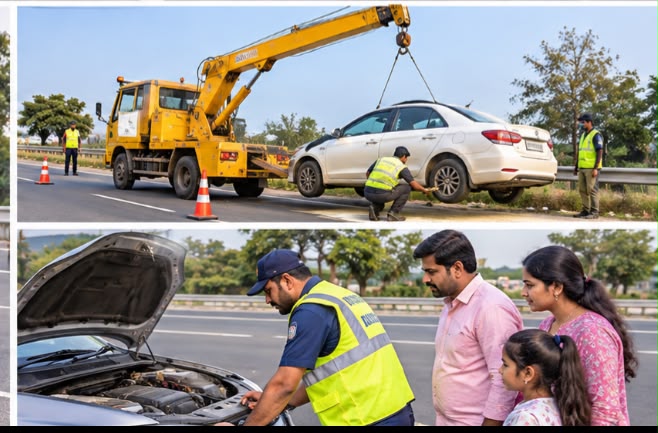
To meet this need, active highway patrolling, ambulance, and recovery services function as an essential mechanism. When a traveler, such as a family, is journeying on the Dewas-Bhopal highway and their vehicle suddenly breaks down, the situation can be extremely stressful. Standing by the roadside amidst fast-moving traffic poses a significant risk in itself.
In these critical moments, the role of the highway patrolling team becomes decisive. This team arrives at the scene immediately, assesses the situation, and assists in moving the damaged vehicle to a safe location to ensure the passengers' safety. If necessary, these teams also provide quick recovery vehicle services, ensuring smooth traffic flow and preventing further hazards.
Regular Patrols Ensure Passenger Safety
Regular patrolling by highway teams is vital for ensuring passenger safety. These teams continuously monitor the highway, allowing for immediate notification of any accidents or vehicle breakdowns. Special attention is given to accident-prone areas, where instructions are issued to reduce speed limits and exercise extra caution.
If a vehicle breaks down, the patrolling team is the first to arrive, assuring passengers of their safety. They not only help move the vehicle to a safe spot on the roadside but also ensure that the passengers suffer no harm. Additionally, these teams arrange for the prompt removal of any obstructions on the road, such as fallen trees or debris, to maintain traffic flow and reduce the likelihood of accidents.
Given the expanse of highways and high-speed traffic, the regularity of this patrolling acts as a significant preventive measure. The extensive reach and speed of traffic necessitate constant vigilance.
Ambulance Service: A Lifesaver in Emergencies
During a journey, anyone can suddenly suffer an injury or face a serious health emergency. In such delicate moments, the ambulance service available on the highway plays a crucial role in getting passengers timely medical assistance. This service not only provides immediate first aid but also ensures the patient is promptly transported to the nearest hospital, increasing the chances of survival.
These ambulances are equipped with specially trained medical personnel capable of providing effective treatment even in complex situations. Their strategic deployment on the highway ensures quick response, even in the most remote areas. Timely medical assistance not only saves lives but also speeds up the recovery process, preventing long-term health issues.
Traffic Flow Maintained with Recovery Vehicles
The entire safety mechanism of highway operations rests on three key pillars: patrolling, ambulances, and recovery services. Patrolling teams continuously monitor the highway, promptly relaying information about any potential threat, such as an accident or breakdown, to the relevant authorities. This surveillance is particularly effective in accident-prone zones.
The ambulance service acts as a shield during medical crises, providing life-saving care to those in need. Meanwhile, recovery vehicles help keep traffic moving by clearing broken-down or crashed vehicles from the road, preventing long traffic jams. The presence of recovery vehicles becomes especially critical when a vehicle is completely immobilized or involved in an accident.
These vehicles, capable of carrying heavy loads and towing large vehicles, arrive at the scene immediately to move the problematic vehicle to a safe location. This not only clears the road for other vehicles but also helps mitigate the impact of the accident. The swift arrival of these vehicles ensures that journeys are not interrupted and passengers can continue their travel. The efficient operation of recovery services contributes to the overall efficiency and safety of the highway, ensuring that it effectively serves its intended purpose—providing safe and smooth travel.
Coordination and Efficiency are Essential
On the Dewas-Bhopal highway, the safety of travelers and the emergency support system are given top priority alongside road management. Better coordination among these services can reduce response times and make the assistance process more organized during any emergency. For example, if a patrolling team reports a breakdown, a recovery vehicle, and if necessary, an ambulance, can be dispatched immediately.
This coordination ensures that passengers experience minimal inconvenience and maximum safety. Continuous communication between these services through control rooms is crucial. Modern technology, such as GPS tracking and real-time communication systems, further enhances this coordination. This integrated approach ensures that any emergency is resolved quickly and efficiently, maintaining traveler confidence.
It is essential to understand that a safe journey on the highway relies not only on the driver's alertness and the vehicle's condition but also on the efficient network of operational teams and support services working tirelessly behind the scenes. These services are the true hallmark of modern highways, not only ensuring travelers reach their destinations safely but also providing a solid sense of security and support during any unexpected trouble along the way. The continuous activity and efficiency of these services are a sign of a better and safer highway. The seamless functioning of these three services – patrolling, ambulance, and recovery – ensures that travelers can experience a safe and worry-free journey, regardless of its length.