
Sabarimala Temple Case: SC Hears Arguments on Religious Freedom, Gender Equality
SC examines constitutional questions around Sabarimala temple entry ban.
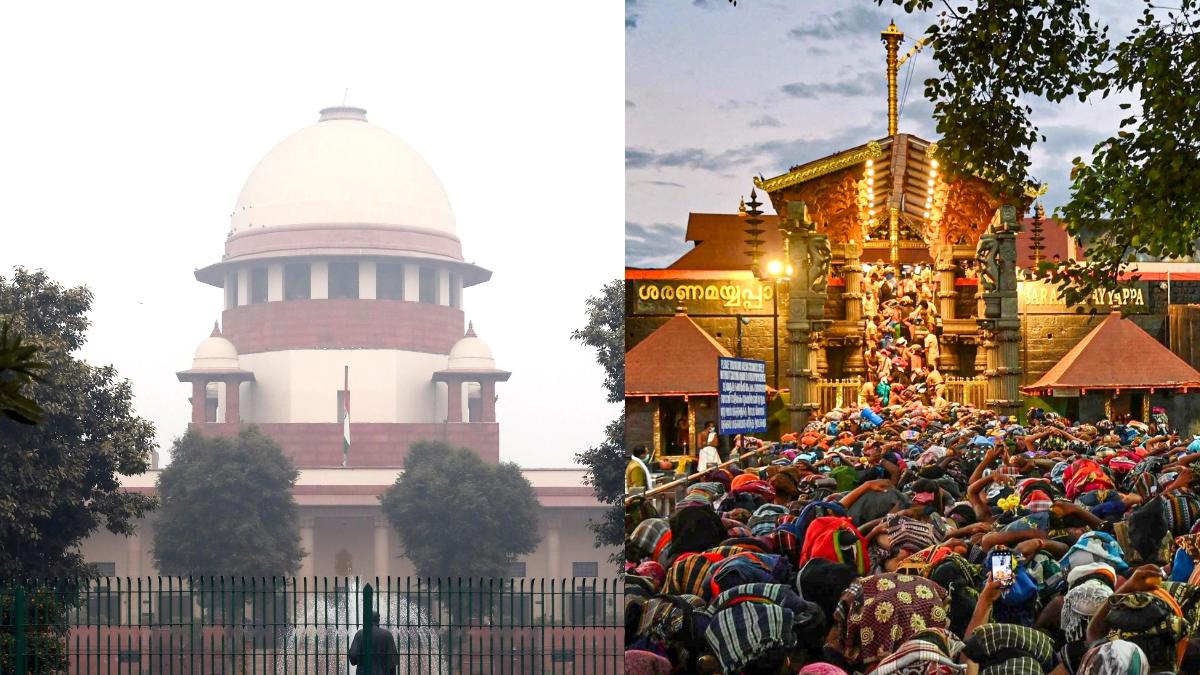
Top Summary
- What happened: The Supreme Court began hearing arguments in the Sabarimala temple reference case, focusing on Articles 25 and 26 of the Constitution.
- Why it matters: The case raises fundamental questions about religious freedom, gender equality, and the extent to which courts can interfere in religious practices.
- What changes for people: The outcome could redefine the balance between religious traditions and constitutional rights, particularly for women.
- Who is affected: The ruling will impact religious denominations, devotees, and women seeking entry into places of worship.
SC Hears Arguments on Sabarimala Temple Entry
The Supreme Court commenced hearings today, April 7, on the Sabarimala temple reference.
This case raises complex legal questions about religious denomination and essential religious practice.
Solicitor General Tushar Mehta opened the arguments.
Union's Stance on 2018 Judgment
Mehta clarified the Union's position, stating that the 2018 Sabarimala judgment, which allowed women of all ages to enter the temple, was wrongly decided.
However, the bench clarified that the current hearing will focus on interpreting Articles 25 and 26 of the Constitution.
The merits of the 2018 judgment will not be examined directly.
Initial Submissions and Clarifications
Senior Advocate Indira Jaising, representing the original writ petitioners, clarified that the nine-judge bench is not examining the review petitions.
The review will be decided separately by a five-judge bench after the reference questions are answered.
The Chief Justice of India confirmed Jaising's understanding.
The fate of the review petitions may depend on the answers given in this reference.
Does Article 25 Cover Gender Equality?
Mehta argued that the term 'equally entitled' in Article 25 should not be interpreted to include gender equality.
He stated that Articles 14 and 15 already address gender equality.
He cited the historical context of partition, riots, and violence when Article 25 was drafted.
"There can be denomination and denomination practices that we have to respect. Everything is not relatable to human dignity or bodily freedom..."
Mehta strongly objected to extending Article 17 to include discrimination against menstruating women, asserting that Article 17 addresses caste-based discrimination.
Justice Nagarathna questioned how untouchability related to women's temple entry can be argued.
Denomination vs. Sections Thereof
Mehta argued that the 2018 Sabarimala judgment failed to consider the aspect of 'sections thereof' in Article 26.
He questioned whether welcoming people of all religions to places like Nizamuddin Auliya Dargah or Shirdi temple would disqualify them as denominational places.
Extent of Court Interference
Mehta stated that courts cannot delve into the essential religious practice (ERP) doctrine.
Justice Bagchi pointed out that courts are empowered to examine expert testimony, even in fields outside their expertise.
"There is a difference between opinion as to faith and the faith perceived..."
He argued that the court is not questioning the existence of faith but how that faith is being perceived.
Interpretation of Articles 25 and 26
Justice Bagchi questioned whether Mehta argued that Article 26(b) prevails over Article 25.
Mehta responded that Article 26 cannot be considered in isolation and must be read with Article 25 and other parts of the Constitution.
Justice Bagchi highlighted that Article 25(1) is subject to other provisions, while Article 26 is only subject to public order, health, and morality.
Sabarimala Merits Not Under Review
Justice Sundresh stated that the Court does not need to go into the Sabarimala judgment.
He clarified that Article 25 applies to Hindu temples of public character, and Article 26 deals with denomination.
The only commonality is that both are subject to public order, morality, and health.
Mehta clarified he won't argue for a review of Sabarimala, but will use the judgment to illustrate the evolution of judicial policy.
The bench includes Chief Justice of India Surya Kant, Justice BV Nagarathna, Justice MM Sundresh, and others.
Arguments will continue tomorrow.
Background of the Case
In 2018, the Supreme Court, in a 4:1 decision, allowed women of all ages to enter the Sabarimala temple.
The bench held that devotion cannot be subjected to gender discrimination and that religious practices must conform to constitutional morality.
Justice Indu Malhotra dissented, stating that courts should not interfere in issues of religious faith.
The judgment stemmed from a 2006 PIL challenging the temple's ban on women of menstruating age.
Subsequent review petitions led to the current reference to a larger bench.
The review petitions are kept pending until a larger bench decides questions related to essential religious practice.
What to Watch Next
The Supreme Court will continue hearing arguments tomorrow, focusing on the interpretation of Articles 25 and 26.
The court's decisions will significantly shape the understanding of religious freedom and gender equality in India.