
Sabarimala: SC Bench Hears Arguments on Women's Religious Rights, Hinduism's Plurality
SC hears pleas on discrimination against women in religious spaces like Sabarimala.
Top Summary
- What happened: A nine-judge Supreme Court bench began final hearings on petitions concerning discrimination against women in religious places and the scope of religious freedom.
- Why it matters: The case examines the balance between religious freedom and gender equality, potentially redefining constitutional protections.
- What changes: The ruling could impact religious practices and women's rights across various faiths in India.
- Who is affected: Women, religious denominations, and all citizens concerned with constitutional rights and religious freedom.
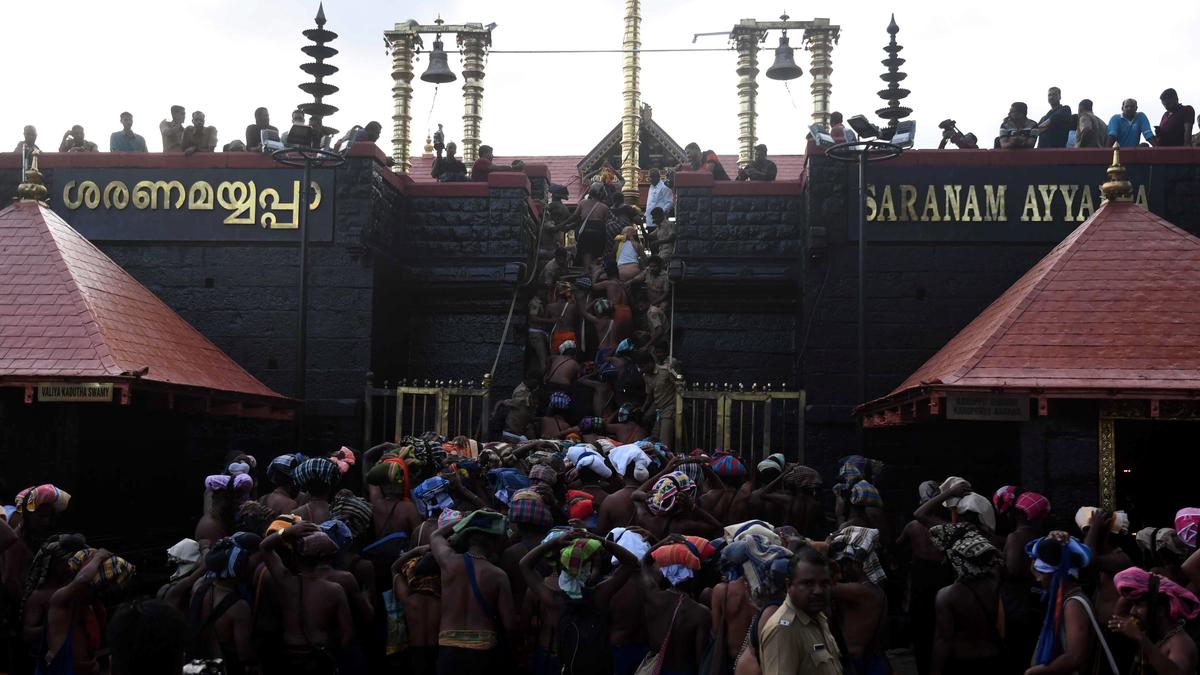
Sabarimala Case Revisited
The Supreme Court is revisiting the Sabarimala case, alongside other petitions concerning religious freedom and gender equality.
A five-judge bench had previously lifted the ban on women of menstruating age entering the Sabarimala Ayyappa temple in September 2018.
However, in 2019, another bench referred the issue to a larger bench, expanding the scope to include discrimination against women at various places of worship.
Centre's Stand on Hinduism's Plurality
The Union government argues against a rigid definition of 'religious denomination' or 'essential religious practices'.
According to the Centre, such definitions would “compress” the inherently plural nature of Hinduism.
“Any attempt to compress Hinduism into a narrow or singular definition would be doctrinally flawed and constitutionally unsafe,” Mr. Mehta had submitted.
Arguments on Religious Freedom
Solicitor General Tushar Mehta argued that courts cannot narrowly define 'religious denominations' and 'essential religious practices'.
He emphasized the plurality of faiths in India and the internal diversity within each religion.
He added that Articles 25 and 26 must be interpreted against the backdrop of the Preambular liberty of thought, expression, belief, faith, and worship.
Key Observations During the Hearing
Justice B.V. Nagarathna observed the difference between propagating religion and forcible conversion.
The Solicitor General stated that India has always treated women not only equally but on a higher pedestal, referencing the worship of female deities.
Justice Joymalya Bagchi noted that the tenets of religious freedoms in the Indian Constitution were taken from the Irish Constitution.
Definition of 'Religious Denomination'
The court is grappling with defining 'religious denomination' under Article 26 of the Constitution.
Tushar Mehta argued against blindly accepting American doctrines to define 'religious denominations', emphasizing India's unique religious structure.
He cited examples like Shirdi, Tirupati Balaji, Khwaja Moinuddin Chishti Dargah, and Nizamuddin Auliyah Dargah where people from all religions visit.
Timeline and Scope of Review
The Supreme Court aims to conclude the case by the end of April.
Petitioners will present their arguments from April 7 to April 9, with opposing arguments scheduled from April 14 to April 16.
Rejoinder submissions are set for April 21, followed by concluding submissions from the amicus curiae on April 22.
Sabarimala Judgment's Current Status
Senior advocate Indira Jaising clarified that the Sabarimala judgment would continue to be in force.
The current review before the nine-judge bench will only address questions of law pertaining to Articles 25 and 26.
What to Watch Next
The court will continue to hear arguments from various parties to determine the scope of judicial intervention in religious matters and the definition of essential religious practices. The outcome of this case will likely set precedents impacting religious freedom and women's rights for years to come.