
Rupee Crashes To Record Low Of 95.63 Against US Dollar As Oil Prices Surge
The Indian rupee plunged to a record low of 95.63 against the US dollar in early trade on Tuesday, extending its sharp decline amid rising...
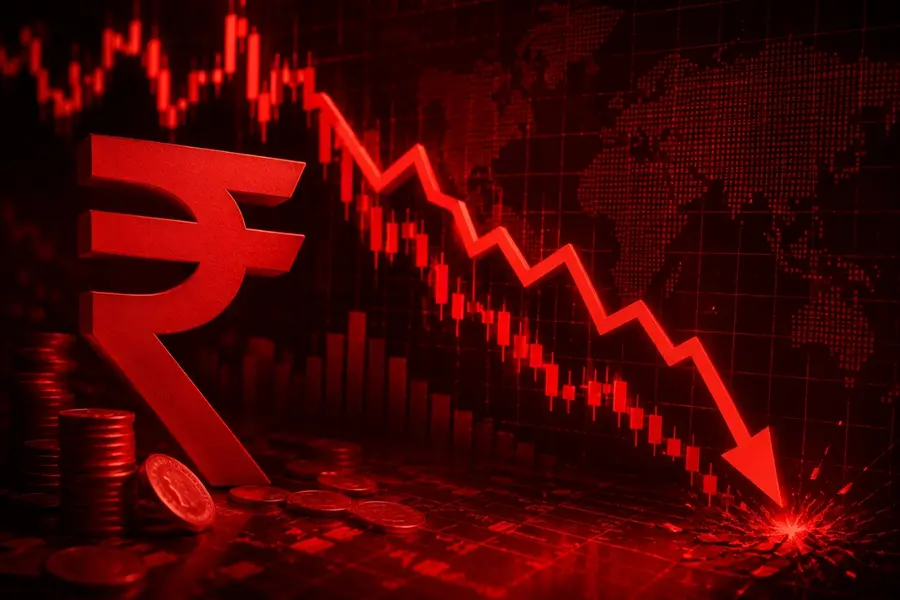
The Indian rupee plunged to a record low of 95.63 against the US dollar in early trade on Tuesday, extending its sharp decline amid rising crude oil prices, escalating Middle East tensions, and weak investor sentiment. The currency remains under pressure as fears grow over disruptions in global oil supply routes and continued foreign capital outflows.
What happened
- Rupee fell to an all-time low of 95.63 per US dollar
- The currency had already closed at 95.31 on Monday, down 82 paise
- Oil prices surged as uncertainty around the US-Iran ceasefire intensified
- Brent crude crossed $104 per barrel, while WTI crude neared $98
- Sensex and Nifty opened sharply lower amid weak market sentiment
Why the rupee is falling
Several factors are putting pressure on the Indian currency:
- Rising global crude oil prices
- Escalating geopolitical tensions in West Asia
- Stronger US dollar
- Continuous foreign fund outflows
- Declining foreign exchange reserves
Forex reserves fell by $7.79 billion to $690.69 billion in the latest reported week, according to RBI data.
Market impact
- Sensex dropped over 645 points in early trade
- Nifty50 slipped nearly 174 points
- Investor confidence weakened across equity and currency markets
Why it matters
India imports a major share of its crude oil requirements. A weaker rupee and rising oil prices can increase import costs, fuel inflation, and put additional pressure on the economy.
What changes
- Fuel and import costs could rise further
- Inflation risks may increase
- RBI may face pressure to stabilize the currency
- Foreign investment sentiment could remain weak in the short term
Who is affected
- Import-dependent businesses
- Fuel consumers and transport sectors
- Stock market investors
- Indian travellers and overseas students
What to watch next
Markets will closely track developments in the US-Iran conflict, global crude oil prices, and RBI’s possible intervention measures. Investor sentiment may remain volatile until geopolitical tensions ease and oil markets stabilize.