
‘Runaway’ black holes raise new questions for astronomers, but no immediate threat to Earth
The idea of a runaway black hole passing through space may sound like science fiction, but astronomers say growing evidence suggests such objects can exist...
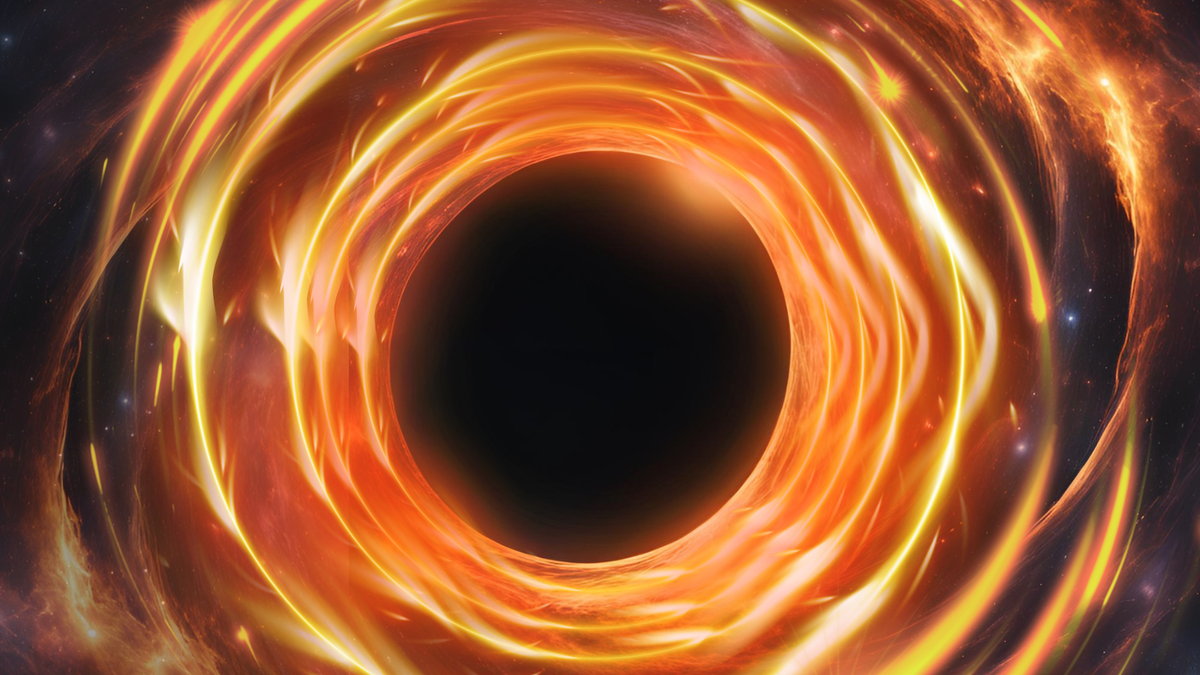
The idea of a runaway black hole passing through space may sound like science fiction, but astronomers say growing evidence suggests such objects can exist — though they pose no immediate danger to Earth.
The discussion follows recent research highlighting how black holes, under certain extreme conditions, can be ejected from galaxies and travel at extraordinary speeds through interstellar space.
What are runaway black holes?
Black holes typically sit at the centres of galaxies or form from collapsing stars. However, astronomers have now observed supermassive black holes being flung out of their host galaxies, usually after violent galaxy mergers.
When two galaxies collide, their central black holes can merge. If the gravitational waves released during that merger are asymmetrical, the newly formed black hole can receive a powerful “kick,” sending it racing away at speeds of thousands of kilometres per second.
In recent observations, astronomers have detected such runaway supermassive black holes ploughing through other galaxies, dragging clouds of stars and gas behind them.
Could smaller black holes wander through space?
Beyond the massive ones we can observe, scientists believe there may also be smaller, stellar-mass black holes roaming interstellar space unnoticed. These objects emit no light and are extremely difficult to detect unless they interact with nearby matter.
Some estimates suggest that our galaxy alone could contain millions of free-floating black holes, most moving quietly through space without affecting anything around them.
Could one pass through our solar system?
In theory, a fast-moving black hole passing through the outer solar system could slightly disturb the orbits of distant objects like those in the Kuiper Belt or Oort Cloud.
However, scientists stress that the odds of such an encounter are extraordinarily low. Space is vast, black holes are tiny on cosmic scales, and even a passing black hole would need to come extremely close to cause noticeable effects.
Importantly, Earth would not suddenly be “swallowed.” A black hole’s gravitational pull behaves like that of any object with the same mass. Unless one passed closer than the Moon — an almost impossible scenario — its impact would be negligible.
Why scientists are paying attention
The growing evidence for runaway black holes is less about fear and more about understanding how galaxies evolve and how extreme gravity behaves.
“These discoveries show the universe is far more dynamic than we once believed,” researchers say, adding that studying runaway black holes helps refine models of galaxy formation, gravitational waves, and cosmic structure.
Bottom line
Runaway black holes are real, but they are not lurking threats to Earth. For now, they remain a fascinating reminder of how violent and unpredictable the universe can be — mostly at distances safely far away from us.