
Rare Greenland Shark Found on Irish Beach: A Scientific Treasure
A rare Greenland shark carcass washed ashore in Ireland, exciting scientists.
Top Summary
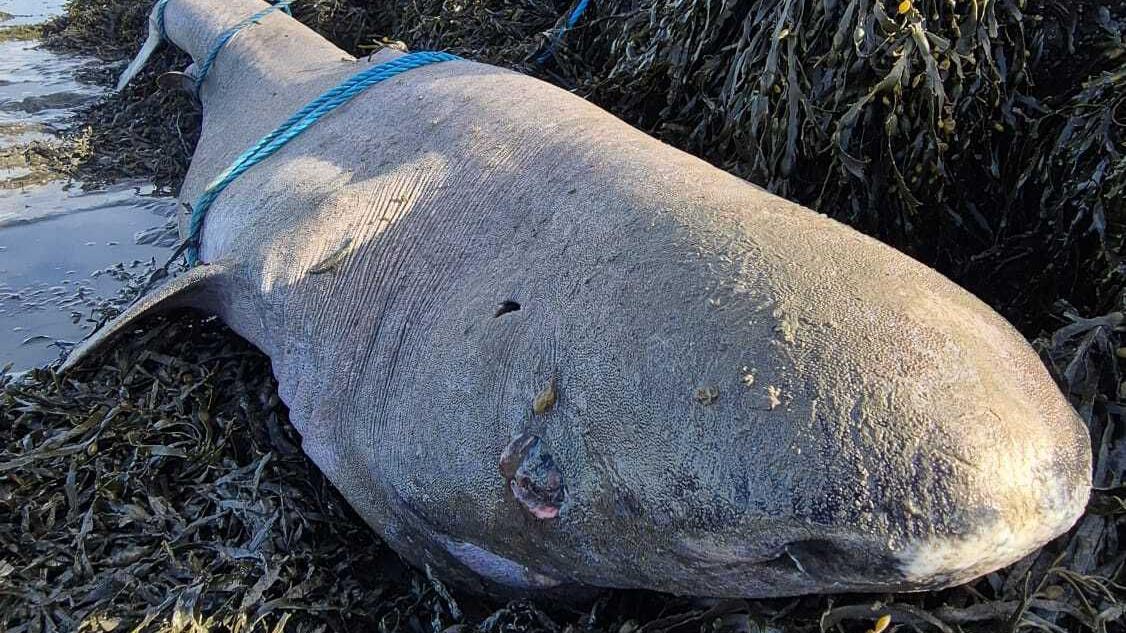
- What happened: A dead Greenland shark, estimated to be over 150 years old, was discovered on a beach in County Sligo, Ireland.
- Why it matters: This is the first recorded stranding of a Greenland shark in Ireland, offering a unique opportunity for scientific study.
- What changes for people: The Natural History Museum of Ireland may display the shark, allowing the public to learn about this mysterious species.
- Who is affected: Researchers at the Natural History Museum of Ireland and potentially the public interested in marine life.
Unusual Discovery on Finisklin Beach
A rare find occurred on April 11th in Finisklin, County Sligo, as Hammad Chaudhry and James Winters O'Donnell stumbled upon the carcass of a Greenland shark.
Initially mistaken for a basking shark, the Irish Whale and Dolphin Group (IWDG) identified it as a Greenland shark, marking the first such stranding in Ireland.
Confirming a Rare Species
The IWDG confirmed the identification.
"On the evening of Saturday, April 11th, the IWDG Live Stranding hotline received a report of a two-metre dead basking shark. Photos confirmed however, that this was not a basking shark and indeed a very rare and interesting stranding,"
Greenland sharks are known for their extreme longevity, with a lifespan exceeding 500 years, making them the longest-living vertebrates. They can grow to lengths of four to six meters.
Life Cycle and Maturity
These sharks inhabit the deep, remote waters of the Arctic and North Atlantic.
"Little is known about the elusive Greenland Shark in Ireland...however they are known to reach sexual maturity around 150 years of age and give birth their pups live after a gestation period of 8 to 18 years,"
The male shark found in Sligo had well-developed claspers, suggesting it was nearing sexual maturity.
Scientific Study and Future Display
The Natural History Museum of Ireland (NHMI) now possesses the shark's carcass. They will dissect and study it.
Tissue samples and anatomical components are being preserved for scientific collections, according to an NHMI spokesperson.
The NHMI hopes to display the specimen. This depends on the condition of the skin. This would allow visitors to learn about this species.
What to Watch Next
Researchers at the Natural History Museum of Ireland will continue to study the Greenland shark carcass, with potential findings about the species' biology and behavior expected in the coming months. The museum's decision on whether to display the specimen will be highly anticipated by the public and marine enthusiasts alike.