
Rapidly Expanding Crack Forces Closures at Yosemite’s Iconic Royal Arches Cliff
A newly detected fracture in Yosemite Valley’s granite wall is shifting faster than experts have ever recorded, prompting urgent safety measures and raising fresh questions...
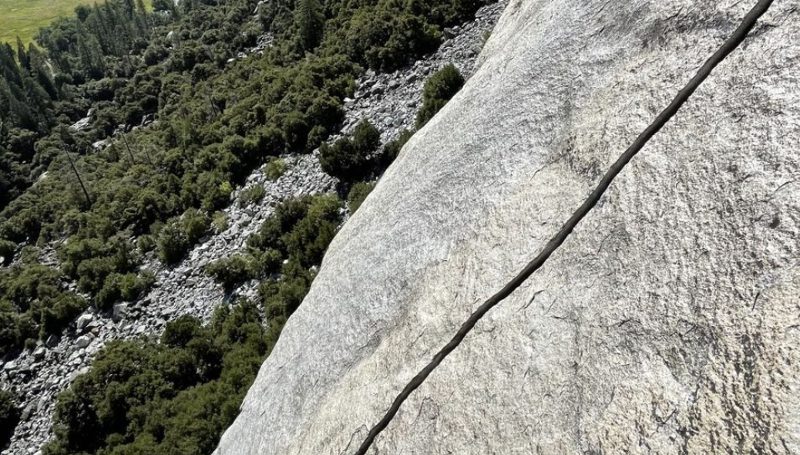
A newly detected fracture in Yosemite Valley’s granite wall is shifting faster than experts have ever recorded, prompting urgent safety measures and raising fresh questions about how the park’s dramatic landscape continues to evolve.
A Dangerous Fracture Alarms Climbers and Park Officials
Yosemite National Park has closed several routes around the Royal Arches formation after climbers discovered a fast-spreading crack in the granite face—an unusual and potentially hazardous development in one of the valley’s most frequented areas.
The fracture, spotted near the well-known Super Slide climbing route, was first reported last week by climbers who heard sharp cracking sounds while ascending the wall. According to Yosemite’s Supervisory Park Ranger Jesse McGahey, the noises resembled the creaking of breaking ice—an indicator that the rock was actively shifting even without physical contact. Small pieces of granite were seen falling from the opening, signaling instability.
Park officials credit the climbers’ quick report for enabling an immediate response, helping authorities cordon off the area before conditions deteriorated further.
Geologists Record Unusually Rapid Movement
A joint team of a climbing ranger and a veteran geologist who has studied Yosemite Valley for more than 15 years inspected the site soon after the alert. Their measurements revealed that the crack expanded by roughly one inch in less than a week—an extraordinary rate for the typically slow-changing granite walls of the valley.
Experts say it is too early to determine whether the movement presages an imminent rockfall or represents part of a more gradual, prolonged shift. However, the speed and noise associated with the fracture place it firmly in the high-risk category.
Research by the U.S. Geological Survey (USGS) has long warned that sudden changes in jointed granite—particularly along popular climbing routes—can precede larger collapses and require continuous monitoring to prevent accidents.
Why Yosemite’s Granite Continues to Change
Though Yosemite’s cliffs appear permanent, the valley is in constant geological motion. The massive walls—sculpted by glaciers during the last Ice Age—are repeatedly reshaped by freeze-thaw cycles, water infiltration, root expansion, and occasional seismic activity.
Frost wedging, in which water enters fractures, freezes, and expands, gradually forces the granite apart. The National Park Service notes that rockfalls are an essential part of Yosemite’s natural evolution, but rapid crack formation like the one at Royal Arches is uncommon and warrants heightened scrutiny.
Closures Implemented as a Precaution
On August 30, Yosemite officials temporarily closed climbing routes and visitor access zones surrounding Royal Arches, citing uncertainty over the crack’s future behavior. No timeline has been announced for reopening.
Ranger McGahey emphasized that the park’s priority is public safety, and officials will revisit the closures only after extended observation. Similar precautionary shutdowns have occurred in past years when unstable slabs or shifting blocks posed risks to visitors.
The park is urging all visitors and climbers to follow posted restrictions and stay updated through official bulletins.
Experts Stress the Need for Vigilance
Geologists who monitor rockfall activity say this event is a reminder of how swiftly Yosemite’s landscape can change. In a 2024 study on rockfall hazards, geologist Dr. Lisa Nguyen noted that sudden shifts in granite, especially in well-traveled recreation zones, often precede larger failures. She advocates for real-time monitoring systems and flexible management strategies in high-risk areas.
As scientists continue to track the expanding fracture, park officials are urging visitors to respect closures, stay informed, and remain aware that Yosemite’s beauty is inseparable from its geological volatility.