
President Murmu Clears SHANTI Bill, Paving Way for Private Entry into India’s Nuclear Power Sector
India has taken a decisive step toward reshaping its civil nuclear energy landscape after President Droupadi Murmu gave her assent to the Sustainable Harnessing and...
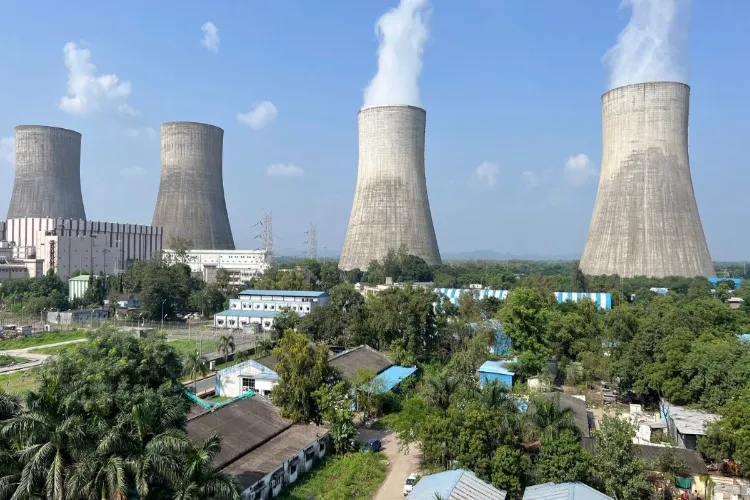
India has taken a decisive step toward reshaping its civil nuclear energy landscape after President Droupadi Murmu gave her assent to the Sustainable Harnessing and Advancement of Nuclear Energy for Transforming India (SHANTI) Bill. The legislation, cleared by Parliament during the Winter Session, was formally notified by the government on Saturday.
The new law marks one of the most significant overhauls of India’s nuclear framework since independence, opening the door for private companies to participate in nuclear power generation while keeping strategically sensitive activities under state control.
A Landmark Reform in Nuclear Governance
According to the official notification issued by the Union government, the President approved the SHANTI Bill on December 20, bringing it into force as a comprehensive statute governing the civil nuclear sector.
The law consolidates and replaces the existing legal architecture by repealing two key legislations:
-
the Atomic Energy Act, 1962, and
-
the Civil Liability for Nuclear Damage Act, 2010.
Government officials have long argued that the earlier regime, particularly the liability framework introduced in 2010, discouraged domestic and foreign investment in nuclear power projects. By subsuming these laws into a single, updated statute, the SHANTI Act aims to create a more predictable and investor-friendly environment.
What the SHANTI Act Allows
Under the new legislation, private companies and joint ventures will be permitted to build, own, operate and decommission nuclear power plants, subject to licensing and oversight by the central government. Until now, nuclear power generation in India was almost entirely the domain of state-owned entities, primarily the Nuclear Power Corporation of India Ltd (NPCIL).
At the same time, the law draws clear red lines around activities deemed critical to national security and strategic autonomy. Functions such as uranium and thorium mining, fuel enrichment, isotopic separation, reprocessing of spent fuel, management of high-level radioactive waste, and heavy water production will continue to remain exclusively with the Union government or government-owned enterprises.
This dual structure reflects what officials describe as a balance between economic reform and strategic caution.
Why the Change Matters
India has committed to expanding its clean energy capacity to meet rising electricity demand and climate goals. Nuclear power, which provides stable, low-carbon base-load electricity, is seen as a key component of this strategy.
Energy policy experts note that limited public-sector capacity and high capital costs have slowed the expansion of nuclear power. Allowing private participation could unlock new funding sources, accelerate project execution and foster technological innovation.
A senior government official, speaking on the background of the Cabinet’s earlier deliberations, said the reform was designed to “remove structural bottlenecks while retaining full sovereign control over sensitive nuclear materials and processes.”
Views from Experts and Industry
Nuclear energy analysts have broadly welcomed the move, saying it aligns India’s framework more closely with global practices, where private companies operate nuclear plants under strict regulation. However, they caution that effective implementation, transparent licensing and robust safety oversight will be critical.
Industry representatives see the law as a potential game-changer, but stress that clarity on regulations, insurance mechanisms and risk-sharing models will determine how quickly private investment materialises.
At the same time, some civil society groups and nuclear safety advocates have urged the government to ensure that safety standards, environmental safeguards and public accountability are not diluted in the push for expansion.
Strategic and International Implications
The SHANTI Act could also have implications for India’s international nuclear partnerships. Since the civil nuclear agreements signed with multiple countries after 2008, India has sought to attract foreign technology and investment, but progress has been uneven. A reformed legal framework may improve confidence among global partners, while India continues to uphold its non-proliferation commitments.
The Road Ahead
With presidential assent now granted, the focus shifts to framing detailed rules and regulatory guidelines under the SHANTI Act. How swiftly and effectively these are rolled out will determine whether the legislation delivers on its promise of transforming India’s civil nuclear sector.
For now, the law signals a clear policy shift: nuclear energy is no longer the exclusive preserve of the state, but a sector where private participation is being actively encouraged—under the watchful eye of the government.