
Perseverance Rover Finds Ancient River Delta on Mars!
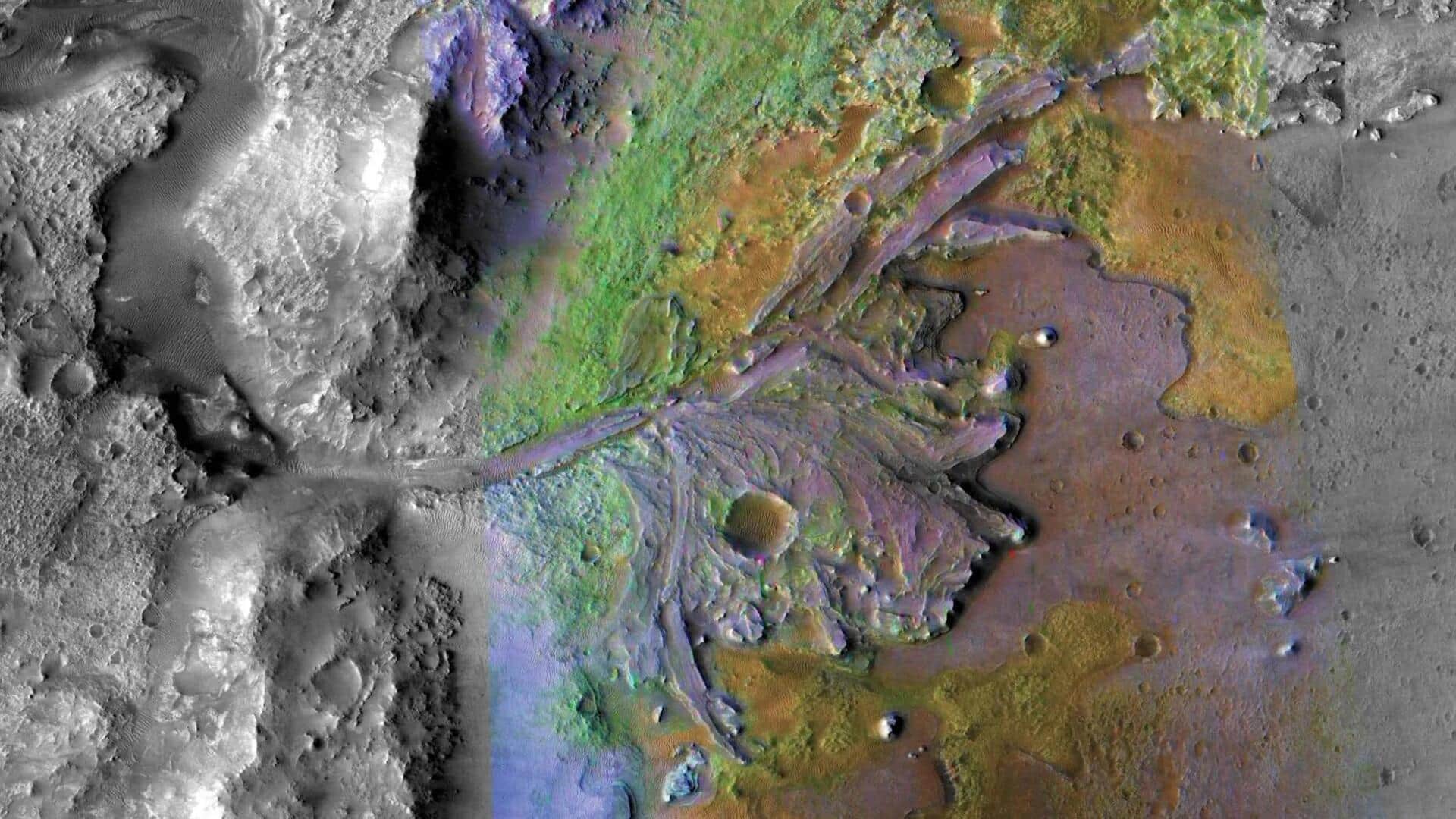
NASA's Perseverance rover discovered a buried river delta on Mars.
Top Summary
- What happened: NASA's Perseverance rover found a buried ancient river delta using ground-penetrating radar.
- Why it matters: This is one of the oldest pieces of evidence that water once flowed on Mars, increasing the possibility of past life.
- What changes: Provides further insights into Mars' geological history and water activity billions of years ago.
- Who is affected: The scientific community, space enthusiasts, and anyone interested in the potential for past life on Mars.
Ancient River Delta Unearthed
NASA's Perseverance rover has made a groundbreaking discovery: the remains of an ancient river delta buried deep beneath the Martian surface.
The discovery provides strong evidence of water activity on the Red Planet billions of years ago.
This pivotal finding was made possible by the rover's RIMFAX instrument.
Exploration Details and Timeline
The six-wheeled rover journeyed 6.12km inside Jezero Crater.
This area, located in the northern hemisphere of Mars, was previously suspected to be a water-rich environment with an ancient lake basin.
Perseverance uncovered geological features as deep as 115 feet (35m) underground.
Dating Back Billions of Years
The buried delta is estimated to be 3.7-4.2 billion years old.
This makes it one of the earliest indicators of water activity on Mars's surface.
The discovery further strengthens the case for a potentially habitable environment in Mars' distant past.
Technological Breakthrough: RIMFAX
Perseverance's RIMFAX instrument is at the heart of this discovery.
It sends radar pulses into the ground, recording reflections to create 3D maps of subsurface features.
The data used in this discovery spanned from September 2023 to February 2024, covering 250 Martian days.
Evidence of a Wet Past
The discovery of the buried river delta bolsters the growing evidence of Mars's wet past.
This significantly impacts the likelihood of past life on the planet.
"From the features mapped by RIMFAX, we believe that Jezero Crater hosted an ancient water-rich environment, capable of biosignature preservation that existed prior to the formation of Jezero's Western Delta," said UCLA planetary scientist Emily Cardarelli.
Geological Diversity on Mars
The presence of liquid water on Mars is becoming increasingly evident.
Each rover mission contributes another piece to the puzzle of Mars's past.
"Over time, we've seen more and more evidence for liquid water on the Martian surface at various rover landing sites," Cardarelli said. "Mars is diverse, and each rover mission reveals another piece of its puzzling past and the early development of our rocky neighbor."
What to Watch Next
Future analysis of the data will likely focus on identifying potential biosignatures within the ancient delta deposits. Scientists will continue to analyze data collected by Perseverance, seeking more clues about Mars' watery past and potential for past life.