
New Study Explores How Marine Silicate Weathering Shapes Earth’s Carbon Cycle and Ocean Chemistry
Scientists have outlined how chemical reactions in ocean sediments influence long-term climate balance and seawater composition.The research reviews global evidence showing that marine silicate weathering...
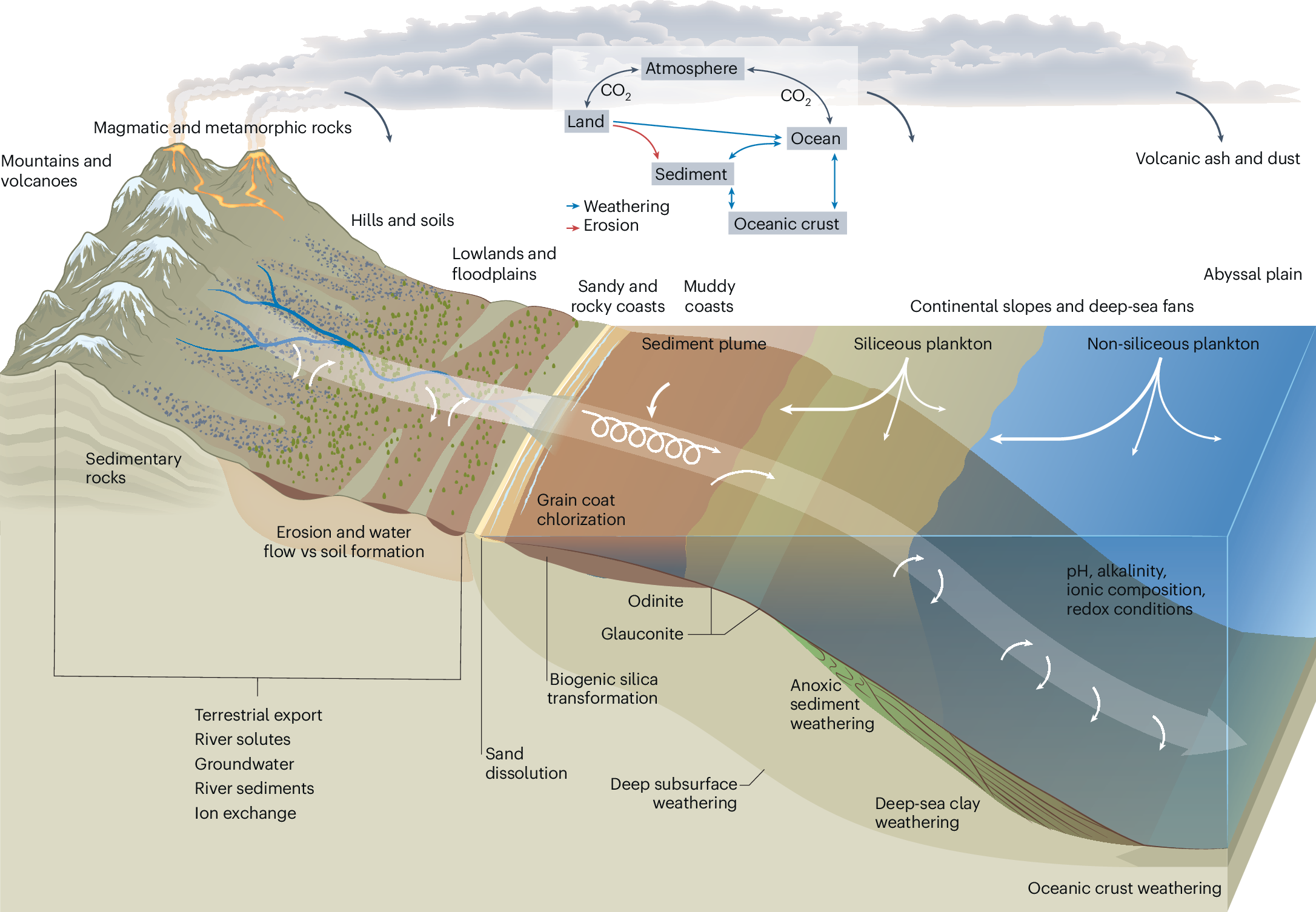
Scientists have outlined how chemical reactions in ocean sediments influence long-term climate balance and seawater composition.
The research reviews global evidence showing that marine silicate weathering plays a major role in regulating alkalinity and elemental cycles.
Experts say understanding these hidden ocean processes could improve climate predictions and carbon cycle modelling.
-
What happened: Researchers including Gerrit Trapp-Müller, Robert C. Aller, Appy Sluijs, and Jack J. Middelburg reviewed how silicate weathering in marine sediments affects global elemental cycles.
-
Why it matters now: Ocean chemistry and carbon cycling are closely tied to climate stability, making these findings important for long-term environmental forecasts.
-
What changes for people: Improved climate models and geo-engineering strategies may emerge from better understanding sediment reactions.
-
Who is affected: Climate scientists, oceanographers, policymakers, and environmental researchers.
A new scientific review has highlighted the crucial role of marine sediment silicate weathering in shaping the Earth’s carbon cycle and ocean chemistry. The study examines how chemical reactions within seabed sediments influence alkalinity levels, mineral formation, and elemental balances across global oceans.
What is silicate weathering and why it matters
Silicate weathering refers to chemical reactions between minerals and seawater that alter the balance of elements such as silicon, potassium, magnesium, and calcium. These processes occur across different marine environments, from coastal muds to deep-sea clays.
Researchers found that reaction balances vary widely depending on sediment type and oxygen conditions. Some environments consume alkalinity through so-called reverse weathering, while others release it through forward weathering reactions.
<u>Scientists estimate that marine sediment processes may reduce alkalinity generation by around 30 percent while increasing carbonate burial by roughly 10 percent.</u>
From coastlines to deep sea: A complex reaction network
The review mapped multiple sediment environments, including:
-
Permeable coastal sands
-
Deltaic mobile muds
-
Anoxic seabed sediments
-
Deep-sea clays and carbonate oozes
Each environment shows distinct reaction rates and sensitivities, meaning global ocean chemistry depends on a broad continuum rather than a single dominant process.
The study suggests that combined oceanic cycles for key elements remain close to equilibrium, though reactions may be 20 to 50 percent faster than earlier estimates.
Implications for climate, geology, and future research
Experts say marine silicate weathering has evolved alongside tectonic activity, volcanic processes, climate shifts, and biological development over millions of years. Understanding this interaction could help scientists reconstruct past climate conditions and predict future environmental changes.
Key implications include:
-
Climate modelling: Better representation of ocean chemistry could refine long-term carbon cycle forecasts.
-
Geo-engineering discussions: Sediment processes may influence proposals aimed at stabilising atmospheric carbon levels.
-
Earth system resilience: The balance between mineral formation and chemical fluxes helps maintain stable ocean conditions.
Why mobile readers should care
While these reactions occur far below the ocean surface, they influence global carbon storage and seawater composition, both of which affect climate stability over geological timescales. Researchers say integrating marine sediment chemistry into climate models will be essential for accurate long-range projections.
What to watch next
Future studies are expected to focus on measuring real-time reaction rates in different ocean regions and integrating these findings into global climate simulations. Scientists are also exploring how human-driven climate change could alter sediment chemistry in the decades ahead.