
New space images reveal rare interstellar comet 3I/ATLAS as it crosses our Solar System
What happened: New high-resolution images of interstellar comet 3I/ATLAS have been released from Hawaii’s Gemini North telescope and NASA’s Europa Clipper spacecraft. Why it matters...
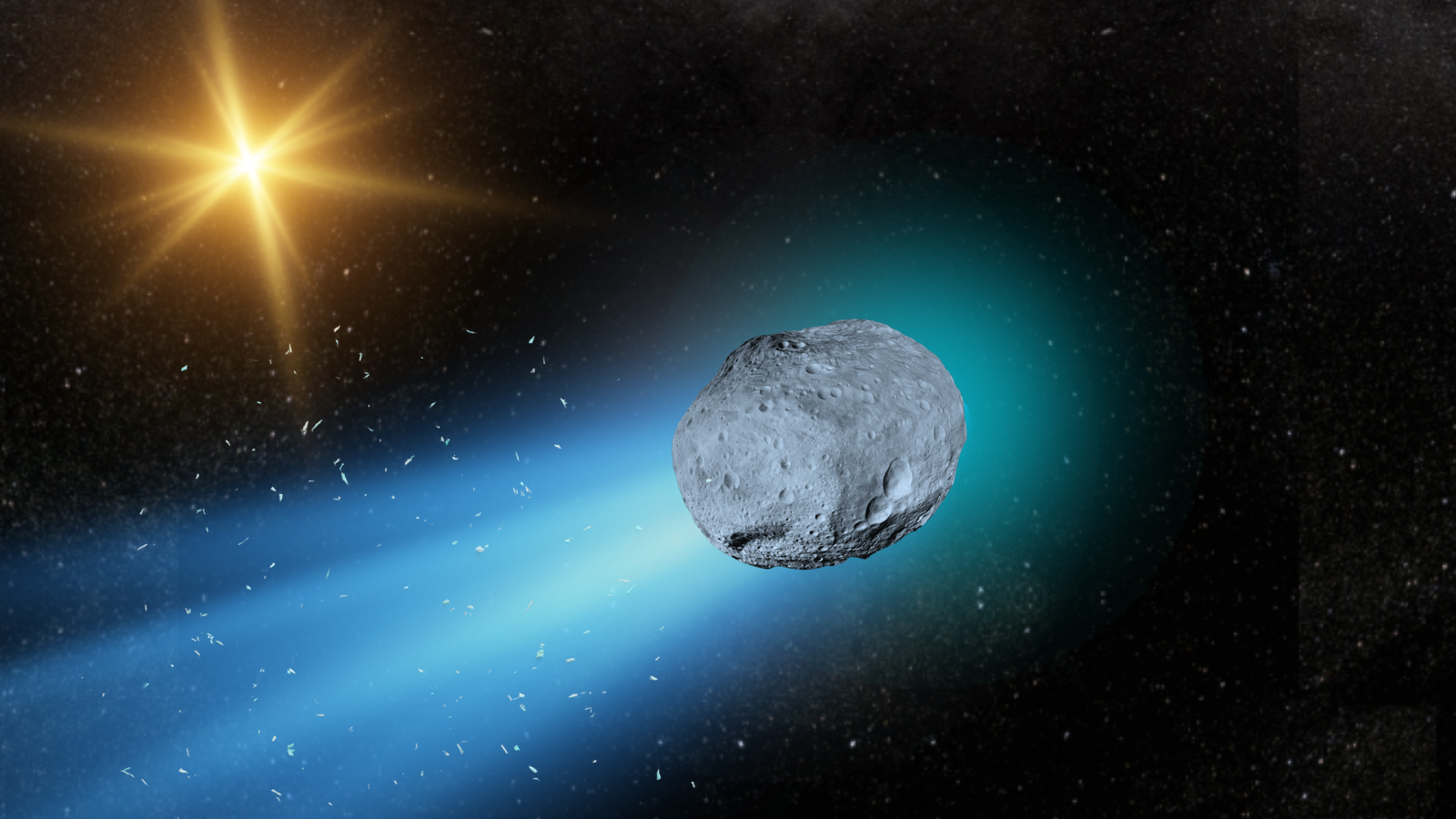
-
What happened: New high-resolution images of interstellar comet 3I/ATLAS have been released from Hawaii’s Gemini North telescope and NASA’s Europa Clipper spacecraft.
-
Why it matters now: The comet is a rare visitor from outside our Solar System, with scientists racing to observe it before it leaves forever.
-
What changes for people: The images provide a unique scientific window into interstellar objects, expanding understanding of how other star systems form.
-
Who is affected: Astronomers, space agencies, and research institutions studying comets, planetary origins, and interstellar travel benefit directly.
Two newly released images have offered an extraordinary look at 3I/ATLAS, a comet believed to have formed around a distant star system before entering our Solar System. The visuals, captured from Earth and deep space, highlight the scientific urgency around documenting one of the rarest types of cosmic visitors.
The comet first drew global attention in 2025, after astronomers identified it as interstellar in origin. Only two such objects have previously been confirmed within our Solar System, making 3I/ATLAS a scientific priority before its exit.
Captured from Earth and deep space
The first image was taken on November 26, 2025, using the Gemini Multi-Object Spectrograph at the Gemini North telescope atop Maunakea in Hawaii. Because comets move rapidly against the night sky, researchers had to adjust for motion during long exposures, later processing the data to keep background stars fixed in place.
NASA released a second image recorded by the Europa Clipper spacecraft, which launched in October 2024 and is currently traveling toward Jupiter. Although Clipper will not reach the Jupiter system until 2030, its scientific instruments are already operational, allowing it to collect data en route.
The spacecraft observed 3I/ATLAS for approximately seven hours from a distance of 164 million kilometers, combining multiple ultraviolet wavelengths to reveal the comet’s coma of dust (red) and gases (blue and green) around its icy nucleus.
A rare interstellar visitor
Comet 3I/ATLAS was discovered on July 1, 2025. Unlike most comets, which form from debris in our own Solar System, its trajectory indicates an origin beyond the Sun’s gravitational boundary.
It is only the third confirmed interstellar object ever detected here, following ʻOumuamua (2017) and 2I/Borisov (2019). Scientists classify such objects as snapshots of other planetary systems, offering chemical clues about how planets and comets form around other stars.
Since discovery, observatories worldwide have been competing for observation windows, knowing the object will eventually disappear from view forever.
Speculation and scientific caution
The comet’s unusual behavior has sparked debate. Data from the Atacama Large Millimeter Array (ALMA) showed the comet diverged slightly from its predicted course by about four arcseconds while also undergoing a color shift from reddish to deep blue.
In a blog post, Harvard astrophysicist Avi Loeb floated the speculative idea that such anomalies might resemble a technological propulsion signature, although experts widely noted that natural explanations remain far more likely.
Efforts to detect technosignatures have so far yielded nothing. On December 18, astronomers used the Green Bank Telescope in West Virginia to search for artificial radio signals ahead of the comet’s closest approach to Earth. No signs of extraterrestrial technology were found.
What comes next
According to NASA, 3I/ATLAS will make a close flyby of Jupiter in March 2026, after which it will exit the Solar System permanently.
For astronomers, the new images mark one of the last major opportunities to study an interstellar object up close, a phenomenon that may not recur for decades.