
New Nuclear Study Reveals What Happens in the Final Split-Second Before Atomic Fission
Scientists in Mumbai have captured rare proton emissions that expose how an atom’s nucleus stretches and snaps — offering new clues about nuclear energy and...
Scientists in Mumbai have captured rare proton emissions that expose how an atom’s nucleus stretches and snaps — offering new clues about nuclear energy and the forces that hold matter together.
What happened:
-
Researchers at the BARC–TIFR Pelletron LINAC Facility identified rare proton “showers” during nuclear fission, revealing new details about the exact moment a nucleus breaks apart.
Why it matters now:
-
Understanding the physics of fission at extreme temperatures could help improve nuclear energy safety, advance super-heavy element research, and deepen knowledge of stellar processes.
What changes for people:
-
While the findings are fundamental science, they could eventually influence cleaner nuclear power technologies and future energy research.
Who is affected:
-
Nuclear physicists, energy researchers, space scientists studying stellar evolution, and policymakers exploring low-carbon energy solutions.
Scientists capture the hidden moment when atoms split
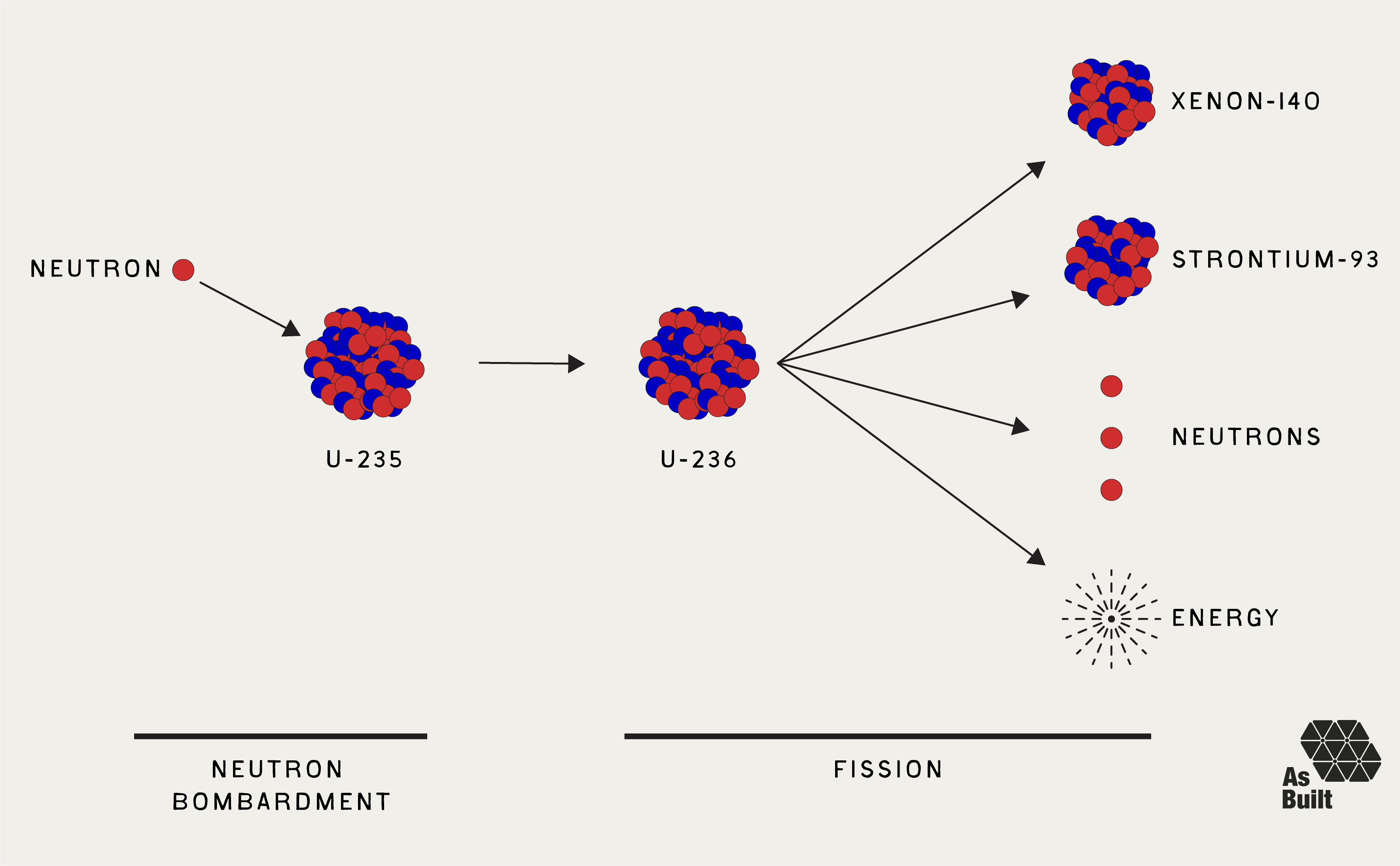
A new study has uncovered rare proton emissions that occur at the precise instant an atomic nucleus snaps during nuclear fission. The research offers one of the clearest views yet of the “neck rupture” phase — a fleeting moment when a heavy nucleus stretches like a droplet before breaking apart.
By tracking charged particles released during high-energy collisions, scientists observed how nuclear matter behaves under extreme heat and pressure, shedding light on forces that govern atomic stability.
Key finding: Researchers detected previously unobserved polar proton emissions, helping map the exact dynamics of the fission process.
Why nuclear fission still holds scientific mysteries
Nuclear fission — the splitting of heavy atoms such as uranium or plutonium — is widely used in power generation, but its high-temperature behaviour remains complex.
Scientists compare the process to a liquid droplet forming a thin neck before separating into two smaller drops. The new study suggests that, at extreme temperatures, the nuclear material behaves less like water and more like a thick, honey-like fluid.
This property, known as nuclear viscosity, appears to increase with temperature, slowing the final snap and changing how energy is released.
Rare proton signals unlock new data
During fission, atoms release multiple particles, including neutrons, photons and protons. Until now, it was difficult to determine when exactly these particles were emitted — before, during, or after the split.
The research team used a specialised method called Moving Source Disentangling Analysis to separate these emissions. They identified protons emerging from both the poles and the equator of the splitting nucleus — a breakthrough that helps pinpoint the scission moment more precisely.
Key detail: The number of detected protons was nearly four times higher than expected compared to certain other particle emissions.
What this means for nuclear energy and future technology
Although the research focuses on fundamental physics, scientists say the implications could extend to energy and materials science.
Better understanding of nuclear viscosity and scission dynamics may help:
-
Improve safety models for nuclear reactors
-
Refine predictions about how heavy atoms behave during collisions
-
Support the creation of super-heavy elements in laboratories
Researchers also believe the findings could help explain processes occurring inside stars, where extreme temperatures influence atomic behaviour.
Multiple perspectives: scientific breakthrough or early-stage discovery?
Physicists view the results as a major step forward in studying one of the least understood phases of fission. The ability to isolate scission-point particles provides a new experimental window into nuclear dynamics.
However, experts caution that translating these insights into real-world energy applications will require further experiments and validation. Fundamental discoveries often take years — or decades — before influencing practical technology.
Still, the study strengthens India’s growing presence in advanced nuclear research and high-energy physics.
Broader impact on science and global energy research
As countries explore low-carbon energy options, nuclear power remains a significant part of the conversation. Improved understanding of fission could contribute to safer reactor designs and more efficient energy systems.
Beyond Earth, insights into nuclear matter viscosity may also inform astrophysics research, including how heavy elements form during stellar explosions.
The discovery underscores how studying the tiniest particles can reshape our understanding of the universe’s most powerful forces.