
NASA's SPHEREx Maps Interstellar Ice Across Milky Way's Stellar Nurseries
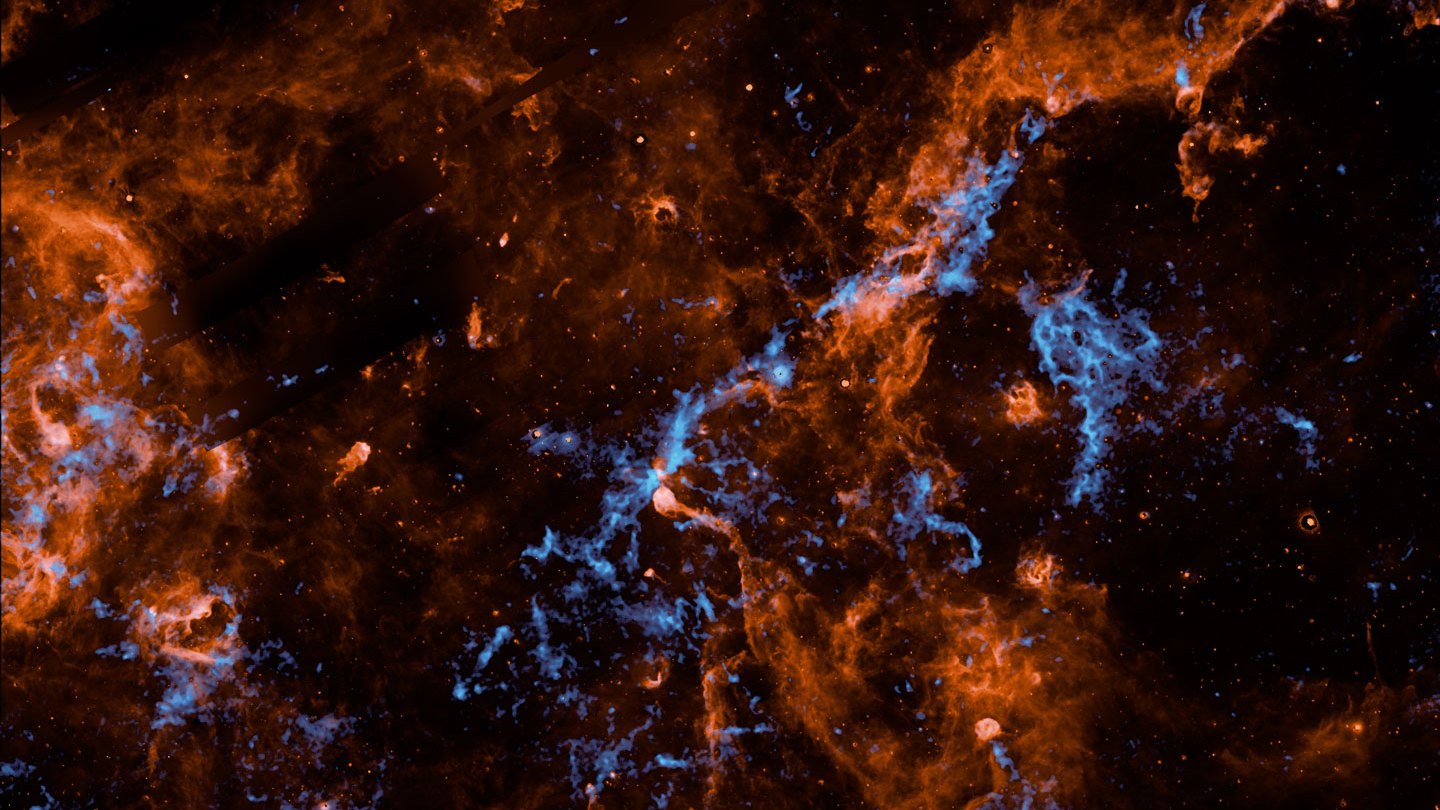
SPHEREx maps ice in Milky Way's stellar nurseries using starlight backlighting.
Top Summary
- What happened: NASA's SPHEREx instrument mapped interstellar ice in stellar nurseries across the Milky Way.
- Why it matters: This provides unprecedented insight into the composition of molecular clouds where stars are born.
- What changes for people: It expands our understanding of star formation and the building blocks of planetary systems.
- Who is affected: The astronomical community and anyone interested in space exploration and the origins of stars.
Unprecedented Ice Mapping
Scientists have achieved an unprecedented mapping of interstellar ice using NASA's Spectro-Photometer for the History of the Universe, Epoch of Reionization, and Ices Explorer (SPHEREx) instrument.
This mapping focused on stellar nurseries, also known as giant molecular clouds, across the Milky Way.
Stellar Nurseries and Star Formation
Giant molecular clouds are regions where dense clumps of gas and dust collapse under gravity, leading to the formation of new stars.
SPHEREx discovered these ices using starlight as backlighting, effectively using stars as spotlights to illuminate the composition of these clouds.
Importance of Ice Composition
The composition of ice within these stellar nurseries is critical to understanding the formation of stars and planetary systems.
By mapping this ice, scientists gain valuable insights into the building blocks available for future star and planet formation.
What to Watch Next
Future research will likely focus on analyzing the SPHEREx data to determine the specific types of ice present and their distribution within these molecular clouds. Further studies could explore how this ice composition influences the characteristics of newly formed stars and planets.