
NASA's Roman Space Telescope: Assembly Complete, Launch Set for 2026
The Nancy Grace Roman Space Telescope is fully assembled and ready for launch preparations.
Top Summary
- What happened: NASA has completed the final assembly of the Nancy Grace Roman Space Telescope at Goddard Space Flight Center.
- Why it matters: Roman will revolutionize our understanding of dark energy, galaxy formation, and exoplanetary systems.
- What changes for people: Astronomers will have access to data 1,000 times faster than Hubble, leading to new discoveries.
- Who is affected: Scientists, researchers, and the global astronomy community will benefit from Roman's capabilities.
Roman Space Telescope: Ready for Launch
NASA has announced the completion of the Nancy Grace Roman Space Telescope's assembly. The observatory is now set to begin final testing and launch preparations. The anticipated launch date is 2026.
Often called the next major advancement after Hubble and James Webb, Roman promises unprecedented data collection. Its unique design will allow for rapid surveying of the cosmos.
Inside the Goddard Cleanroom
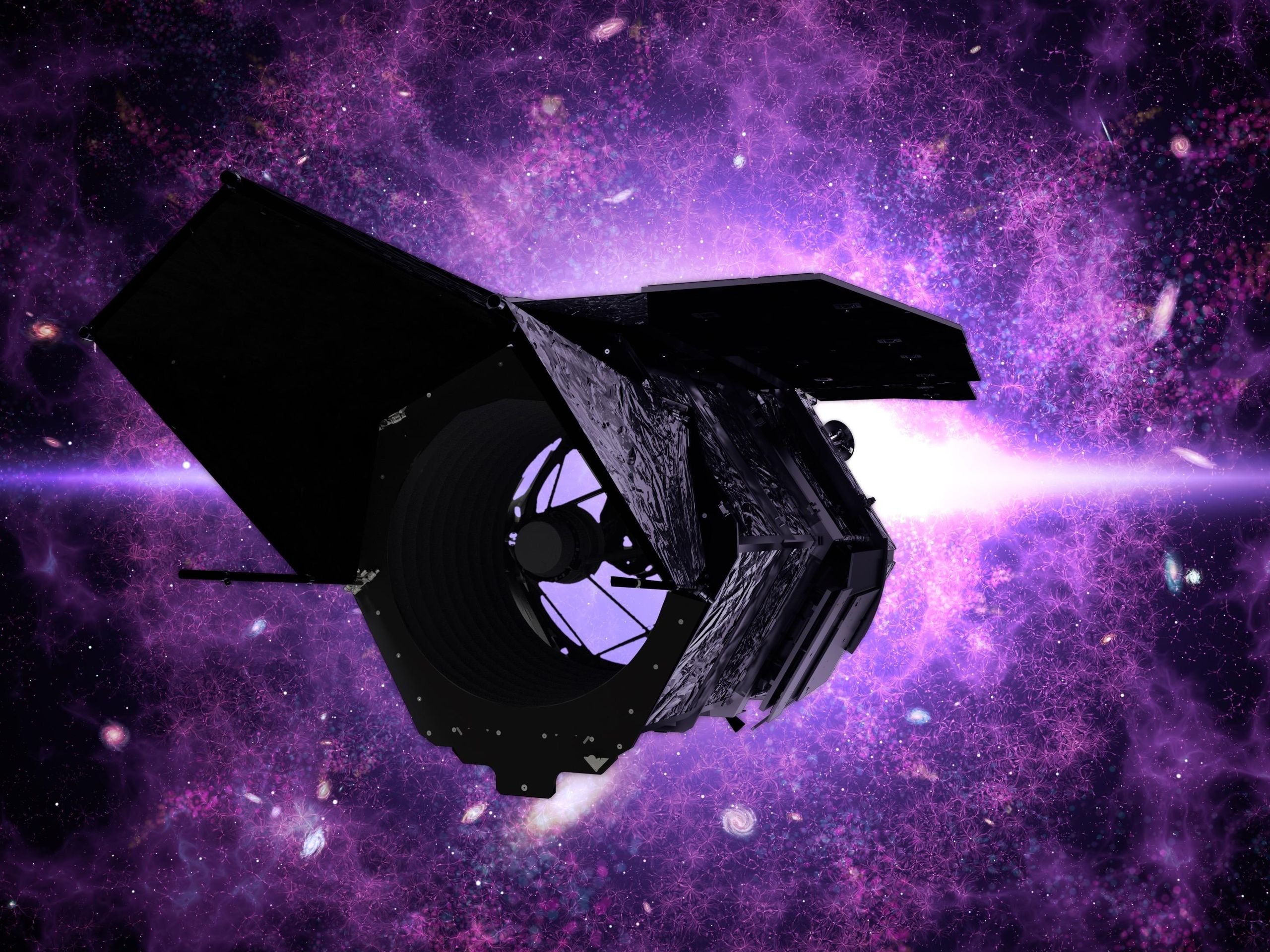
The telescope stands fully assembled within NASA's Goddard facility. It features solar panels, advanced optical systems, and sensitive scientific instruments. The spacecraft and telescope modules were carefully integrated in a controlled cleanroom.
Engineers consider this completion a vital milestone.
"With this stage complete, Roman moves out of construction and into final testing and launch preparation."
Hubble vs. Roman: A New Perspective
Roman is not intended to replace Hubble. Rather, it offers a different approach to astronomical observation.
While its primary mirror is similar in size to Hubble at 2.4 meters, Roman's field of view is vastly superior. Each image will cover roughly 100 times the area that Hubble can capture.
NASA states that Roman can collect data 1,000 times faster than Hubble during survey operations. This efficiency will dramatically accelerate research.
Unveiling Cosmic Secrets: Dark Energy and Exoplanets
A primary goal of the Roman mission is to investigate dark energy and dark matter. These mysterious components dominate the universe's structure.
Roman will map galaxy distribution and movement. This mapping will help scientists refine models of cosmic expansion. It will build large 3D maps of the cosmos.
Roman also carries a coronagraph. The coronagraph is designed to block starlight. This will allow direct imaging of large exoplanets, particularly gas giants.
NASA indicates this system may detect planets up to 100 million times dimmer than their host stars. The technology is still experimental, but promising for future planet-hunting missions.
The Journey to Space
Roman is scheduled to launch aboard a SpaceX Falcon Heavy rocket. It will travel nearly one million miles to Lagrange Point 2.
Before launch, the telescope will undergo rigorous testing. This includes vibration and thermal simulations to ensure it can withstand the harsh conditions of space. Afterward, it will be shipped to Kennedy Space Center for final launch preparations.
Repeated Sky Scans for Transient Events
Roman's ability to repeatedly observe large areas is crucial. It will detect sudden cosmic events that might otherwise be missed. Researchers anticipate detecting thousands of supernovae during the mission.
What to Watch Next
The next crucial phase involves rigorous testing to ensure the telescope's resilience in space. Keep an eye out for news regarding the final testing results and preparations for the 2026 launch from Kennedy Space Center.