
NASA’s Perseverance Rover Finds Potential Biosignatures in Mars’ Jezero Crater
An international team led by NASA, with key contributions from Imperial College London, has uncovered minerals and organic matter in Martian rocks that suggest ancient...
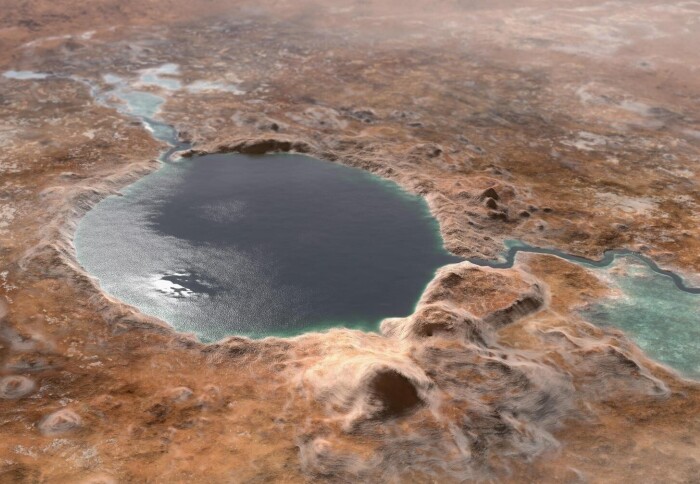
An international team led by NASA, with key contributions from Imperial College London, has uncovered minerals and organic matter in Martian rocks that suggest ancient habitable conditions and possible biological activity on the Red Planet.
The study focuses on the Bright Angel formation within Jezero Crater, a site chosen for the Mars 2020 mission because it once hosted a large lake and river delta—prime targets in the search for signs of past life. Researchers propose that the geological features in Bright Angel are closely linked to organic carbon, making them a potential biosignature of past life.
Professor Sanjeev Gupta of Imperial College emphasized caution, stating, “This is a very exciting discovery of a potential biosignature, but it does not mean we have discovered life on Mars. We now need to analyse this rock sample on Earth to truly confirm if biological processes were involved or not.”
Since 2021, the Perseverance Rover has been exploring the 45-kilometre-wide Jezero Crater, collecting and storing rock and soil samples for eventual return to Earth. In Bright Angel, within the ancient river valley Neretva Vallis, Perseverance encountered fine-grained mudstones and muddy conglomerates.
Using instruments such as PIXL (Planetary Instrument for X-ray Lithochemistry) and SHERLOC (Scanning Habitable Environments with Raman & Luminescence for Organics & Chemicals), researchers mapped the rock types and sedimentary structures. The findings revealed lake-margin and lake-bed environments rich in silica and clay minerals—an unexpected discovery, as such deposits are unusual at the bottom of a river valley.
Alex Jones, a PhD researcher at Imperial and Perseverance collaborator, noted, “Our work indicates a past, low-energy lake environment—and that is precisely the kind of habitable environment we have been looking for on the mission.”
The findings, published in Nature, represent a significant step in understanding Mars’ potential for past life, highlighting the importance of detailed geological analysis and the upcoming return of Martian samples to Earth for confirmation.