
NASA's Nuclear Mars Mission: A New Era of Space Exploration by 2028
NASA plans a nuclear-powered Mars mission by 2028, revolutionizing space travel.
Top Summary
- What happened: NASA aims to launch a nuclear-powered mission to Mars by 2028, utilizing Nuclear Electric Propulsion (NEP).
- Why it matters: Nuclear propulsion offers faster travel, heavier payloads, and independence from solar power, crucial for deep space exploration.
- What changes for people: Reduced travel time to Mars lowers health and financial risks for future human missions. It also paves the way for more frequent and ambitious space expeditions.
- Who is affected: Scientists, space agencies (like NASA and DARPA), future astronauts, and potentially anyone dreaming of interplanetary travel.
Nuclear Power to Mars: NASA's Bold Plan
NASA's ambitious plan to launch a nuclear-powered mission to Mars by 2028 marks a significant leap in space exploration. For years, Mars missions have relied on chemical and solar power, limiting speed and efficiency.
The introduction of nuclear power promises a future where humanity can explore space faster, carry more equipment, and operate independently of the sun.
Unveiling Nuclear Electric Propulsion (NEP)
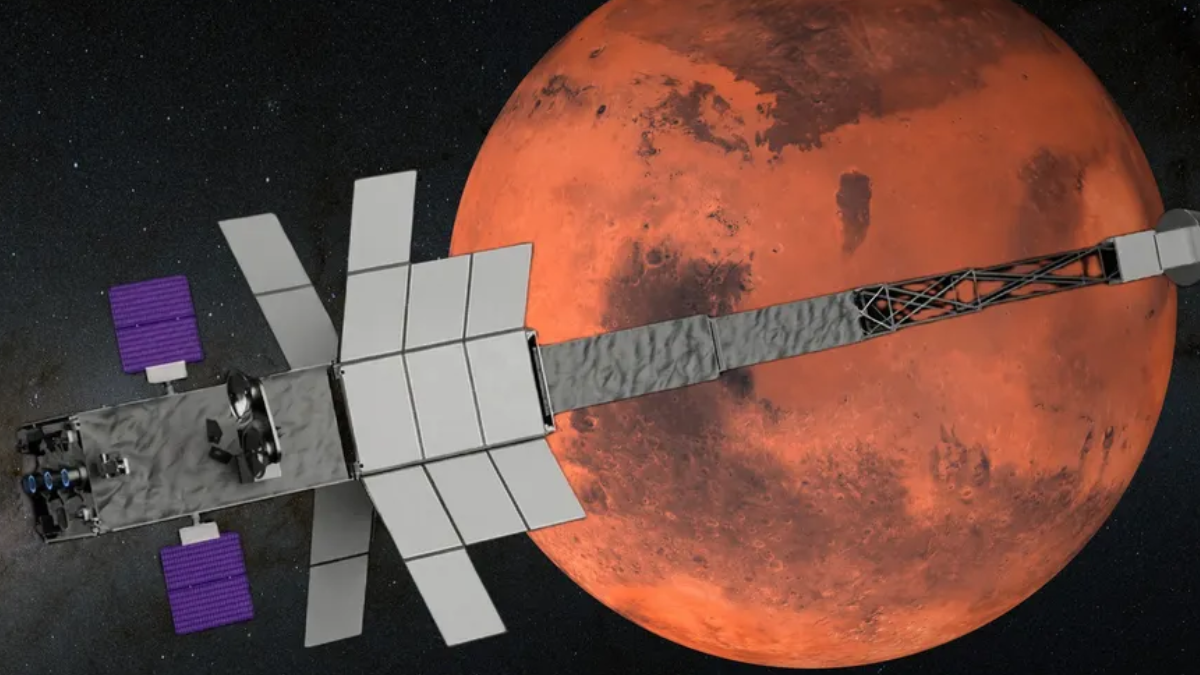
The upcoming NASA mission will use a spacecraft powered by Nuclear Electric Propulsion (NEP).
This system employs a small nuclear reactor to generate electrical power, which then drives efficient propulsion systems. This enables spacecraft to travel vast distances with less fuel.
The mission, possibly associated with the Space Reactor-1 (SR-1) concept, will demonstrate the effectiveness of nuclear power in space. The spacecraft might also deploy robotic drones to explore otherwise inaccessible Martian locations.
"This demonstration will be a crucial step… to send humans to Mars." - Pam Melroy, NASA Deputy Administrator
Nuclear Propulsion: A Game Changer
Nuclear propulsion provides a fundamentally different approach compared to traditional rockets. It offers a steady and highly efficient power source, unlike the rapid bursts of chemical fuel.
Two key technologies are under development:
- Nuclear Thermal Propulsion (NTP): Uses a nuclear reactor to heat a propellant like hydrogen to generate thrust.
- Nuclear Electric Propulsion (NEP): Uses electricity from nuclear power to run ion engines.
NASA states that nuclear thermal propulsion can be two to five times more efficient than chemical propulsion. Greater efficiency translates to faster travel and heavier payloads with reduced fuel needs.
Nuclear propulsion's independence from sunlight makes it ideal for deep space missions.
Why This Mission Matters
A major obstacle to sending humans to Mars is the lengthy travel time, typically six to nine months.
Nuclear propulsion can drastically reduce this time, mitigating health and financial risks. NASA and DARPA are already testing nuclear rocket engines to validate the technology before the mission.
Nuclear technology also provides a potent and reliable power source.
A Technological Breakthrough
This mission uniquely integrates propulsion, power, and exploration. Unlike previous missions dependent on solar power and batteries, nuclear power operates reliably in any environment.
The advantages of nuclear power include:
- Uninterrupted power generation, regardless of solar distance
- Long-duration mission capability
- Ability to explore harsh environments
NASA emphasizes the need to develop "flight-heritage nuclear hardware" for missions beyond Mars, targeting Jupiter and Saturn.
The Future of Space Travel
NASA's 2028 Mars mission aims to usher in a new era of space exploration. A successful mission could establish nuclear power as the standard for space travel, leading to faster, more productive expeditions and, ultimately, human settlements on other planets.
In essence, this mission brings humanity closer to making Mars accessible.
What to Watch Next
Keep an eye on the progress of NASA and DARPA's nuclear rocket engine testing. Monitor for announcements regarding the selection of contractors for the Space Reactor-1 (SR-1) project, a crucial step in realizing this ambitious Mars mission.