
NASA’s Crew-12 Mission Set To Advance Moon and Mars Science With 8-Month ISS Expedition
Four-member international team will run health, food and technology experiments designed to prepare humans for long-duration space exploration. What happened: NASA unveiled details of the...
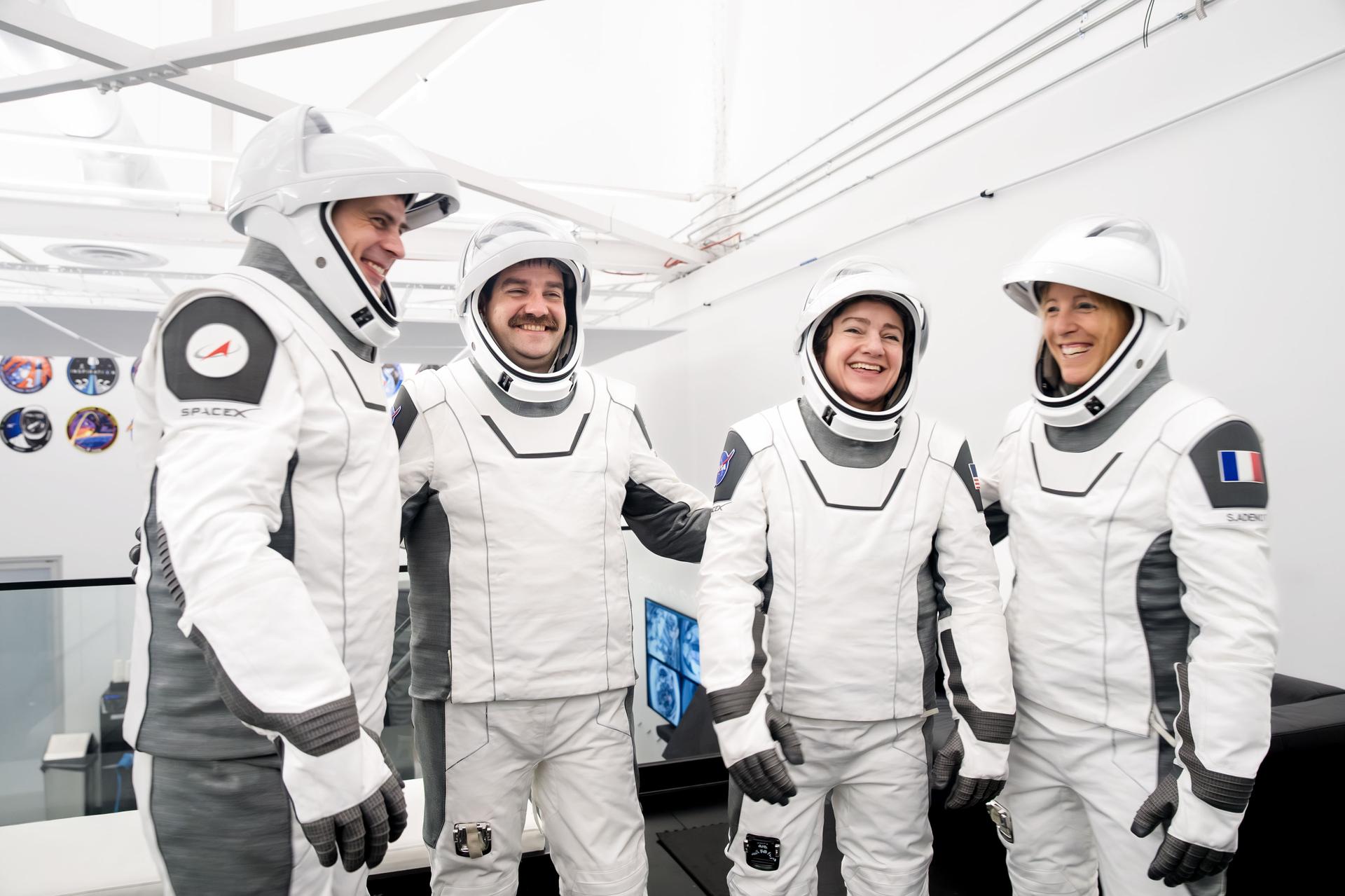
Four-member international team will run health, food and technology experiments designed to prepare humans for long-duration space exploration.
What happened:
-
NASA unveiled details of the Crew-12 mission, sending astronauts to the International Space Station aboard a SpaceX Dragon Freedom spacecraft.
-
The eight-month mission focuses on research supporting future lunar and Martian missions.
Why it matters now:
-
The ISS is being used as a long-duration testbed for the Artemis program and future human journeys to Mars, making each crew rotation critical for technology development.
What changes for people:
-
Breakthroughs in medical science, food production and fluid technologies developed in space could influence healthcare, agriculture and remote medicine on Earth.
Who is affected:
-
Global space agencies, researchers working on human spaceflight, and industries investing in space-based innovation.
A multinational crew preparing for deep-space exploration
Crew-12 highlights growing international cooperation in orbit. NASA astronauts Jessica Meir and Jack Hathaway will serve as commander and pilot, joined by Sophie Adenot from the European Space Agency and Andrey Fedyaev from Roscosmos.
Meir brings extensive spaceflight experience, including historic all-woman spacewalks, while Hathaway and Adenot will make their first journeys into orbit. Fedyaev returns with long-duration mission experience, strengthening operational continuity aboard the station.
This diverse skill set reflects a broader shift toward multinational missions as agencies pool expertise to tackle complex exploration goals.
Launch plan and mission timeline
Crew-12 will launch from Cape Canaveral atop a Falcon 9 rocket, accelerating the Dragon spacecraft to roughly 17,500 mph before autonomous docking with the ISS.
The flight will follow a carefully choreographed sequence of orbital maneuvers monitored by both astronauts and mission control teams. Although docking is automated, manual override capabilities remain a critical safety layer.
Once aboard, the crew will integrate with Expedition teams already living in orbit, supporting station maintenance while carrying out dozens of experiments during their eight-month stay.
Science priorities: Health, food and future technologies
NASA says Crew-12’s research portfolio directly supports future lunar bases and eventual human missions to Mars.
Key experiments include:
-
Studying pneumonia-causing bacteria to improve treatments in extreme environments
-
Developing on-demand intravenous fluid systems for medical emergencies in space
-
Testing plant growth and nitrogen-fixing microbes to enhance space-based food production
-
Analysing how blood flow changes during long-duration microgravity exposure
These projects address one of the biggest challenges of deep-space travel: keeping astronauts healthy and self-sufficient far from Earth.
ISS remains the backbone of future exploration
For more than 25 years, continuous human presence aboard the ISS has allowed scientists to test technologies that cannot be replicated on Earth. NASA continues to position the station as a proving ground for life-support systems, advanced robotics and long-term human adaptation to space.
Crew-12’s schedule will overlap with multiple cargo deliveries and crew rotations, underscoring how complex logistics keep the orbital laboratory running smoothly.
The mission also highlights the reliability of commercial partnerships. SpaceX’s Dragon Freedom capsule has already flown several missions, showing how private industry now plays a central role in human spaceflight.
Multiple perspectives: Innovation vs cost debates
Supporters argue that missions like Crew-12 accelerate technological breakthroughs and strengthen international collaboration. Medical and agricultural research conducted in orbit often leads to unexpected innovations with real-world applications.
Critics, however, question the rising cost of extended missions and whether resources should shift toward lunar infrastructure instead of ISS operations. NASA maintains that lessons learned on the station are essential before humans venture farther into deep space.