
NASA Receives Blue Origin’s Moon Lander Training Cabin Ahead Of Artemis Lunar Missions
NASA has received a full-scale mock-up of Blue Origin’s future lunar lander crew cabin, marking another major step in preparations for upcoming Artemis Moon missions....
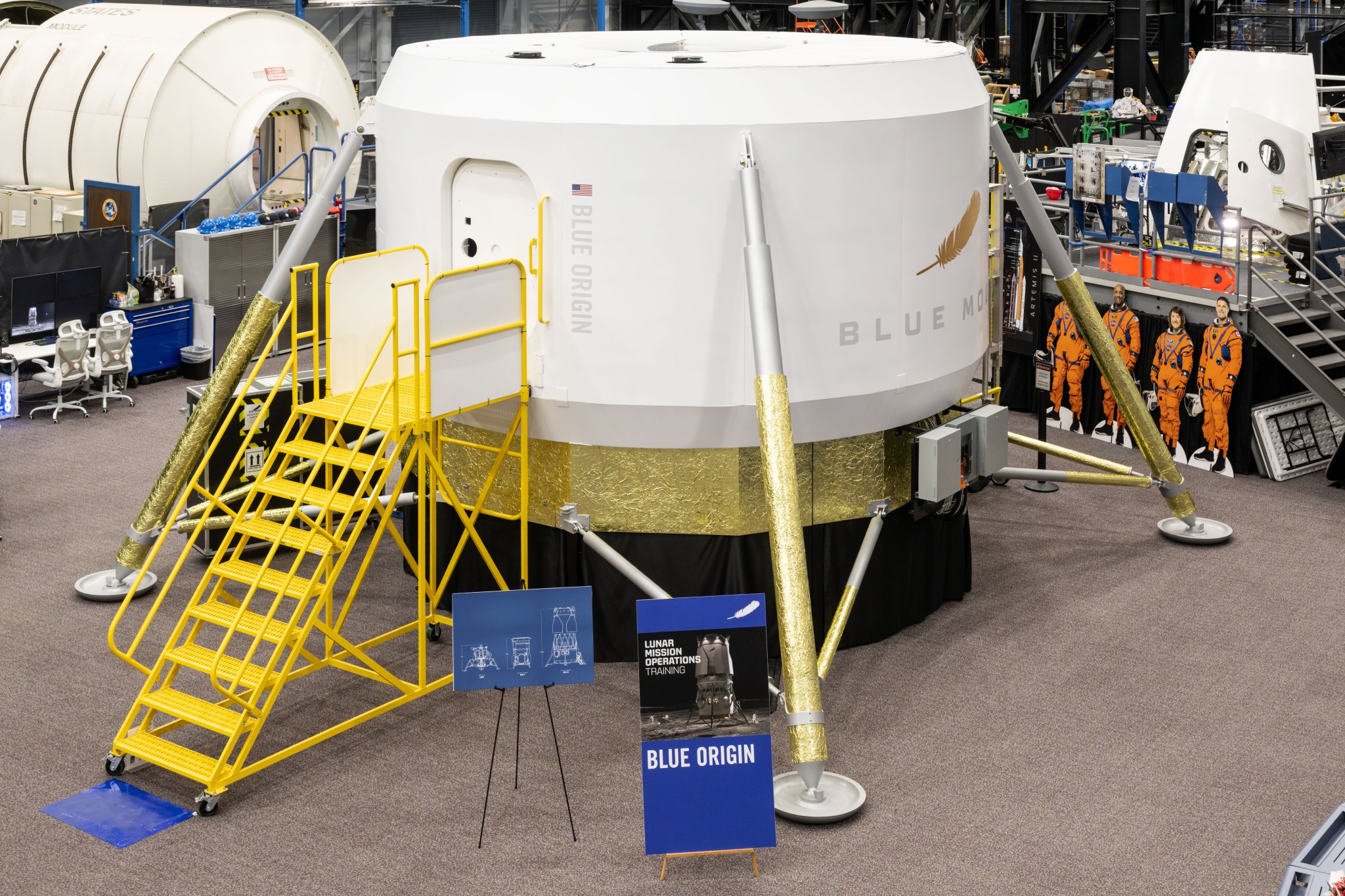
NASA has received a full-scale mock-up of Blue Origin’s future lunar lander crew cabin, marking another major step in preparations for upcoming Artemis Moon missions.
The training cabin, now operational at NASA’s Johnson Space Center in Houston, will help astronauts and mission teams simulate lunar missions before humans return to the Moon later this decade.
Top Summary
- What happened: NASA installed Blue Origin’s full-scale Moon lander training cabin for Artemis missions.
- Why it matters now: The simulator will help astronauts prepare for future Moon landings beginning later this decade.
- What changes for people: The development advances NASA’s long-term plans for lunar exploration and future Mars missions.
- Who is affected: NASA astronauts, commercial space companies and the global space exploration sector.
The mock-up represents the crew cabin of the Blue Moon Mark 2 lunar lander that is being developed under NASA’s Artemis program.
According to NASA, the lander will eventually transport astronauts from lunar orbit to the Moon’s surface and back.
The actual Blue Moon lander is expected to stand around 52 feet tall once fully assembled. Its crew cabin, located at the base of the spacecraft, will serve as the astronauts’ living and working area during lunar surface missions.
NASA said astronauts inside the cabin will eat, sleep, conduct scientific experiments and observe the lunar environment during Moon stays.
The newly delivered simulator includes a full-size interior and an external ladder that astronauts are expected to use while entering or exiting the spacecraft on the Moon.
Engineers and astronauts will use the training unit for:
- Mission simulations
- Crew communication exercises
- Spacesuit testing
- Simulated moonwalk preparations
- Human-interaction testing scenarios
NASA stated that the mock-up will gradually evolve into a more advanced integrated simulator with interactive systems and mission-control connectivity.
The agency is currently working with both Blue Origin and SpaceX to develop commercial human landing systems for the Artemis program.
Under the mission architecture, astronauts aboard the Orion spacecraft will dock with lunar landers in orbit before descending to the Moon’s surface.
NASA expects the Artemis III mission next year to test key systems including rendezvous and docking procedures with commercial lunar landers in Earth orbit.
Future Artemis IV and Artemis V missions, planned for 2028, are expected to use these landing systems for actual lunar surface missions.
The Artemis campaign is considered NASA’s largest Moon exploration initiative since the Apollo era and is intended to lay the foundation for eventual human missions to Mars.
Industry experts say commercial partnerships with companies like Blue Origin and SpaceX are transforming how deep-space exploration missions are being developed and operated.
The collaboration also reflects NASA’s broader strategy of relying more heavily on private aerospace companies for future exploration infrastructure.
Bottom line
NASA’s arrival of the Blue Moon training cabin marks another major milestone in preparations for human lunar missions under Artemis. The simulator will play a critical role in training astronauts and validating systems before humans return to the Moon later this decade.
What to watch next
- Artemis III mission testing timeline
- Blue Origin’s uncrewed lunar lander launch
- NASA docking and Moonwalk simulations
- Competition between Blue Origin and SpaceX lunar systems
- Future Moon missions leading toward Mars exploration