
NASA re-analysis of Galileo mission data confirms ammonia on Europa, boosting chances of life beneath its icy crust
What happened: NASA scientists have discovered ammonia-bearing compounds on the surface of Europa, Jupiter’s icy moon, after re-examining decades-old Galileo mission data. Why it matters...
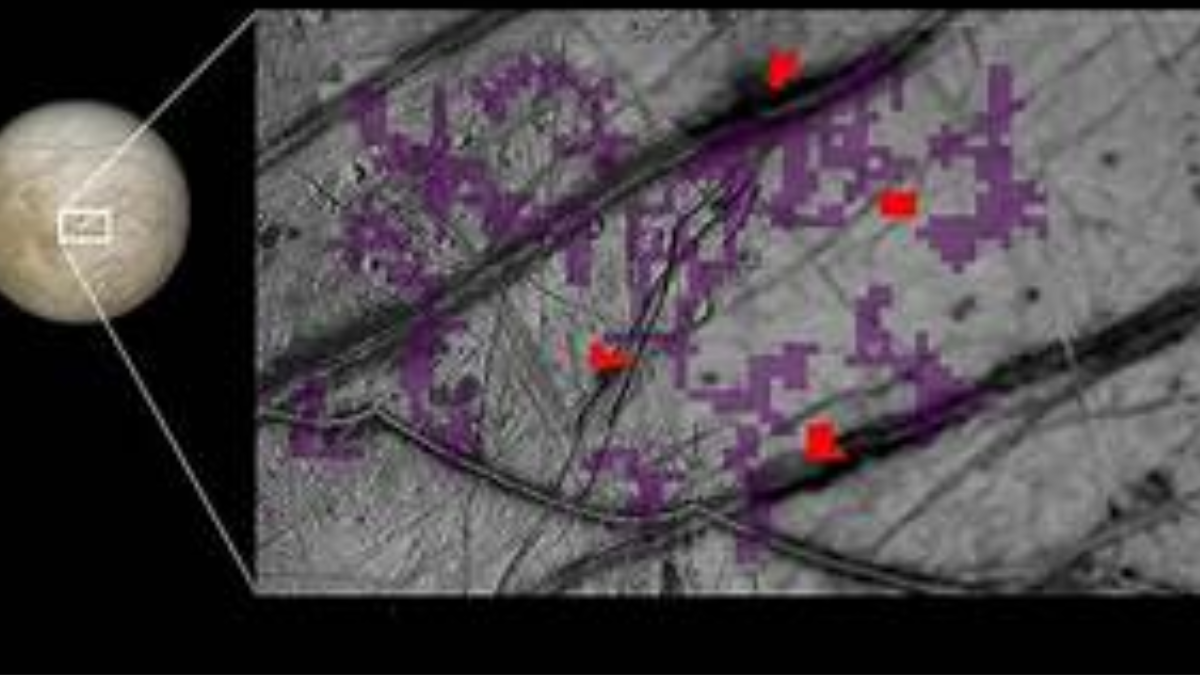
What happened: NASA scientists have discovered ammonia-bearing compounds on the surface of Europa, Jupiter’s icy moon, after re-examining decades-old Galileo mission data.
Why it matters now: Ammonia contains nitrogen, a key ingredient for life, and its presence strengthens the possibility that Europa’s subsurface ocean could be habitable.
What changes for people: The finding gives new direction to upcoming missions, especially Europa Clipper, which will explore the moon more closely in 2030.
Who is affected: Planetary scientists, astrobiologists, space mission planners, and anyone tracking the search for extraterrestrial life.
NASA announced on Thursday that a fresh analysis of archived data from the Galileo spacecraft, which orbited the Jupiter system from 1995 to 2003, has revealed something extraordinary: the first confirmed detection of ammonia compounds on Europa’s surface.
Ammonia is a nitrogen-rich molecule essential for biological chemistry, making this discovery crucial to understanding the moon’s habitability.
Hidden signals uncovered decades later
The breakthrough came from a new study led by Al Emran of NASA’s Jet Propulsion Laboratory, who revisited data from Galileo’s Near-Infrared Mapping Spectrometer.
Modern analytical techniques allowed researchers to find faint spectral signatures of ammonia—signals that earlier computational tools couldn’t detect.
These ammonia traces appear near fractures and pits on Europa’s frozen crust, areas known for geological activity.
Why ammonia matters for potential life
Scientists consider ammonia a key indicator for two reasons:
It lowers the freezing point of water, acting like a natural antifreeze. This helps keep Europa’s subsurface ocean liquid.
It contains nitrogen, one of the core elements needed to form amino acids, proteins and other building blocks of life.
The short lifespan of ammonia in harsh space conditions also suggests that it must have arrived recently, likely pushed upward from Europa’s hidden ocean through cryo-volcanic vents or shallow fractures.
Cryovolcanism may be bringing ocean material to the surface
NASA’s statement noted that the most likely explanation is geologically recent cryovolcanism—a process where briny, ammonia-rich water erupts or seeps through cracks and refreezes on the surface.
The presence of ammonia in precisely these active zones makes the surface an even more important site for future sampling and exploration.
Old data, new discoveries
The discovery highlights how valuable long-archived mission data can remain.
Galileo’s instruments captured enormous amounts of information, much of which scientists continue to re-examine using today’s advanced processing tools.
This ammonia detection is one of the strongest recent examples of how earlier missions still inform modern planetary science.
Europa Clipper mission will investigate further
NASA’s Europa Clipper, set to reach Jupiter in April 2030, will carry far more powerful instruments capable of probing Europa’s chemistry, geology and ocean interactions.
The new findings give mission planners a sharper target:
fractured regions with ammonia signatures that may connect directly to the moon’s interior.
Clipper will determine whether Europa’s ocean has the right chemical ingredients, energy sources and conditions to support life.