
NASA locks in February 2026 window for Artemis II: first crewed Moon flyby in over 50 years
What happened: NASA has confirmed a February 6–11, 2026 launch window for Artemis II, the first crewed lunar flyby since the Apollo era. Why it...
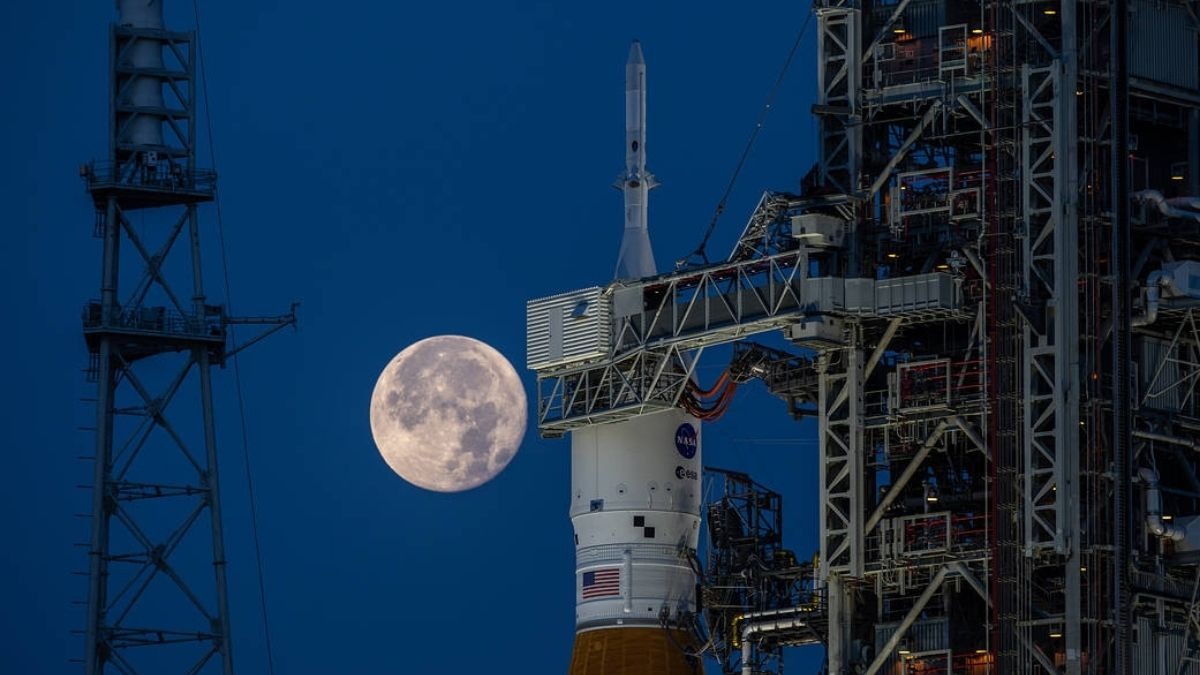
-
What happened: NASA has confirmed a February 6–11, 2026 launch window for Artemis II, the first crewed lunar flyby since the Apollo era.
-
Why it matters now: It marks a underlinemajor return to deep space human missionsunderline and a key step toward future Moon landings.
-
What changes for people: Mission data will shape underlinelunar base planning, deep space habitats and Mars mission architectureunderline.
-
Who is affected: Astronauts, global space agencies, private aerospace firms, and future science missions tied to NASA’s Artemis roadmap.
For the first time in more than five decades, astronauts are preparing to leave low Earth orbit and swing around the Moon, as NASA confirms that its Artemis II mission is targeting its earliest launch opportunities between February 6 and February 11, 2026.
The confirmation signals one of the most significant advances in human spaceflight since the Apollo era, moving NASA closer to its long-term plan to return crews to the lunar surface later this decade and develop capabilities that could eventually support missions to Mars.
Narrow launch window dictated by physics
NASA officials say orbital mechanics, lighting conditions, fuel constraints and Earth–Moon alignment restrict the number of viable launch days. Each date within the February 6–11 window offers only a brief opportunity to lift off, with weather and vehicle readiness playing major roles.
Mission managers emphasized that the mission is underlinenot attempting a landingunderline. Instead, Artemis II is designed to validate life support, navigation, communications and crew operations far beyond Earth’s magnetic shield.
Final pre-flight milestones underway
At the Kennedy Space Center in Florida, NASA’s Space Launch System (SLS) rocket is undergoing its final pre-certification phases, including inspections, fueling checks and a wet dress rehearsal. This full countdown simulation uses actual propellant to verify how the system behaves during launch operations.
Only after these final tests will officials lock a specific launch date within the February window. Engineers noted that even small timeline shifts can alter the spacecraft’s trajectory and re-entry plan, underscoring the mission’s complexity.
Meet the crew heading into deep space
Artemis II will carry four astronauts aboard the Orion spacecraft:
-
Reid Wiseman (NASA)
-
Victor Glover (NASA)
-
Christina Koch (NASA)
-
Jeremy Hansen (Canadian Space Agency)
The crew will spend roughly 11 days traveling beyond the Moon before looping back to Earth, evaluating how humans operate in deep space environments where there is no quick return and no protective magnetosphere.
Why Artemis II is a turning point
Artemis II builds directly on Artemis I, which sent an uncrewed Orion around the Moon and safely back in late 2022. By adding human crews, NASA is advancing from testing hardware to testing human systems.
The mission’s success will unlock Artemis III, currently targeting later in the decade, which aims to land astronauts on the lunar surface for the first time since Apollo 17 in 1972.
NASA sees Artemis as the foundation for a broader exploration ecosystem involving:
-
Lunar surface bases
-
In-space fuel depots
-
Interoperable habitats
-
Mars transfer vehicles
Why timing matters scientifically and operationally
Launching to the Moon requires precise line-of-sight, lighting and fuel considerations. The spacecraft must follow a trajectory that minimizes fuel consumption while ensuring safe re-entry conditions.
Mission planners say trajectory, weather, and system readiness all become part of a single decision loop that has no counterpart in typical orbital launches.
The bottom line
If successful, Artemis II will reopen the path for humans to travel beyond low Earth orbit and set the stage for a new era of Moon-to-Mars exploration backed by both government agencies and commercial partners.