
NASA astronaut Suni Williams retires after historic career, caps final mission with troubled Starliner flight
What happened: NASA astronaut Suni Williams announced her retirement months after returning from a nine-month Starliner mission that was originally planned as a short test...
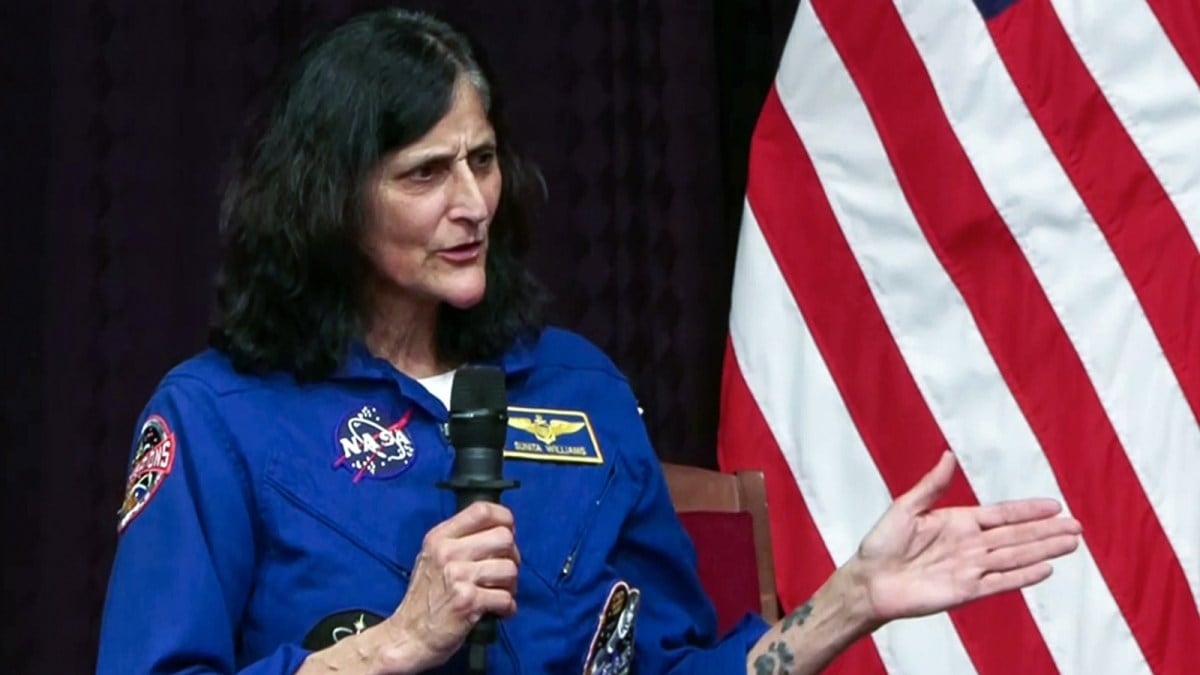
-
What happened: NASA astronaut Suni Williams announced her retirement months after returning from a nine-month Starliner mission that was originally planned as a short test flight.
-
Why it matters now: Her exit closes a 27-year NASA career and raises fresh focus on the future of Boeing’s Starliner programme.
-
What changes for people: NASA loses one of its most experienced spacewalkers and commanders as it prepares for Moon and Mars missions.
-
Who is affected: NASA, Boeing, future astronauts, and spaceflight programmes linked to the International Space Station.
Veteran NASA astronaut Suni Williams has officially retired, turning her unexpectedly extended Boeing Starliner test mission into the final spaceflight of a career that reshaped records, leadership, and human endurance in orbit.
NASA confirmed Williams’ decision on Tuesday, January 21, 2026, months after she returned to Earth following a mission that drew global attention for its technical challenges and prolonged stay aboard the International Space Station.
A career that redefined time in space
Williams joined NASA in 1998 and flew to space three times, first aboard Space Shuttle Discovery in 2006 and later via a Russian Soyuz capsule in 2012.
Across her career, she logged 608 days in space, the second-highest total by any NASA astronaut, behind Peggy Whitson.
She also completed nine spacewalks totaling 62 hours, making her the most experienced female spacewalker in history and fourth overall worldwide.
Underline: Williams’ spacewalk record and cumulative time in orbit place her among NASA’s most accomplished astronauts.
The Starliner mission that became her last
Williams’ final mission was the first crewed test flight of Boeing’s Starliner capsule, alongside astronaut Butch Wilmore.
The mission was initially expected to last about one week, but thruster malfunctions and gas leaks during flight forced NASA to reassess safety risks. The agency ultimately decided to return Starliner to Earth without a crew, leaving Williams and Wilmore aboard the ISS for more than nine months.
Despite the ordeal, both astronauts repeatedly said they were well-prepared, safe, and productive throughout the extended mission.
Williams reflects on her NASA journey
In her farewell statement, Williams described space as her favorite place and expressed gratitude for the teams she worked with across decades.
She highlighted the International Space Station as a cornerstone of human exploration and said the work done there has paved the way for future missions to the Moon and Mars.
Underline: Williams credited the ISS and its people for laying the groundwork for humanity’s next steps beyond low-Earth orbit.
A trailblazer beyond science and engineering
Williams also made headlines for achievements beyond traditional spaceflight.
She became the first person to complete a triathlon in space in 2012, and earlier, the first to run a marathon in orbit, showcasing how astronauts adapt physically in microgravity.
These milestones turned her into a symbol of human adaptability and innovation beyond Earth.
NASA leadership praises her legacy
Vanessa Wyche, director of NASA’s Johnson Space Center, called Williams a pioneering leader, citing her command roles, space station contributions, and critical involvement in testing new spacecraft.
NASA officials say her career will inspire future generations of explorers, especially as the agency expands ambitions beyond the ISS.
What this means for Starliner and NASA
Williams’ retirement comes as NASA reassesses Boeing’s Starliner programme. The agency has confirmed that Starliner’s next mission will be uncrewed, treated as another test flight before astronauts fly aboard again.
Williams has said she would willingly fly on Starliner again, noting that while fixes are needed, the spacecraft has unique capabilities.
Underline: NASA’s cautious approach signals heightened focus on crew safety after the mission’s setbacks.
Why this matters now
As NASA prepares for Artemis Moon missions and eventual Mars exploration, the departure of seasoned astronauts like Williams marks a generational transition inside the agency.
Her retirement also underscores how test pilots of new spacecraft often exit after milestone missions, a path followed earlier by astronauts from SpaceX’s first crewed flight.