
Methane Boost: Indian Wells See 4x Production Surge with Bio-Stimulation
Bio-stimulation quadrupled methane output in Indian coalbeds, offering a renewable energy boost.
Top Summary
- What happened: In-situ bio-stimulation in Indian coalbed methane (CBM) wells significantly enhanced methane production, with some wells seeing a four-fold increase.
- Why it matters: This demonstrates the potential of microbially enhanced coalbed methane (MeCBM) as a viable pathway towards meeting the growing demand for renewable energy.
- What changes for people: The increased methane production could lead to greater energy security and potentially lower energy costs.
- Who is affected: Energy companies, consumers, and the environment stand to benefit from this enhanced and renewable energy source. The EOGEPL Raniganj block specifically.
Boosting Methane Production
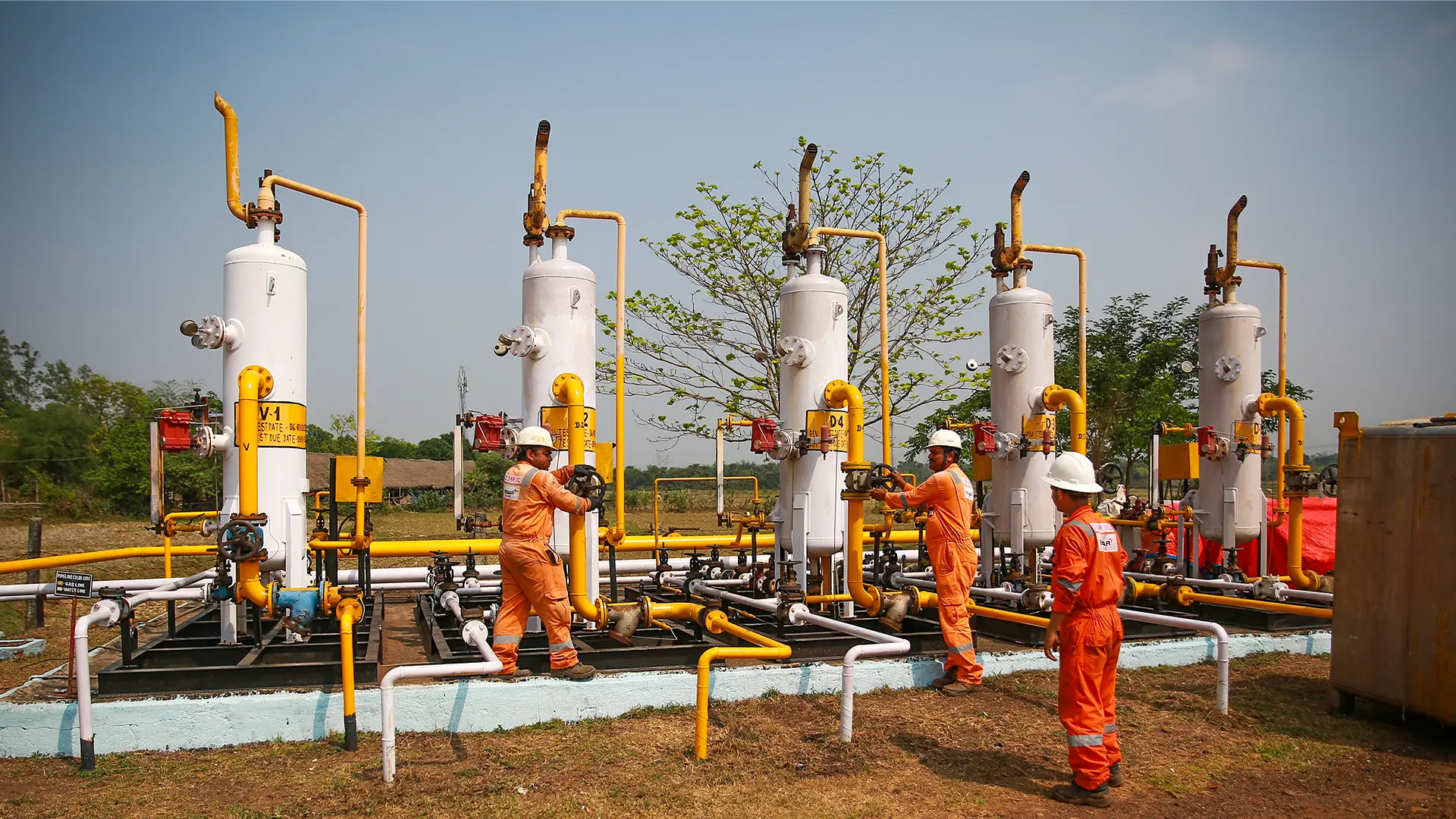
Researchers from TERI have successfully demonstrated a significant enhancement of biogenic methane in coalbed methane (CBM) wells located in the Raniganj block, India.
The process involved in-situ biostimulation, a technique that stimulates microbial activity to convert coal into methane.
Raniganj Block Results
The industrial-scale microbial stimulation job at the EOGEPL Raniganj block yielded impressive results.
Well-B saw the most dramatic increase, jumping from a baseline of 117.04 scmd to 461.38 scmd.
Well-E experienced an increase from 210.93 scmd to 385.19 scmd, while Well-C rose from 514.22 scmd to 670.22 scmd.
Scientific Analysis
Post-nutrient injection, molecular and isotopic analysis confirmed the presence of secondary microbial gas.
16s rRNA amplicon sequencing analysis revealed the impact of microbial stimulation on the indigenous microbiome of the CBM wells.
"The present study provides a framework for understanding the effects of in-situ biostimulation via nutrient amendment in a coal reservoir," according to the research paper.
Wider Implications
This study offers a framework for understanding and implementing in-situ biostimulation in coal reservoirs.
The findings could facilitate the broader application of methane enhancement strategies in various coal fields, thereby unlocking its commercial potential.
What to Watch Next
Future research will likely focus on optimizing the biostimulation process for different coal field conditions. The team plans to implement methane enhancement strategy via biostimulation on a wider range of coal fields.