
Mega-iceberg A23a turns into bright blue ‘mush’ as one of Earth’s oldest ice giants nears its end
• What happened: New satellite photos show A23a, once the world’s largest iceberg, breaking apart into streaks of blue meltwater and surrounding slush.• Why it...
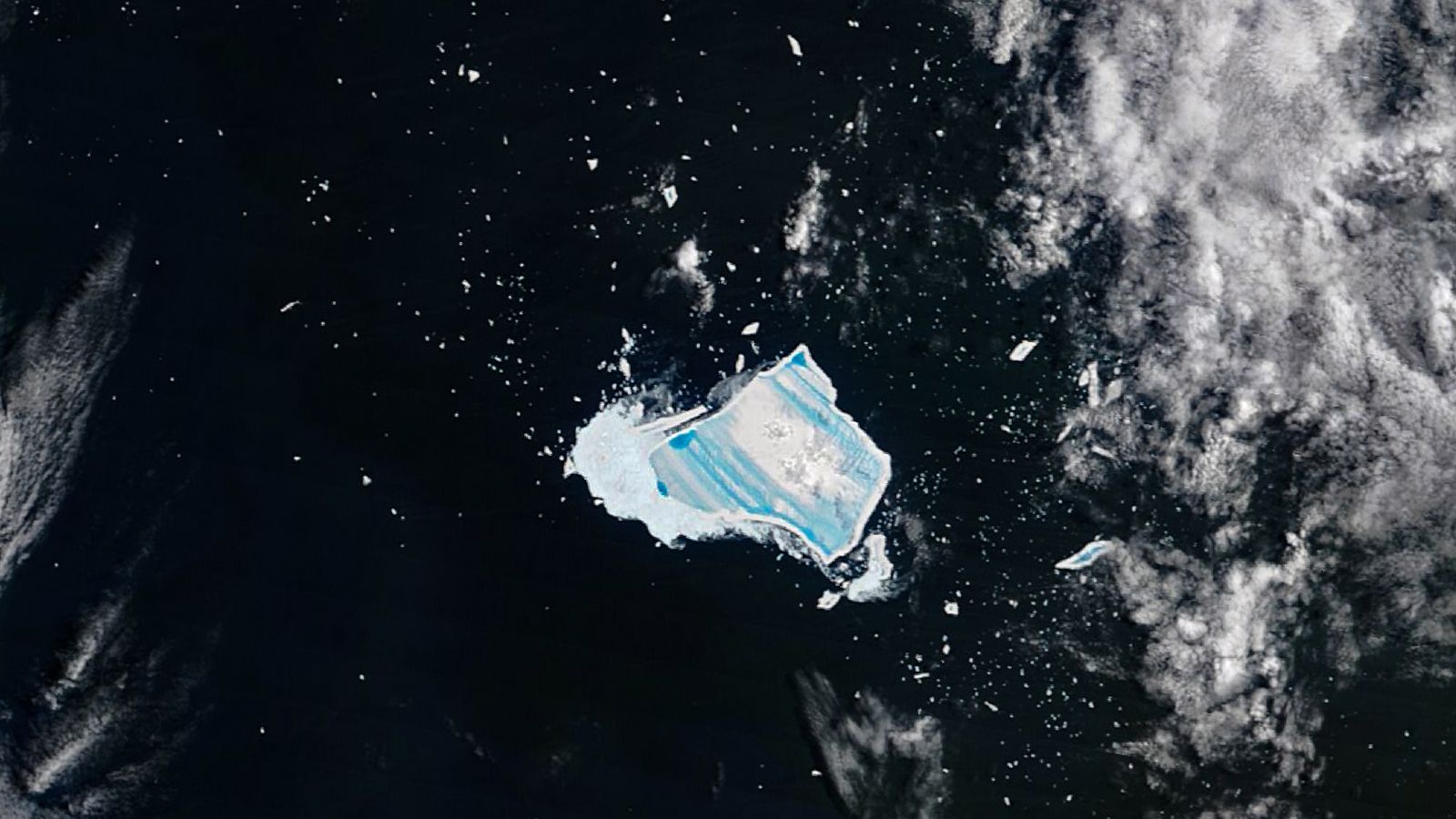
• What happened: New satellite photos show A23a, once the world’s largest iceberg, breaking apart into streaks of blue meltwater and surrounding slush.
• Why it matters now: The transformation signals the final stage of a 40-year-old iceberg, offering a rare look at how massive Antarctic ice fractures and dies in warming seas.
• What changes for people: The event serves as a visible climate marker, helping scientists better track Antarctic ice loss, sea-level dynamics, and ocean circulation.
• Who is affected: Climate scientists, polar researchers, and global agencies studying cryosphere change and ocean systems.
The colossal Antarctic iceberg A23a, once three times larger than New York City, is disintegrating into a patchwork of bright blue melt ponds and gray slush as it drifts through the South Atlantic, marking the final chapter of a rare four-decade lifespan. Fresh satellite images captured on December 26 show the megaberg stripped of its clean white surface and covered in long blue streaks that researchers say indicate structural collapse.
A rare survivor from 1986
A23a has been described by polar scientists as an Antarctic anomaly. It calved from the Filchner-Ronne Ice Shelf in 1986, then remained almost frozen in place for more than 30 years after its underwater base lodged against the seafloor. Unlike most bergs, which rapidly melt or drift out to sea, A23a barely changed in size for decades due to its proximity to the cold parent ice shelf.
The iceberg finally broke loose in 2020 and has been slowly drifting north into warmer waters. Its long, slow journey and unusual survival have made it a major research subject.
Warmer Atlantic waters finish the job
Oceanographers say the berg’s deterioration accelerated once it entered the South Atlantic, where warmer currents from South America circulate. The latest NASA images show:
• blue melt ponds aligned in striking stripes
• white ice ramparts forming around pooled water
• gray ice melange leaking around the berg’s perimeter
• hundreds of small bergs calving from its sides
Researchers told NASA that the blue streaks are a sign that meltwater is forcing open deep, ancient cracks carved long before A23a broke away from Antarctica.
Satellite images hint at rapid changes
A follow-up image from the International Space Station on December 27 shows the blue striping already fading into a more uniform pool, suggesting the breakup is ongoing and unpredictable. Scientists currently do not know how much of A23a remains intact.
Climate research value remains high
Although experts caution against treating a single iceberg as a standalone climate indicator, A23a’s final collapse is helping researchers:
• track Antarctic meltwater pathways
• observe ice fracture mechanics
• refine sea-level contribution models
• monitor Southern Ocean heat transport
The National Snow and Ice Data Center (NSIDC) now lists D15A as the world’s largest iceberg, covering about 1,200 square miles. A23a lost its title in 2025 after colliding with South Georgia, which caused significant breakage.
There is no immediate risk to shipping or coastal communities connected to A23a’s demise, but scientists note that large bergs can occasionally disrupt ecosystems, ocean circulation, and nutrient pathways as they melt.