
Mars simulation crew exits after 378 days in isolation
Four analog astronauts have completed a year-long simulated Mars mission at NASA's Johnson Space Center, offering vital insights for future human spaceflight.
The Cliff News | 2 November 2026
Four crew members have successfully emerged from an unprecedented 378-day isolation period within a simulated Mars habitat at NASA's Johnson Space Center in Houston, Texas. The endeavor, known as the Crew Health and Performance Exploration Analog (CHAPEA) mission, was designed to gather crucial data on the psychological and physiological challenges astronauts may face during extended stays on the Red Planet.
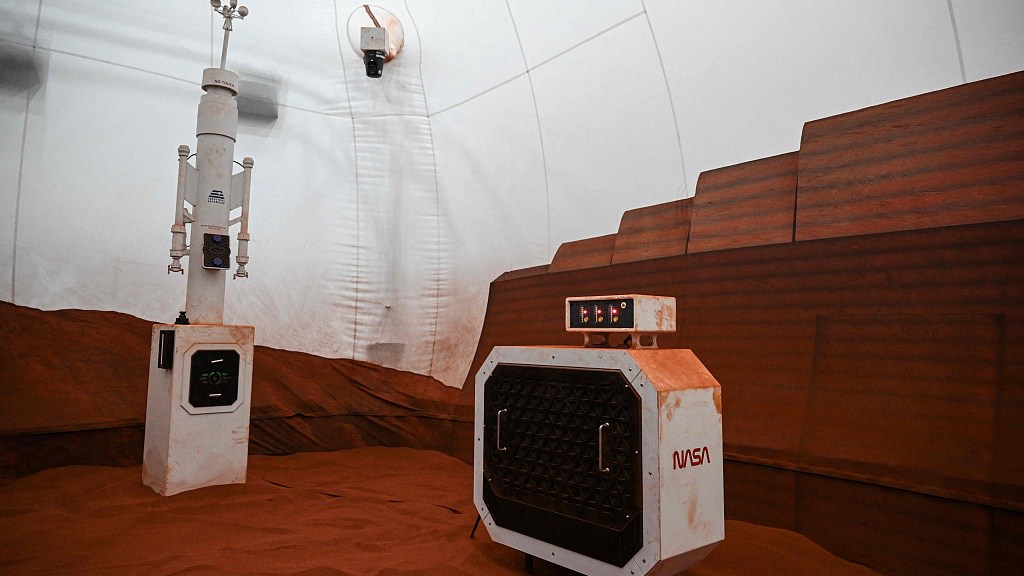
The crew entered their 158-square-meter 3D-printed habitat on October 19, 2025, embarking on a mission aimed at replicating the conditions of a future human excursion to Mars. Their activities included cultivating crops in simulated Martian soil and practicing communication with NASA officials, incorporating the inherent time delays experienced in interplanetary transmissions.
Preparing for Interplanetary Journeys
The successful completion of the CHAPEA mission marks a significant step in NASA's long-term ambitions for human exploration of Mars, with potential missions eyed for the 2030s. This follows the agency's plans to return astronauts to the Moon for the first time since 1972.
“It's been a hell of a year – analog astronauts living in captivity of our own free will,” stated Ellen Ellis, the mission's medical officer, upon exiting the habitat. Ellis emphasized the importance of such missions in maintaining American leadership in space exploration and highlighted the need to “seize the initiative, lead with science that will benefit our economy and ensure our legacy in space for our children's children.”
The CHAPEA Crew's Experience
Ellis was joined by mission commander Ross Elder, science officer Matthew Montgomery, and flight engineer James Spicer. Throughout their year in isolation, the crew undertook a variety of tasks crucial for understanding long-duration spaceflight.
Elder reflected on the significant risks associated with Mars missions but expressed optimism about achieving the goal of landing humans on the planet. “For Mars, the risks are great,” he remarked. “But through seeking understanding, strong vision and leadership, creativity, fortitude, hard work and incredible foundation, the goal of putting humans on Mars is not only achievable, but rather inevitable.”
Simulating Martian Conditions
The CHAPEA mission recreated aspects of Martian living, including the use of a simulated exterior and the critical element of communication lag. This lag, mimicking the vast distances between Earth and Mars, required the crew to develop advanced problem-solving and planning skills.
Vanessa Wyche, director of the Johnson Space Center, personally welcomed the crew as they concluded their isolation. She commended their ability to manage with limited resources, maintain their living space, and execute simulated Mars operations. Wyche specifically noted their adeptness in handling the delayed communications, stating, “These delays require patience, careful planning and greater independence – qualities that will be essential for future astronauts traveling millions of miles from home.”
Learning from Isolation
The data collected from the CHAPEA crew is expected to provide invaluable insights into how astronauts adapt to the demanding routines and psychological pressures of extended missions far from Earth. NASA aims to identify strategies to keep future astronauts healthy, productive, and connected.
This was the second iteration of the CHAPEA mission. A previous four-person crew also underwent a 378-day isolation period spanning 2023 and 2024, underscoring NASA's commitment to a phased approach in understanding the human element of deep space exploration.
Future Implications for Lunar and Martian Missions
The lessons learned from these analog missions are pivotal for NASA's immediate goals, including returning astronauts to the Moon, and ultimately, for the ambitious objective of sending humans to Mars. Wyche concluded that the experiences of the CHAPEA crew will “help pave the way for the missions – first to the moon and ‘one day, Mars.’”
The crew is scheduled to undergo a two-week period of post-mission evaluations and debriefings with NASA scientists. These sessions will delve deeper into their performance, well-being, and the effectiveness of the simulated mission protocols, further refining plans for future crewed missions beyond Earth orbit.