
Mars Scientists Propose New Way to Detect Hidden Water Using Proton Signals
A new study suggests future Mars missions could identify underground water faster by tracking albedo protons beneath the planet’s dusty surface. What happened: Researchers introduced...
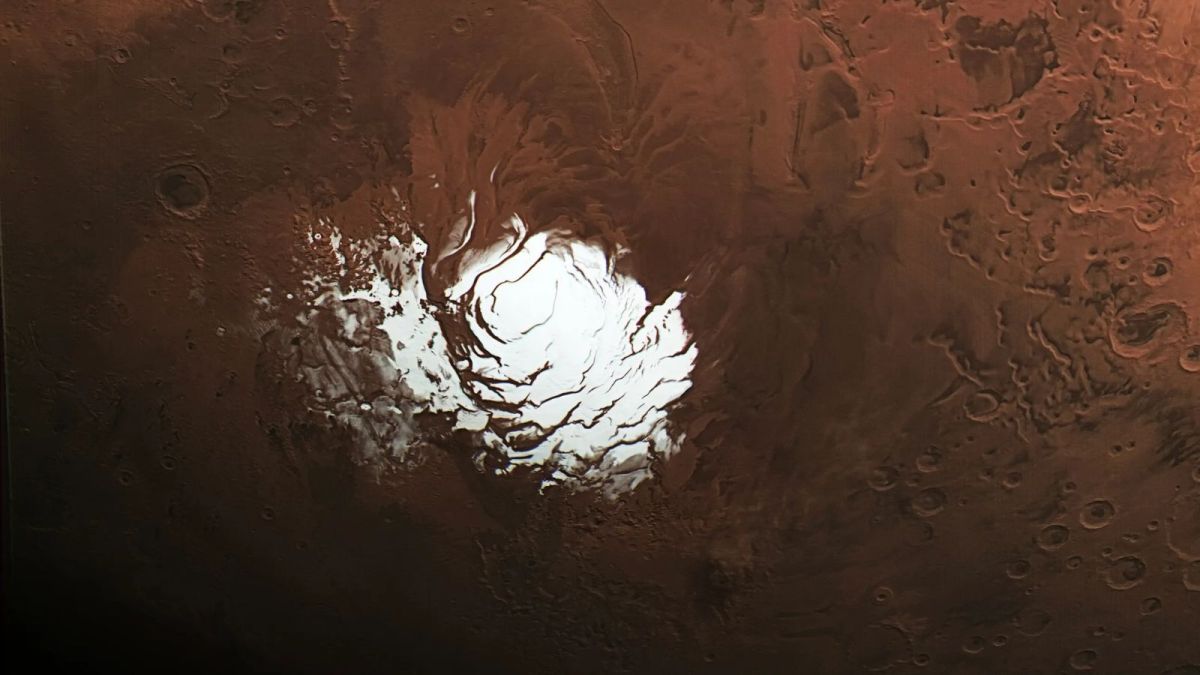
A new study suggests future Mars missions could identify underground water faster by tracking albedo protons beneath the planet’s dusty surface.
What happened:
-
Researchers introduced a method to detect near-surface water on Mars using albedo protons measured by the Radiation Assessment Detector (RAD) on NASA’s Mars Science Laboratory rover.
-
The technique targets water hidden about 3–7 cm below dust layers, a depth range rarely observed before.
Why it matters now:
-
Understanding Mars’ water reserves is key for future human missions, planetary science, and the search for past microbial life.
What changes for people:
-
Future spacecraft may include redesigned detectors that could find underground water much faster, helping mission planners choose landing and exploration sites.
Who is affected:
-
Space agencies, Mars researchers, future astronauts, and industries focused on space exploration technologies.
A new window into Mars’ hidden water
Scientists studying Martian soil are looking beyond traditional detection tools. Instead of relying only on neutron signals or surface imaging, the new approach uses protons reflected from the Martian surface — known as albedo protons — to estimate water content beneath layers of dust.
The research shows that current instruments aboard the Mars Science Laboratory can probe water just below the surface, expanding the depth range scientists can study.
Key finding: The method allows observation of water deposits roughly 3–7 cm under the soil, bridging a gap between surface measurements and deeper subsurface scans.
Why near-surface water matters
Water on Mars is more than a scientific curiosity. It shapes how scientists reconstruct the planet’s climate history and evaluate whether microbial life could have existed — or may still exist today.
For human exploration, accessible water could become a critical resource. Astronauts could potentially convert it into drinking water, oxygen, or even rocket fuel components.
Researchers argue that improving detection tools will help determine whether usable water reserves exist near future landing zones.
What the current Mars rover can — and can’t — see
The Radiation Assessment Detector (RAD), working alongside the Dynamic Albedo of Neutrons (DAN) experiment, already provides valuable radiation and soil data. But the study highlights limits in current technology.
-
RAD has so far been unable to resolve small water variations of just 2–7% in the Martian regolith.
-
Larger reservoirs — especially at higher latitudes or localized equatorial regions — may still be detectable with two to three months of measurements.
These findings suggest that while the concept works, today’s instruments were not designed primarily for this purpose.
Future detectors could change the game
The biggest breakthrough may come from future missions. Researchers simulated a new detector specifically optimized to measure albedo protons.
According to the study:
-
A redesigned system could detect about 20% changes in near-surface water within 6–16 days.
-
Larger shifts — over 40% — might be confirmed in only a few days with strong statistical confidence.
Scientists are now urging mission planners to consider adding this capability to upcoming Mars probes or even missions to other planetary bodies.
Proposed action: Future exploration missions should include dedicated albedo proton instruments to complement existing neutron-based measurements.
Multiple perspectives from the scientific community
Supporters of the method believe it offers a faster and more precise way to map shallow water layers — an area that has remained difficult to study directly.
However, some researchers note that the technique still depends heavily on long observation times and complex modeling. Until specialized detectors are launched, the approach will remain largely experimental.
Space agencies also face trade-offs: adding new instruments increases mission cost and payload weight, forcing engineers to prioritize which technologies make the final launch list.
Impact on future missions and global space strategy
If validated, the technology could reshape exploration planning. Faster water detection would help agencies:
-
Identify safer landing sites with potential resources
-
Reduce mission risk by understanding soil composition
-
Support long-term goals of sustained human presence on Mars
Beyond Mars, the same method might be adapted to explore icy moons or asteroids, expanding how scientists search for hidden water across the solar system.