
Mars Rover Finds Ancient River Delta, Boosting Life Hunt!
Perseverance rover discovers a buried river delta, hinting at past water and potential life on Mars.
Top Summary
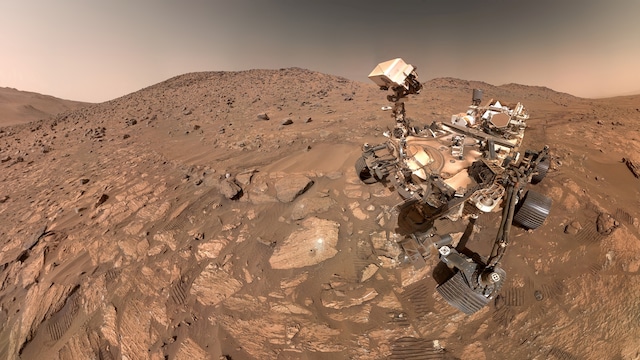
- What happened: NASA's Perseverance rover used ground-penetrating radar to uncover a buried, ancient river delta within Jezero Crater on Mars.
- Why it matters: The discovery provides significant evidence of early water flow and increases the possibility that microbial life may have once existed on Mars.
- What changes for people: This finding reinforces the idea that Mars was once habitable, furthering the push for future Mars exploration and research into extraterrestrial life.
- Who is affected: Scientists, researchers, space enthusiasts, and anyone interested in the search for life beyond Earth.
Ancient River Delta Unearthed
NASA's Perseverance rover has made a groundbreaking discovery on Mars. Using ground-penetrating radar, the rover detected the underground remains of an ancient river delta within Jezero Crater.
This provides some of the oldest evidence indicating how water once flowed on Mars. The findings significantly boost hopes of finding evidence of past microbial life.
Delving Deep into Jezero Crater
The rover explored 3.8 miles (6.1 km) of terrain within Jezero Crater. Jezero Crater is believed to have been flooded with water and home to an ancient lake basin.
Perseverance identified geological features up to 115 feet (35 meters) underground. These features included layered sediments and eroded surfaces indicative of a delta environment.
Dating the Delta
Researchers estimate the now-buried delta dates back approximately 3.7 to 4.2 billion years ago. Mars and Earth formed about 4.5 billion years ago, making this delta a relatively early feature in Martian history.
This delta predates the nearby Western Delta, which is estimated to be 3.5 to 3.7 billion years old. The rover's RIMFAX instrument allowed for three-dimensional mapping of the Martian subsurface.
The Role of Water
The mounting evidence of a wet Martian past is of great interest. Water is considered crucial for the possibility of past life on Mars.
Once, Mars possessed a thicker atmosphere and warmer climate. This allowed for liquid water to exist on its surface.
Biosignature Potential
"From the features mapped by RIMFAX, we believe that Jezero Crater hosted an ancient water-rich environment, capable of biosignature preservation that existed prior to the formation of Jezero's Western Delta,"
said UCLA planetary scientist Emily Cardarelli.
A biosignature is chemical or physical evidence indicating past or present life. River deltas on Earth concentrate sediments and create niches favorable to microbial life.
Previous Discoveries
Last year, scientists announced that a rock sample from Jezero Crater contained a potential biosignature. This rock was dated to roughly 3.2 to 3.8 billion years ago.
Scientists believe river channels spilled over the crater wall and created a lake.
Significance of RIMFAX
"It's very exciting that RIMFAX was able to provide such a detailed view of these deposits, and thus help solve the puzzle of their origin,"
said UCLA planetary scientist David Paige.
"This further cements the notion that ground-penetrating radar is indeed an extremely valuable new tool for studying planetary geology."
The Bigger Picture
Chinese scientists previously detected subsurface evidence of sandy beaches using ground-penetrating radar. These beaches may have existed on the northern plains of Mars.
"Over time, we've seen more and more evidence for liquid water on the Martian surface...Mars is diverse, and each rover mission reveals another piece of its puzzling past,"
added Cardarelli.
What to Watch Next
Scientists will continue analyzing the data collected by Perseverance to further understand the ancient Martian environment. Future missions are likely to focus on retrieving the collected rock samples for in-depth analysis back on Earth, potentially revealing more definitive evidence of past life on Mars.