
Madras High Court quashes FIR against Amit Malviya, calls Udhayanidhi’s Sanatana Dharma remarks hate speech
What happened: The Madras High Court has quashed the FIR against BJP leader Amit Malviya over his social media posts criticising Tamil Nadu Deputy Chief...
-
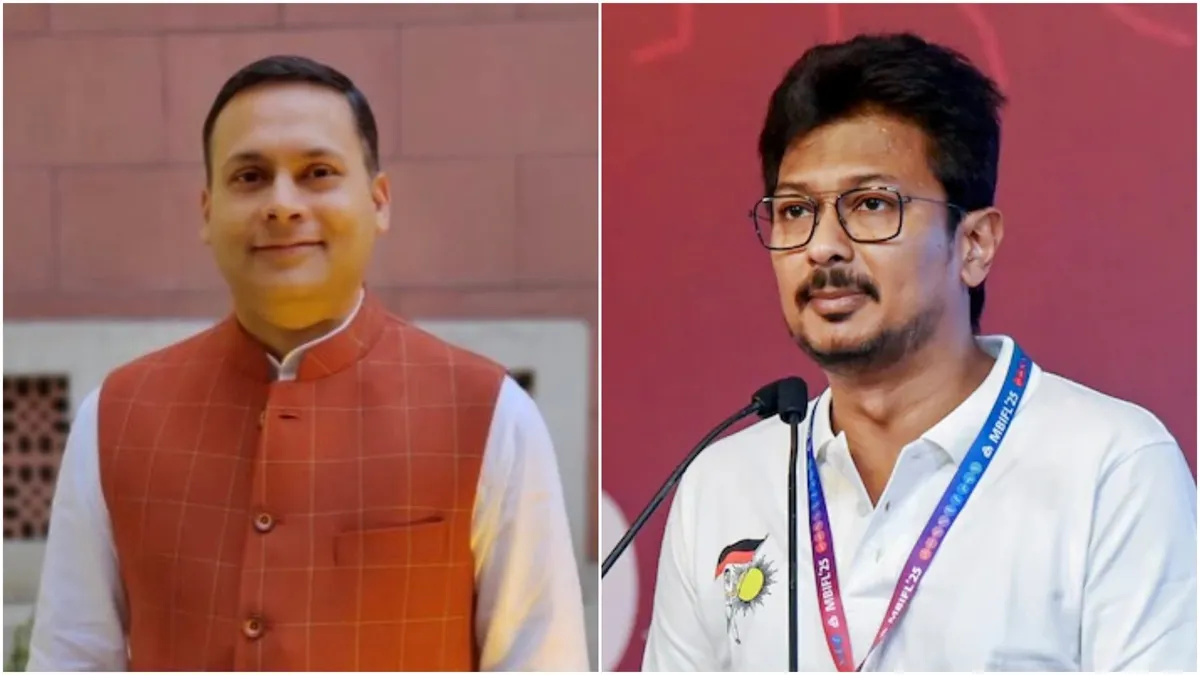
What happened: The Madras High Court has quashed the FIR against BJP leader Amit Malviya over his social media posts criticising Tamil Nadu Deputy Chief Minister Udhayanidhi Stalin’s remarks on Sanatana Dharma.
-
Why it matters now: The ruling delivers strong judicial observations on hate speech, free expression, and selective prosecution, with wider political and legal implications.
-
What changes for people: The judgment reinforces that reacting to a controversial public speech cannot automatically invite criminal action.
-
Who is affected: Political leaders, social media users, law enforcement agencies, and parties involved in ideological debates.
The Madras High Court has set aside the criminal case against Amit Malviya, ruling that continuing proceedings against him would amount to an abuse of the legal process. The case stemmed from Malviya’s posts reacting to Udhayanidhi Stalin’s 2023 speech on Sanatana Dharma.
The decision was delivered by Justice S. Srimathy on January 21, 2026.
Court criticises selective application of law
The Court noted that no criminal case had been registered against the minister who made the original speech, while action was taken against a person who reacted to it.
Underline: The Court said it was “painful” that those who initiate hate speech are left untouched while those responding face legal action.
Justice Srimathy observed that this reflected a disturbing imbalance in enforcement, with courts being forced to scrutinise responses rather than the originating remarks.
Background of the controversy
The issue traces back to a 2023 conference titled ‘Sanatana Abolition Conference’, where Udhayanidhi Stalin compared Sanatana Dharma to diseases like dengue and malaria and called for its eradication.
Following the speech:
-
Multiple cases were filed in the Madras High Court and the Supreme Court against the minister.
-
Amit Malviya shared clips of the speech online, questioning its intent and implications.
A complaint was later filed by K.A.V. Thinakaran, a district organiser of the DMK Advocate Wing, leading to an FIR against Malviya under Sections 153, 153A, and 505(1)(b) of the IPC.
Malviya’s defence accepted by the Court
Malviya argued that:
-
He had only shared content already in the public domain.
-
His posts reflected his interpretation and concern over the speech’s implications.
-
He had not called for violence, agitation, or unrest.
The Court agreed, stating that Malviya merely raised questions and sought clarification, which did not satisfy the ingredients of the charged offences.
Underline: Questioning a public speech, the Court said, cannot be criminalised in the absence of incitement.
Prosecution’s argument rejected
The prosecution claimed Malviya:
-
Distorted the speech and portrayed it as a call for genocide.
-
Used posts in multiple languages to create social unrest.
-
Triggered extreme reactions, including a controversial bounty announcement by a religious figure.
However, the Court ruled that third-party reactions cannot be attributed to Malviya, and that his posts did not advocate violence or hatred.
Strong observations on Sanatana Dharma remarks
The judgment went further, making extensive observations on the minister’s original speech.
The Court said the Tamil phrase “Sanathana Ozhippu”, meaning abolition of Sanatana Dharma, could be interpreted as:
-
Genocide,
-
Religicide, or
-
Cultural eradication.
Underline: The Court held that calling for the abolition of a belief system followed by a majority could imply eradication of its followers.
It concluded that the speech fell within the definition of hate speech, and that Malviya, as a follower of Sanatana Dharma, was a victim reacting to it, not an offender.
Observations on ideological history
The Court also referred to historical instances where Hindu symbols and practices were allegedly targeted by organisations linked to the Dravidian movement, noting that many complaints in such cases were not acted upon.
Based on this broader context, the Court said Malviya’s interpretation of the speech could not be dismissed as baseless or malicious.
Final ruling
The High Court:
-
Quashed the FIR against Amit Malviya.
-
Held that his actions did not constitute hate speech or criminal intent.
-
Allowed his petition in full.
The case was titled Amit Malviya v State and Another, cited as 2026 LiveLaw (Mad) 38.
Why this judgment matters
Legal experts say the ruling sets an important marker on:
-
Free speech and political commentary
-
Limits of criminal law in ideological debates
-
Judicial scrutiny of selective prosecutions
It is also expected to influence how hate speech complaints are assessed in politically sensitive cases.