
Justice Department Begins Epstein Files Release, but Partial Disclosure Triggers Political Backlash
Lawmakers accuse DOJ of missing statutory deadline as officials cite victim privacy and ongoing reviews The US Department of Justice (DOJ) has begun releasing a...
Lawmakers accuse DOJ of missing statutory deadline as officials cite victim privacy and ongoing reviews
The US Department of Justice (DOJ) has begun releasing a portion of its long-awaited archive of documents related to the life, criminal investigations, and prosecution decisions surrounding Jeffrey Epstein, the disgraced financier and convicted sex offender who died in federal custody in 2019.
However, the initial disclosure, made public on Friday, has fallen short of the full release mandated by Congress, sparking sharp criticism from lawmakers across party lines and raising the prospect of further legal and political action.
Partial Release Despite Legal Deadline
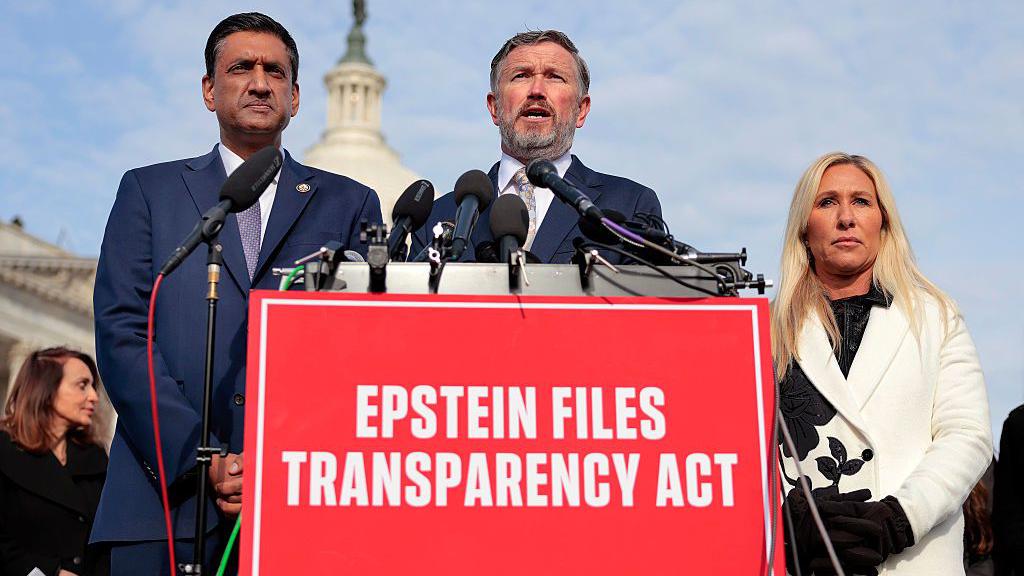
The document release follows the passage of the Epstein Files Transparency Act, approved by Congress on November 19, which required the DOJ to publish its complete, unclassified Epstein-related records within 30 days. That deadline expired this week.
Speaking earlier on Friday, Deputy Attorney General Todd Blanche acknowledged that the release would be incomplete, citing the need to protect the identities and privacy of Epstein’s victims.
Blanche said the DOJ plans to publish additional material in stages over the coming weeks, indicating that several hundred thousand documents were released initially, with hundreds of thousands more to follow after further review.
Congressional Anger and Oversight Threats
The staggered release immediately drew criticism from members of Congress who authored and supported the legislation.
Democratic Representative Ro Khanna, one of the bill’s sponsors, said the Justice Department had failed to comply fully with the law.
He argued that while some redactions were legally permissible, the department owed Congress and the public a clear explanation for:
-
Why all documents were not released by the deadline
-
The legal basis for each redaction
-
When the remaining records will be made public
Khanna warned that lawmakers could pursue contempt proceedings, referrals for prosecution, impeachment recommendations, or civil litigation if the DOJ does not comply.
Republican Representative Thomas Massie, the bill’s co-sponsor, also raised concerns, previously cautioning that the absence of specific investigative summaries—known as FBI FD-302 interview forms—would indicate incomplete disclosure.
Technical and Transparency Complaints
Public reaction to the release was swift. Users reported:
-
Difficulty accessing the DOJ website due to queues
-
A search tool that failed to return basic results
-
Documents heavily obscured by blacked-out sections
Despite the DOJ advertising access to a “full Epstein library,” critics said much of the content appeared to contain little new information, with extensive redactions even in materials believed to have already entered the public record through prior court proceedings.
DOJ’s Legal Justification
Under the Epstein Files Transparency Act, the government is permitted to withhold or redact information in limited circumstances, including:
-
Details that could compromise ongoing investigations
-
Information that could identify victims or survivors
-
Explicit or graphic material
However, the law also requires that every redaction be justified in writing, a requirement lawmakers say has not yet been met.
Bipartisan Frustration
The limited release prompted frustration even among Republicans typically aligned with the administration. Representative Marjorie Taylor Greene publicly demanded full compliance, stating that the law clearly requires the complete release of unclassified materials.
The Democratic Party’s official account also criticized the DOJ, highlighting Blanche’s admission that the deadline would not be met.
A Case With Deep Public Sensitivity
The Epstein case remains one of the most scrutinized criminal scandals in modern US history. Epstein was accused by hundreds of women, many of whom say they were minors at the time, of sexual abuse and trafficking over several decades.
His 2008 plea deal in Florida—widely criticized as overly lenient—sparked years of legal challenges and public outrage. Epstein’s death in a New York jail while awaiting federal trial further intensified suspicion and distrust surrounding the case.
Public interest has also been fueled by Epstein’s connections to powerful figures across business, academia, and politics. While association alone does not imply wrongdoing, critics have long demanded transparency around how prosecutorial decisions were made.
Political Complications for the White House
The Epstein files have also carried political implications for former President Donald Trump, whose administration has faced criticism over perceived inconsistencies in messaging about the case.
While Trump has denied any close relationship with Epstein and rejected allegations of wrongdoing, his name—like those of many public figures—appears in Epstein-related records. Trump’s aides have insisted that such references do not indicate criminal conduct.
Despite past rhetoric dismissing Epstein-related scrutiny, Trump publicly supported the transparency legislation in November, urging Republicans to vote for it. The bill passed with overwhelming bipartisan support, including a near-unanimous vote in the House and unanimous approval in the Senate.
What Happens Next
The DOJ has pledged to continue releasing documents in phases over the coming weeks. Lawmakers, however, have made clear that patience is limited.
As congressional oversight intensifies, the unfolding dispute underscores a broader tension between government transparency, legal accountability, and survivor protection—a balance that remains at the heart of the Epstein files debate.
Whether the Justice Department’s staggered approach will satisfy the law—or provoke further confrontation—remains to be seen.