
Jupiter’s Early Growth May Have Shielded Earth Before It Existed
New research suggests that Jupiter, the solar system’s largest planet, may have played a crucial role in protecting the material that eventually formed Earth and...
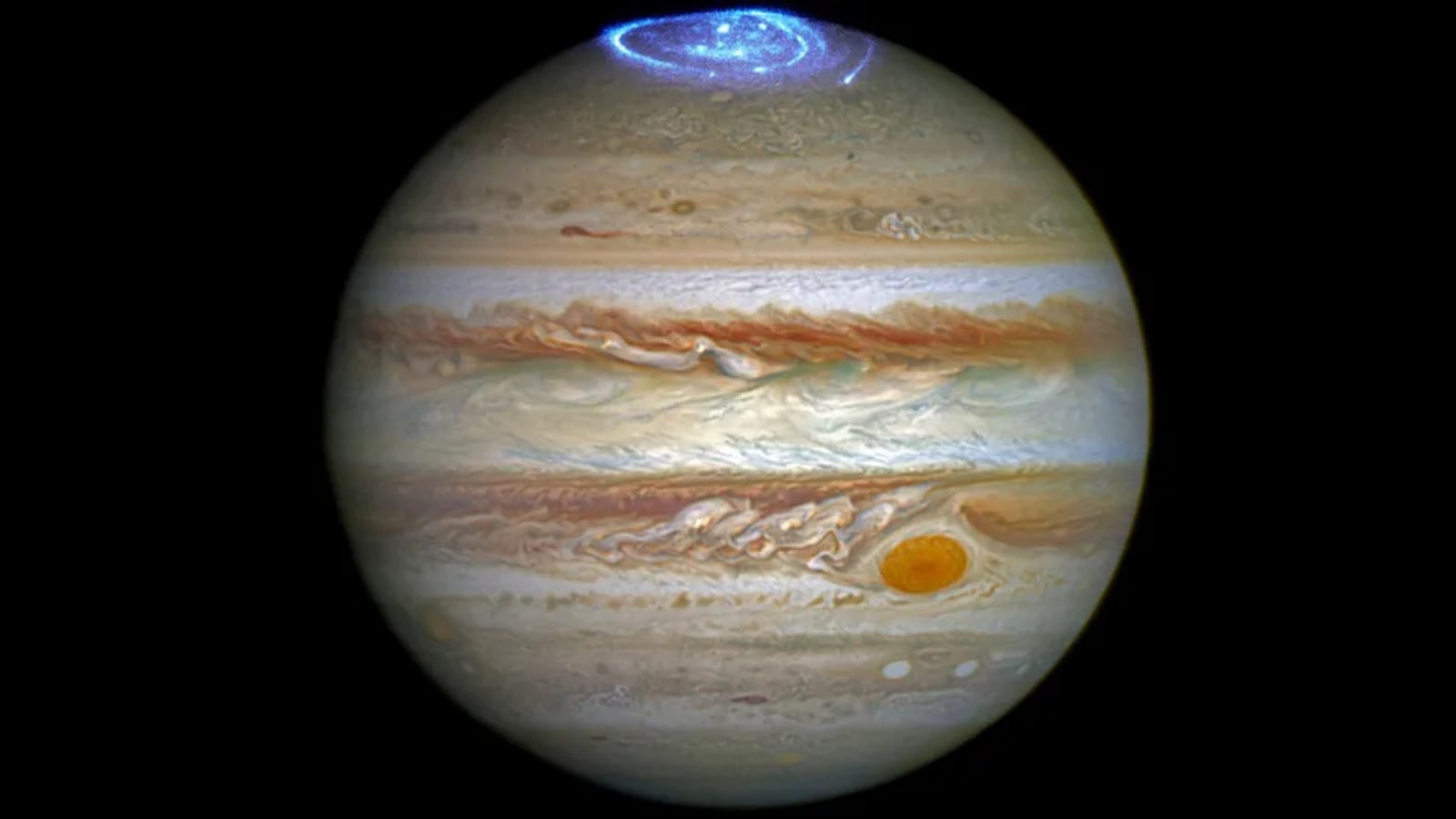
New research suggests that Jupiter, the solar system’s largest planet, may have played a crucial role in protecting the material that eventually formed Earth and its neighboring planets. Scientists at Rice University report that Jupiter’s early formation acted as a barrier, blocking the inward flow of gas and dust that could have otherwise fallen into the Sun.
A Giant Protector in the Early Solar System
According to the study, as Jupiter grew, its strong gravitational influence disrupted the movement of gas and dust within the protoplanetary disk. By halting this inward drift, Jupiter ensured that sufficient material remained in the inner solar system, enabling the formation of rocky planets like Earth, Venus, and Mars.
“This work provides compelling evidence that Jupiter didn’t just dominate the outer solar system—it actively shaped the environment where terrestrial planets could form,” said one of the study’s lead researchers.
Shaping the Solar System’s Architecture
The research also indicates that Jupiter’s gravity created rings and gaps in the solar disk, influencing not just the formation of planets, but also their timing and locations. These structures likely guided how rocky bodies coalesced, contributing to the solar system’s current layout.
The findings underscore how giant planets can play protective and organizing roles in planetary systems, a principle that may also help astronomers understand the formation of exoplanetary systems around other stars.