
James Webb Telescope May Have Found Signs of the Universe’s First Stars
Astronomers may be closer than ever to identifying the universe’s first generation of stars, thanks to a new discovery made with the James Webb Space...
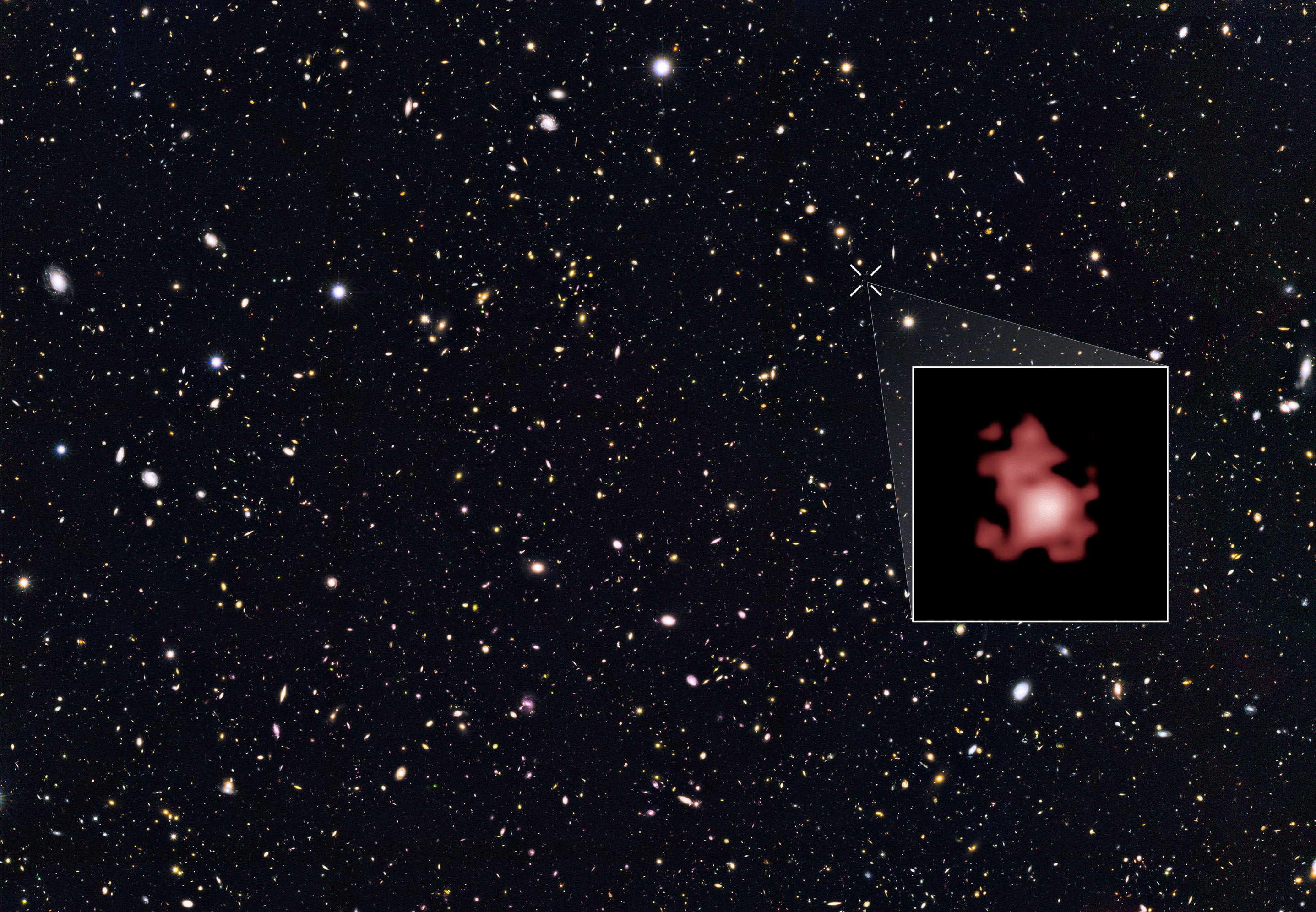
Astronomers may be closer than ever to identifying the universe’s first generation of stars, thanks to a new discovery made with the James Webb Space Telescope (JWST).
A newly observed star system, LAP1-B, located about 13 billion light-years away, appears to exhibit all the signatures expected from the long-theorised Population III stars — the very first stars formed after the Big Bang.
A Glimpse Into the Cosmic Dawn
The light from LAP1-B was emitted when the universe was just 800 million years old, offering a rare glimpse into the cosmic dawn. The system lies within a small dark matter halo, a key structural hallmark predicted by early star formation models.
Why LAP1-B Stands Out
According to researchers, LAP1-B is extraordinary for its combination of traits:
-
It resides in a tiny halo.
-
It possesses immense stellar mass.
-
It appears as part of a compact cluster, not an isolated body.
Earlier candidates for Population III systems showed only one or two of these features, making LAP1-B the strongest candidate yet for containing the universe’s first stars.
The Webb telescope’s unprecedented sensitivity, combined with gravitational lensing by the galaxy cluster MACS J0416, enabled astronomers to magnify and study the faint, ancient light from this primordial system.
Chemical Fingerprint of the First Stars
Spectral data revealed almost no heavy elements—or “metals,” as astronomers call them. This absence matches predictions for Population III stars, which formed from pure hydrogen and helium before heavier elements were created through fusion and supernovae.
“These stars mark the universe’s first steps toward chemical complexity,” researchers said, noting that LAP1-B could be the most convincing evidence yet that such stars truly existed.