
Interstellar Comet 3I/ATLAS: High Methanol Levels Baffle Scientists
3I/ATLAS shows unusually high methanol, offering clues about planet formation.
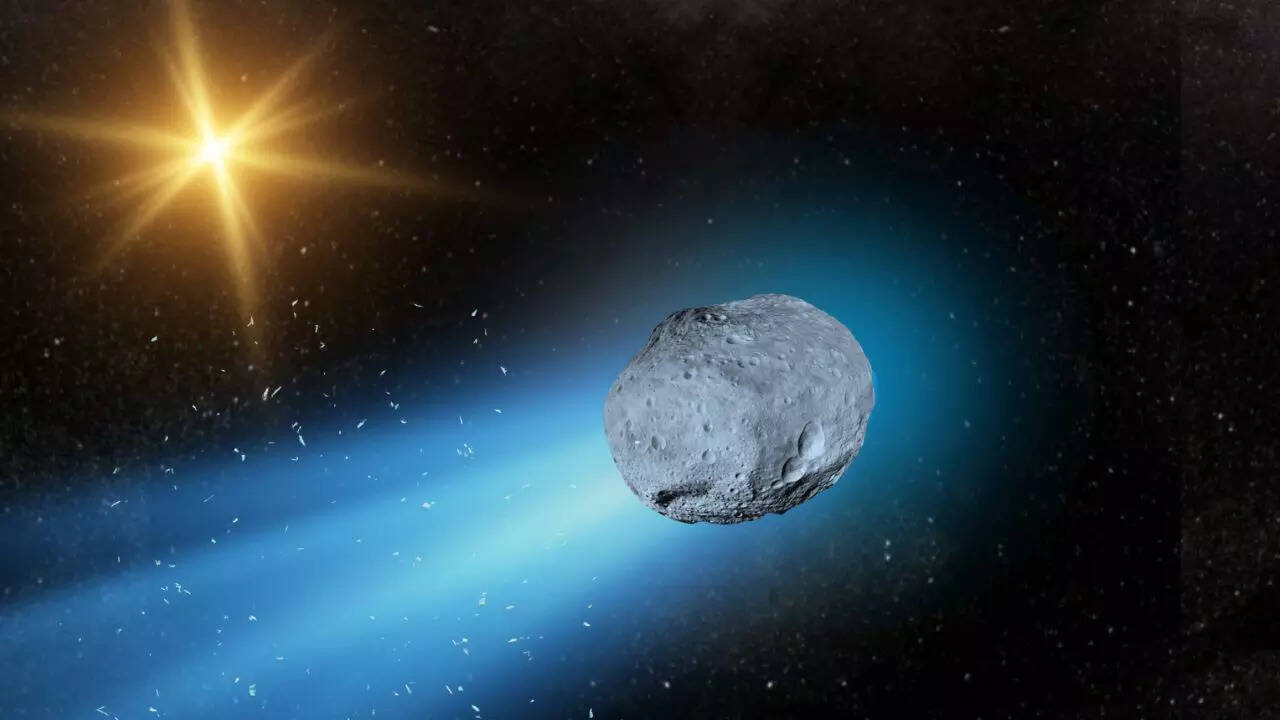
Top Summary
- What happened: Astronomers discovered that the interstellar comet 3I/ATLAS has significantly higher levels of methanol compared to comets in our solar system.
- Why it matters: This unique chemical composition provides a "fingerprint" of the planetary system where 3I/ATLAS originated, offering insight into planet and icy body formation around other stars.
- What changes for people: It expands our understanding of the diverse conditions under which planetary systems can form beyond our own.
- Who is affected: Astronomers, astrophysicists, and anyone interested in space exploration and the origins of planetary systems.
A Comet From Another Star System
The interstellar comet 3I/ATLAS is revealing secrets about planetary formation far beyond our solar system.
Observations from the Atacama Large Millimeter/submillimeter Array (ALMA) in Chile indicate unusually high levels of methanol.
This discovery offers valuable clues about the conditions in the comet's birthplace.
Unique Chemical Composition
The abundance of methanol in 3I/ATLAS, relative to hydrogen cyanide, is significantly higher than in comets from our solar system.
This suggests 3I/ATLAS formed in a planetary system with colder temperatures or a different chemical makeup.
Methanol forms on icy dust grains in interstellar clouds and becomes incorporated into comets during planet formation.
'A Fingerprint From Another Solar System'
Nathan Roth, lead author of the study and a professor at American University, compares observing 3I/ATLAS to taking a fingerprint.
"Observing 3I/ATLAS is like taking a fingerprint from another solar system. The details reveal what it's made of, and it's bursting with methanol in a way we just don't usually see in comets in our own solar system."
According to Space.com, the unusually high methanol levels make it a valuable chemical fingerprint.
Tracking 3I/ATLAS
Discovered in July 2025 by the Asteroid Terrestrial-impact Last Alert System (ATLAS), 3I/ATLAS is only the third known interstellar object to visit our solar system.
Previous interstellar visitors include 'Oumuamua in 2017 and 2I/Borisov in 2019.
Telescopes like Hubble and James Webb have been monitoring 3I/ATLAS, observing its coma and tail.
Methanol vs. Hydrogen Cyanide
ALMA observations revealed that hydrogen cyanide streams directly from the nucleus.
Methanol is released from the nucleus and icy grains in the coma, acting like miniature comets.
This behavior has never before been mapped in an interstellar object.
Natural Origins
Despite online speculation, 3I/ATLAS's comet-like tail, gas jets, and molecular composition suggest it's a natural icy body.
What to Watch Next
Scientists will continue to analyze data collected from 3I/ATLAS to further understand the conditions of its origin and to compare its composition to other interstellar objects. Future observations could reveal even more about the diversity of planetary systems beyond our own.