
Inside Antarctica’s ‘Doomsday Glacier’: Scientists Drop Camera 3,300 Feet Into Thwaites Ice Borehole
A deep-drilling mission inside one of Earth’s most unstable glaciers captured rare footage — even as extreme conditions forced researchers to cut the expedition short....
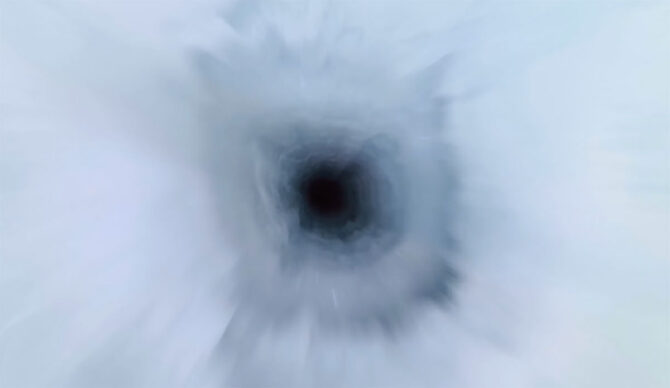
A deep-drilling mission inside one of Earth’s most unstable glaciers captured rare footage — even as extreme conditions forced researchers to cut the expedition short.
What happened:
-
Scientists from the British Antarctic Survey and Korea Polar Research Institute drilled a 3,300-foot borehole into Antarctica’s Thwaites Glacier and lowered a camera to study hidden ice layers and warm ocean water below.
Why it matters now:
-
Thwaites Glacier holds enough ice to raise global sea levels by 2 to 10 feet, making it one of the most closely watched climate hotspots on Earth.
What changes for people:
-
New data could improve sea-level forecasts, helping coastal cities and governments prepare for future flooding risks.
Who is affected:
-
Coastal communities worldwide, climate researchers, polar missions, and policymakers planning climate adaptation strategies.
A risky mission inside the world’s most fragile glacier
Often called the “Doomsday Glacier,” Antarctica’s Thwaites Glacier has become a symbol of accelerating climate risk. Stretching roughly 80 miles wide, the massive ice sheet acts like a barrier holding back other glaciers behind it.
To better understand what’s happening beneath the ice, researchers drilled deep into the glacier using heated water. The team then dropped a camera into the narrow shaft — capturing views no one had seen before.
Scientists observed layered ice structures, hidden cavities, and unusual formations that may explain how warm ocean water is melting the glacier from below.
Why Thwaites Glacier worries scientists
Thwaites isn’t just another melting glacier. Experts say it could trigger a chain reaction across West Antarctica if it weakens too quickly.
A previous NASA analysis identified a huge cavity forming underneath the glacier — nearly two-thirds the size of Manhattan and almost 1,000 feet tall. That discovery intensified fears that the ice sheet could be less stable than previously believed.
Glaciologist Christine Dow described the region as one of the most unstable parts of Antarctica, warning that the speed of change may be underestimated — a scenario that could threaten coastal populations globally.
First-ever attempt to measure water beneath the ice
Until now, scientists had struggled to measure the temperature of water flowing under Thwaites. The drilling operation aimed to change that.
Using water heated to 176°F, the team created a borehole more than 3,000 feet deep. The camera footage revealed complex ice layers and tunnel-like pockets that looked almost like frozen caves.
These observations may help explain why melting appears to be happening from below rather than just at the surface — a key factor in predicting future ice loss.
Extreme Antarctic conditions cut the mission short
Despite early success, the expedition faced major challenges. West Antarctica’s harsh environment proved too unpredictable for long-term equipment deployment.
The glacier itself shifts by up to 30 feet per day, causing the borehole to tilt. Sections of the hole repeatedly froze shut, and worsening weather forced the research vessel to leave earlier than planned.
Although the team couldn’t complete every measurement, researchers say the footage and data gathered still represent an important scientific milestone.
Multiple perspectives: breakthrough or early setback?
Some climate scientists see the mission as a breakthrough because it offers a rare glimpse into the hidden world beneath a critical glacier. Visual data from deep inside the ice could reshape how scientists model future sea-level rise.
Others emphasize that the shortened mission highlights the difficulty of studying extreme polar environments. Without longer monitoring, it remains hard to quantify exactly how quickly the glacier is weakening.
Researchers involved in the project say failure is often part of exploration — and that future missions will build on what they learned.
Global impact: climate risk, governance, and future exploration
Understanding Thwaites Glacier is more than an academic exercise. Governments worldwide rely on accurate projections to plan infrastructure, disaster response, and long-term climate policy.
If the glacier destabilizes, rising seas could reshape coastlines, disrupt economies, and increase pressure on urban planning. International collaboration — including polar research partnerships — is becoming increasingly important as nations race to understand Antarctic change.
Scientists are already planning to return with improved technology designed to withstand shifting ice and extreme cold.