
IndiGo Resumes Some Saudi Flights Amid Gulf Tensions
IndiGo has resumed select flights to Jeddah and Madinah while continuing cancellations to Riyadh and Dammam, citing security assessments in the Gulf region.
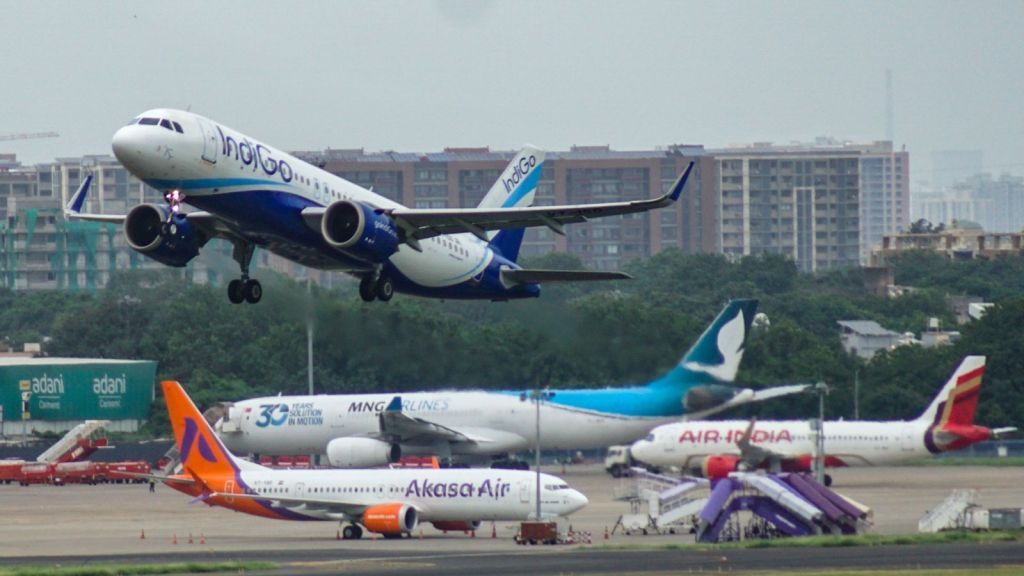
The Cliff News | 28 November 2026
Indian airline IndiGo has announced the resumption of some flights connecting to Saudi Arabian cities, amidst ongoing security concerns in the Gulf region. The airline will reinstate select services to Jeddah and Madinah, while flights to Riyadh and Dammam remain suspended until December 7, inclusive.
The decision to resume partial services was made following a thorough assessment of the evolving situation and operational considerations. IndiGo is actively communicating with affected passengers, utilizing the contact details provided at the time of booking to inform them of the changes. The Indian embassy in Riyadh has also disseminated this advisory, emphasizing the continued suspension of flights to the capital and Dammam.
Heightened Security Situation in Saudi Arabia
This development comes in the wake of an intensification of fighting between Saudi-led forces and Yemen's Houthi rebels, which has been escalating since July. This week saw a significant Houthi attack on an Aramco oil refinery in Saudi Arabia's Jazan. The overnight strike resulted in the death of a Nepali worker and caused a temporary halt to some refinery operations.
Just a day prior, the Houthis claimed responsibility for a strike on the Ras Tanura refinery, the kingdom's largest oil processing facility. Additionally, a drone strike targeted a tower in Riyadh that houses the Public Investment Fund, injuring 11 people. These incidents underscore the volatile security landscape in the region.
The Saudi-led coalition reported intercepting a Houthi drone heading towards Riyadh on Friday. Shortly after, Saudi Civil Defence issued and then quickly rescinded danger alerts in Al-Kharj and the Eastern Province, indicating a rapidly changing threat assessment. A Houthi military spokesman claimed that Saudi Arabia conducted 104 air and missile strikes across Yemen within a 24-hour period, a claim that could not be independently verified.
Regional Diplomatic Engagements
In parallel, Pakistan, Turkiye, and Saudi Arabia convened on Friday to review their Mecca defense pact. The discussions focused on strengthening collective defense commitments in light of the escalating regional instability. This multilateral engagement highlights a unified approach to addressing the growing security challenges.
Italian Technicians Killed in Kuwait Attack
Separately, Italian Foreign Minister Antonio Tajani confirmed that investigations by Kuwaiti authorities have established that the drone used in an attack on Thursday was manufactured in Iran. The attack tragically killed two Italian technicians employed by the company Rheinmetall. Iran has denied launching the drone from its territory and has proposed joining a joint commission of inquiry with Italy and Kuwait.
Iran's embassy in Rome described the incident as a "false flag" operation. In response to the attack, Kuwait summoned Iran’s ambassador. The United Kingdom, Austria, Belgium, Greece, and Cyprus have all condemned the drone strike, reflecting widespread international concern.
Iran-US Standoff and Strait of Hormuz Impact
The broader geopolitical tensions are significantly impacting maritime trade, particularly around the Strait of Hormuz, a critical chokepoint for global oil transport. The United States and Iran remain locked in a standoff in this vital waterway.
US Central Command reported disabling the cargo ship M/V Pacific Archer in the Gulf of Oman on Thursday. The vessel allegedly ignored warnings while attempting to evade an American naval blockade on Iran. Fortunately, no crew members on board were injured. The US states that since implementing the blockade in April, it has redirected 158 ships and disabled six.
Iran, however, claims that two oil tankers exploded after striking sea mines within and near the strait. Its navy chief has asserted that Iranian forces are working to break the US blockade, a claim that the US has dismissed as "fabricated." The ongoing maritime tension poses a significant risk to global energy supplies.
The pressure from these geopolitical events is also being felt within Iran. Reports indicate a sharp decline in gas supply to petrochemical plants, with some units slated for shutdown within 72 hours to conserve fuel for winter heating. Meanwhile, international oil prices reflect the uncertainty, with Brent crude trading near $96 a barrel.