
India's Vanishing Stars: Light Pollution Erases Night Sky, Dark Sky Reserves Offer Hope
Light pollution is erasing India's night sky, but dark sky reserves offer a glimpse of what's been lost.
Top Summary
- What happened: Light pollution in Indian cities is drastically reducing the visibility of stars, with the night sky becoming increasingly bright.
- Why it matters: Loss of the night sky impacts astronomy education, tourism potential, and cultural connection to the cosmos.
- What changes for people: Urban dwellers are increasingly unable to see the Milky Way, requiring travel to dark sky locations for stargazing.
- Who is affected: Astronomy students, stargazers, and future generations who may never experience a truly dark night sky are negatively affected.
The Disappearing Night
For many Indians, a sky full of stars is now a rare sight, requiring a blackout to produce the faintest glimpses. What was once common is now an exception. The increasing light pollution obscures the natural wonder of the night sky. This impacts not just casual observers, but also serious students of astronomy.
Aniket Sule, Associate Professor at TIFR-HBCSE in Mumbai, recalls a time when the Milky Way cast shadows on the ground in his childhood village. Now, that same sky looks like Mumbai: a flat, orange haze. "It is deeply saddening," says Dr. Sule, highlighting what our kids have lost.
Measuring the Darkness
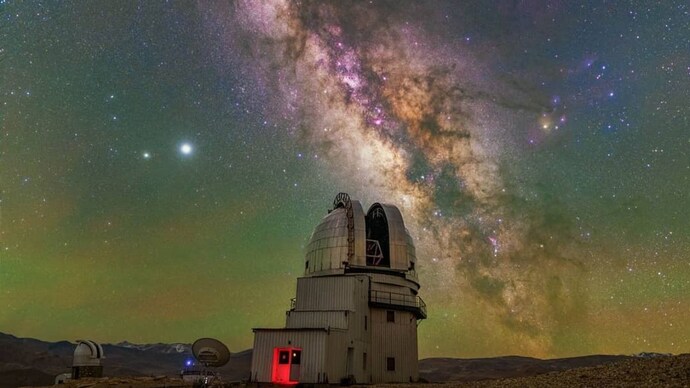
Astronomers use the Bortle scale to measure the darkness of the night sky, ranging from 1 (darkest) to 9 (brightest). Hanle scores 1, offering stunning views of galaxies millions of light years away. Delhi scores 9, representing the worst light pollution.
Mumbai, where India trains its future astronomers, scores an 8 on the Bortle Scale. This highlights the challenge faced by educators. Between these numbers lies what India stands to lose: the ability to see and recognize the stars.
Dark Sky Initiatives
In December 2022, Hanle was designated India’s first Dark Sky Reserve, protecting a 22-kilometre radius around the Indian Astronomical Observatory. This is a collaboration between the Union Territory of Ladakh, the Ladakh Autonomous Hill Development Council, and the Indian Institute of Astrophysics.
On January 11, 2024, the Pench Tiger Reserve in Maharashtra became India’s first International Dark Sky Park, certified by the International Dark-Sky Association. A dark sky site has also been recently inaugurated in Tamil Nadu. These are positive steps, but challenges remain outside designated areas.
Delhi's Dimming Skies
Sneh Kesari, Director of AstroPhile Education Services, notes the decline of Delhi's night sky. He organizes stargazing excursions to escape the orange glow of the capital.
"From Delhi, a magnitude 0 or +1 star is visible," Kesari states. "Ideally, from cities across Europe and the US, a +4 star is easily visible."
The Global Picture
A study in the journal Science found that the average night sky is brightening by 9.6% every year between 2011 and 2022. At this rate, the brightness of the night sky is doubling every eight years. India, with its rapid development, is contributing to this trend.
Simple Solutions, Unheeded
Dr. Sule emphasizes that the problem isn't just the type of bulb, but the angle of street lights. Indian fixtures often direct light upwards, creating the orange haze.
He suggests a simple fix: adjusting the angle and adding a downward shade. This would light the road without polluting the sky. However, no Indian regulation mandates this.
The Cost to Education
TIFR-HBCSE in Mumbai, the center for India's Astronomy Olympiad program, suffers from light pollution. Dr. Sule asks, "How do we train students to use telescopes and identify constellations if we don't see enough stars from our location?"
- Hanle Dark Sky Reserve trained 25 local youths as Astronomy Ambassadors in 2024.
- Nearly 10,000 visitors came to Hanle Dark Sky Reserve in 2024.
What to Watch Next
Future regulations on outdoor lighting could significantly reduce light pollution. The expansion of Dark Sky Reserves and Parks across India will be crucial to preserving and promoting access to the natural night sky.