
India’s App-Based Workers Stage New Year’s Eve Log-Out, Marking a Turning Point in the Gig Economy Debate
On New Year’s Eve — traditionally one of the busiest and most profitable days for app-based delivery and ride-hailing platforms — tens of thousands of...
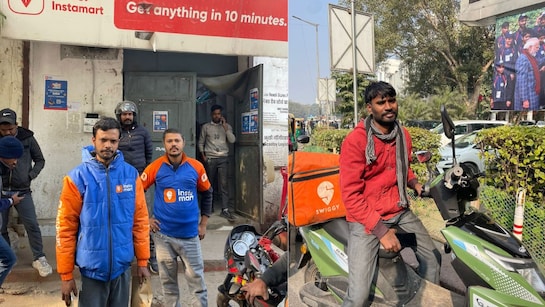
On New Year’s Eve — traditionally one of the busiest and most profitable days for app-based delivery and ride-hailing platforms — tens of thousands of gig workers across India chose to log out instead of logging on. For a workforce dependent on daily earnings and burdened by rising costs and debt, the decision to forgo peak-day income was not symbolic. It was a calculated act of protest that has brought renewed focus on the conditions underpinning India’s rapidly expanding platform economy.
The coordinated action, organised by unions and worker collectives, signals a growing willingness among platform workers to challenge business models they say prioritise speed and scale over safety, income security, and dignity.
Why the Strike Matters
App-based platforms have become deeply embedded in urban India, reshaping how people commute, eat, and shop. But behind the promise of convenience lies a workforce that operates without many of the protections enjoyed by formal employees. The New Year’s Eve log-out is significant because it shows that even in a highly fragmented, algorithm-driven labour market, collective action is possible — and potentially disruptive.
Union leaders say the strike reflects years of unresolved grievances, including falling per-task pay, long working hours, opaque algorithmic decisions, and sudden account deactivations that can instantly cut off a worker’s livelihood.
“This is about survival, not just protest,” said Shaik Salauddin, founder of the Telangana Gig and Platform Workers Union and general secretary of the Indian Federation of App-Based Transport Workers, in public remarks following the strike. He argued that platforms exert intense pressure through ratings, targets, and penalties, while workers bear the risks of accidents, health issues, and fluctuating demand.
A Global Shift Toward Regulation
The Indian protests come amid a broader international push to rein in platform companies. Over the past year, governments and courts across regions have moved to strengthen worker protections:
-
United States: In December, the New York City Council passed legislation requiring due process before app-based workers can be deactivated, with an overwhelming majority, making the law veto-proof, according to council records.
-
Mexico: The federal government approved reforms that classify most platform workers as employees, granting them access to minimum wages, paid leave, and social security benefits, as outlined in official government releases.
-
Latin America: Colombia has moved toward employee classification based on the level of control platforms exercise, while Brazil’s Supreme Court, even while leaning toward contractor status, affirmed workers’ rights to health and social security and awarded damages in cases of unjust termination.
-
Europe: Authorities in the Netherlands have reprimanded Uber following a complaint by the International Alliance of App-based Transport Workers, urging higher standards of transparency and governance.
Labour experts note that these developments reflect a growing consensus: regardless of how contracts are worded, platform workers perform labour that deserves basic protections under international labour standards set by the International Labour Organization (ILO).
India’s Lag and the Reality on the Ground
In contrast, India’s regulatory framework remains limited. Platform workers are referenced in the Social Security Code, but unions argue that the provisions lack enforceable standards on wages, working hours, grievance redressal, or algorithmic accountability.
Independent research underscores the scale of the problem. A large survey conducted by the People’s Association in Grassroots Action and Movement (PAIGAM), supported by the University of Pennsylvania, covering more than 10,000 app-based workers, found that a majority worked over 10 hours a day, earned less than ₹15,000 a month, and reported widespread physical and mental health issues. The study also highlighted concerns over “10-minute delivery” models, which many workers described as unsafe.
Urban planners and labour economists warn that speed-driven delivery targets effectively turn cities into high-risk workplaces, exposing workers to traffic hazards, extreme weather, and pollution, while platforms retain control over pricing and work allocation.
Platforms Push Back
Workers involved in the strike reported a mix of pressure and incentives from companies. According to union statements, some workers faced heightened surveillance, temporary account suspensions, or police questioning, while others were offered higher per-order payouts and promotional bonuses to return online. Platforms have not publicly acknowledged these allegations, but industry representatives have previously maintained that incentive-based pay allows flexibility and higher earnings during peak demand.
Market analysts noted that shares of some listed platform companies dipped following earlier holiday-season log-outs, reflecting investor sensitivity to labour disruptions.
Beyond Companies: A Challenge to the State
The protest also places pressure on governments. Labour advocates argue that without clearer rules on pay, safety, and data transparency, state policies risk favouring platform growth over worker welfare.
“This is no longer just an industrial dispute; it’s a policy question,” said a labour law expert at a Delhi-based think tank, speaking on background. “The state has to decide whether digital innovation will be built on precarious work or regulated employment.”
A New Form of Collective Action
For years, strikes were seen as relics of factory-era labour movements. The New Year’s Eve log-out challenges that assumption. In the digital economy, logging out has emerged as a potent tool — one that directly affects service availability, consumer experience, and company valuations.
As 2026 begins, the strike stands as both a warning and a signal. It warns that unregulated platform capitalism risks deepening inequality, and it signals that India’s gig workers are increasingly organised, politically aware, and prepared to demand a future of work that values dignity over disposability.