
Indian Astronomers Confirm That Supermassive Black Holes Can Halt Star Formation in Galaxies
Black Holes as Cosmic Regulators In a discovery that redefines how scientists understand galaxy evolution, researchers at the Indian Institute of Astrophysics (IIA) in Bengaluru...
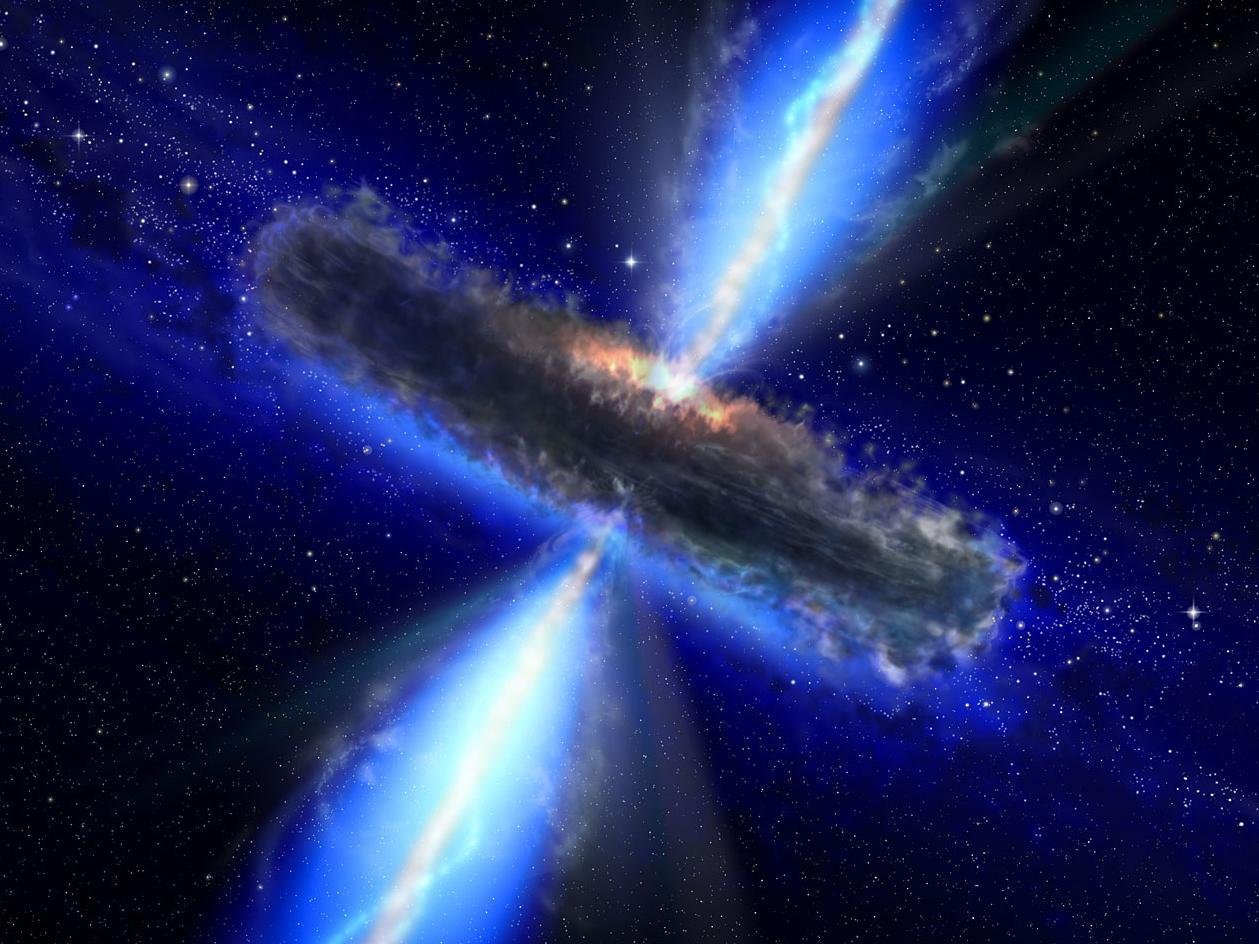
Black Holes as Cosmic Regulators
In a discovery that redefines how scientists understand galaxy evolution, researchers at the Indian Institute of Astrophysics (IIA) in Bengaluru have confirmed that supermassive black holes can suppress the birth of new stars in their host galaxies.
The findings, published in The Astrophysical Journal, demonstrate that the immense energy radiated by black holes and the high-speed jets they emit can work together to eject gas—the very raw material required for star formation—from galactic centers.
This process, known as feedback from active galactic nuclei (AGN), effectively starves galaxies of the fuel needed to create new stars, halting their growth and altering their long-term evolution.
A Landmark Study from India’s Premier Observatory
The IIA, an autonomous institute under the Department of Science and Technology (DST), has a storied history tracing back to 1786, when it began as the Madras Observatory before moving to Kodaikanal in 1899. Its latest study cements India’s growing role in global astrophysical research.
Prof. C. S. Stalin, a faculty member at IIA and co-author of the paper, credited recent advancements in observational techniques for making such insights possible.
“Because of advancements in instrumentation, such as integral field spectroscopy, we can now probe galactic regions at scales that were unimaginable a few years ago,” he said. “This has enabled us to explore the complex connection between black holes and their host galaxies.”
A Deep Dive into 538 Active Galaxies
Led by Ph.D. researcher Payel Nandi, the team conducted one of the largest and most detailed analyses of AGN to date, examining 538 galaxies across multiple wavelengths.
Previous studies had focused on smaller samples or individual galaxies, but the IIA research took a comprehensive approach—combining optical data from the Sloan Digital Sky Survey (SDSS) with radio data from the Very Large Array (VLA) in the United States.
“We systematically compared optical and radio properties to uncover trends linking black hole activity, gas outflows, and star formation suppression,” Nandi explained. “It took nearly four months of meticulous analysis and data cross-matching.”
Revealing the Mechanism Behind Galactic Shutdowns
The results show that radiation from black holes is the primary driver of energetic gas outflows—fast-moving streams of gas expelled from galactic centers.
Such outflows were found to be more than twice as common in galaxies that emit strong radio waves (56%) than in those without radio emission (25%). This suggests that radio jets, powerful beams of charged particles shot from the vicinity of black holes, play a major role in blowing away star-forming material.
These findings bridge a key gap in astrophysics, confirming that black holes are not merely cosmic consumers but also active regulators of galaxy growth.
Implications for the Future of Astronomy
The study not only provides a crucial piece in the cosmic puzzle of galaxy evolution but also underscores the importance of multi-wavelength astronomy.
“To truly understand how galaxies evolve, astronomers must combine data across optical, radio, and other wavelengths,” said Nandi. “This multi-layered approach reveals both the visible light we observe and the hidden processes that shape galaxies over billions of years.”
Such insights will refine theoretical models and computer simulations, offering scientists a more complete view of how galaxies “live and die” under the influence of their central black holes.
Prof. Stalin added that the research sets a strong foundation for future explorations:
“This study places a key piece in the cosmic jigsaw puzzle. It helps us understand how black holes sculpt the universe, influencing not only their immediate surroundings but the destiny of entire galaxies.”
The Broader Picture
The IIA team’s findings contribute to a growing body of evidence suggesting that supermassive black holes are architects of the cosmic landscape. By regulating star formation and energy flow, they determine whether a galaxy continues to shine brightly with new stars—or fades into dormancy.
As observational astronomy continues to advance, scientists hope to uncover even deeper links between black hole behavior and galactic evolution—revealing, as Nandi put it, “not just what we see, but the powerful, invisible forces that govern the life cycle of the universe.”