
India Defends Rights Record After Norwegian Journalist's Press Freedom Query
MEA official defends India's democracy after journalist questions its rights record.
Top Summary
- What happened: A Norwegian journalist questioned India's commitment to press freedom and human rights during a press briefing in Oslo.
- Why it matters: The exchange highlights ongoing scrutiny of India's human rights record and press freedom by international observers.
- What changes for people: The incident sparks debate about the state of democracy and freedom of expression in India.
- Who is affected: The Indian government, international media, and citizens concerned with human rights and press freedom are affected.
Tense Exchange in Oslo
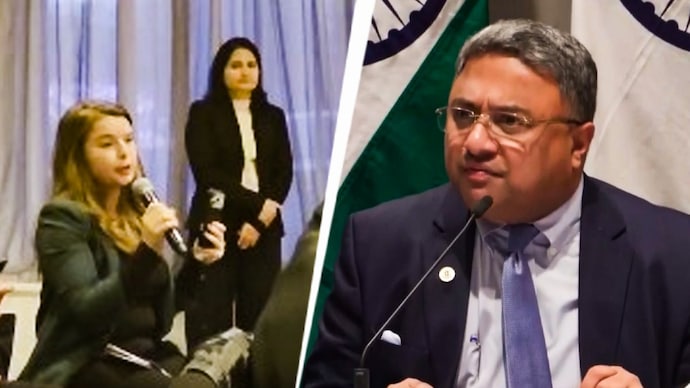
A press briefing in Oslo turned contentious after a Norwegian journalist, Helle Lyng, repeatedly challenged Indian diplomats on issues of press freedom, minority rights, and human rights in India.
MEA Secretary (West) Sibi George responded sharply, defending India's democratic framework and accusing critics of relying on biased reports.
MEA Defends India's Record
George asserted that India's Constitution guarantees fundamental rights to all citizens and provides legal remedies for violations.
"We have a Constitution which guarantees the rights of the people, fundamental rights of the people. We have equal rights for the women of our country, which is very important," he stated.
He highlighted India's early adoption of women's suffrage as evidence of its commitment to equality, noting that women were granted voting rights in 1947.
Criticism and Rebuttals
Lyng questioned why India should be “trusted” on issues concerning democratic freedoms and rights, even briefly walking out of the briefing.
George countered that critics often misunderstand India's complexity, relying on selective reports from “ignorant NGOs”.
"They [India’s critics] read one or two news reports published by some godforsaken, ignorant NGOs and then come and ask questions," the senior diplomat added.
Political Reactions
The incident drew political reactions in India, with Rahul Gandhi sharing Lyng's post on X and criticizing Prime Minister Modi.
"When there is nothing to hide, there is nothing to fear. What happens to India’s image when the world sees a compromised PM panic and run from a few questions?" Gandhi wrote.
The Indian Embassy in Norway had invited Lyng to the briefing in response to her earlier post questioning why Prime Minister Modi hadn't taken her question.
Journalist Defends Actions
Lyng defended her confrontational style, stating that it is a journalist's duty to seek answers from those in power.
"Journalism is sometimes confrontational. We seek answers. If any interview subject, especially with power, do not answer what I asked, I will try to interrupt and get a more focused response," she wrote on X.
What to Watch Next
Future discussions are expected to center on India's ranking in the World Press Freedom Index and its commitment to upholding democratic values. Ongoing debates about the role of NGOs and media scrutiny of governmental policies are also likely to continue.