
India and Brazil Seek to Triple Trade Amid US Tariff Pressures
Government officials and business leaders from Brazil and India are meeting this week in New Delhi to strengthen economic ties and potentially triple their current...
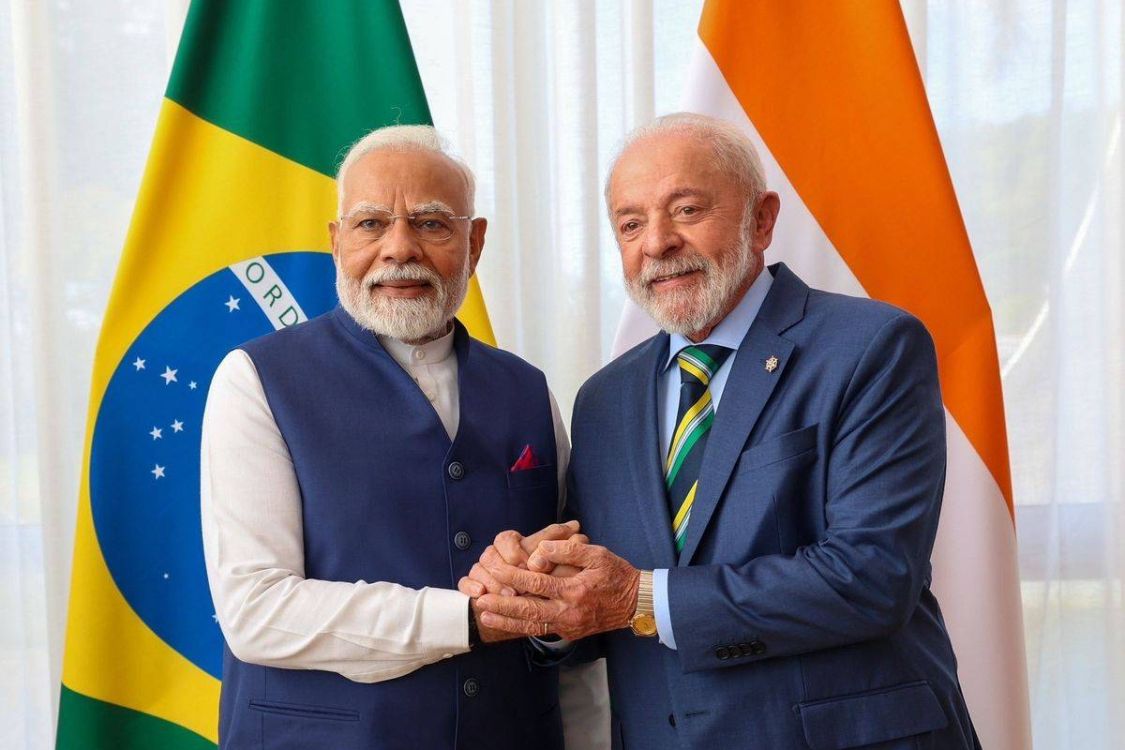
Government officials and business leaders from Brazil and India are meeting this week in New Delhi to strengthen economic ties and potentially triple their current $12 billion trade partnership, even as economists warn that US tariffs under the Trump administration could slow growth in both countries.
Diversifying Trade Partnerships
The Brazilian delegation, led by Vice President Geraldo Alckmin, includes executives from Petrobras, Vale SA, and BRF SA, and aims to explore opportunities in agribusiness, biofuels, defense, coffee, and ethanol markets. Both nations are also considering expanding the Mercosur–India preferential trade agreement, first signed in 2004.
Brazilian President Luiz Inácio Lula da Silva and Indian Prime Minister Narendra Modi are pursuing closer cooperation as part of broader efforts to hedge against economic risks posed by US trade policy.
“Trump’s trade war is generating a total reorganization of trade everywhere,” said Thiago de Aragao, head of Arko International. “Countries are seeking alternatives to reduce exposure to unpredictable US policies.”
Impact of US Tariffs
Since 2017, Brazil and India have faced tariffs of up to 50% on key goods exported to the US, although some carve-outs have been granted. For Brazil, nearly 12% of exports go to the US, including beef and steel. India relies heavily on US markets for electronics, jewelry, and pharmaceuticals, making trade with Washington critical.
Recent US tariffs on Brazilian goods came amid political tensions following the prosecution of former President Jair Bolsonaro, a Trump ally. India, meanwhile, faced US levies over its continued Russian energy imports.
A Strategic Global Realignment
The India–Brazil partnership exemplifies how emerging economies are reshaping alliances in response to shifts in US trade policy. Both nations are founding members of BRICS, which has increasingly served as a counterbalance to Western economic influence.
“Perhaps the biggest increase in trade flows we’ll see, regardless of the tariff hike, will be with India,” said Jorge Viana, head of the Brazilian Trade and Investment Promotion Agency (Apex Brasil).
While both countries aim to expand trade with each other, Washington remains an indispensable market, and both India and Brazil continue to rely on China for critical imports and exports.