
India Administers 1 Crore HPV Vaccines to Girls in 9 Months
India's National HPV Vaccination Campaign has successfully administered over 1 crore doses to 14-year-old girls within nine months of its launch, nearing its annual target.
The Cliff News | 21 November 2026
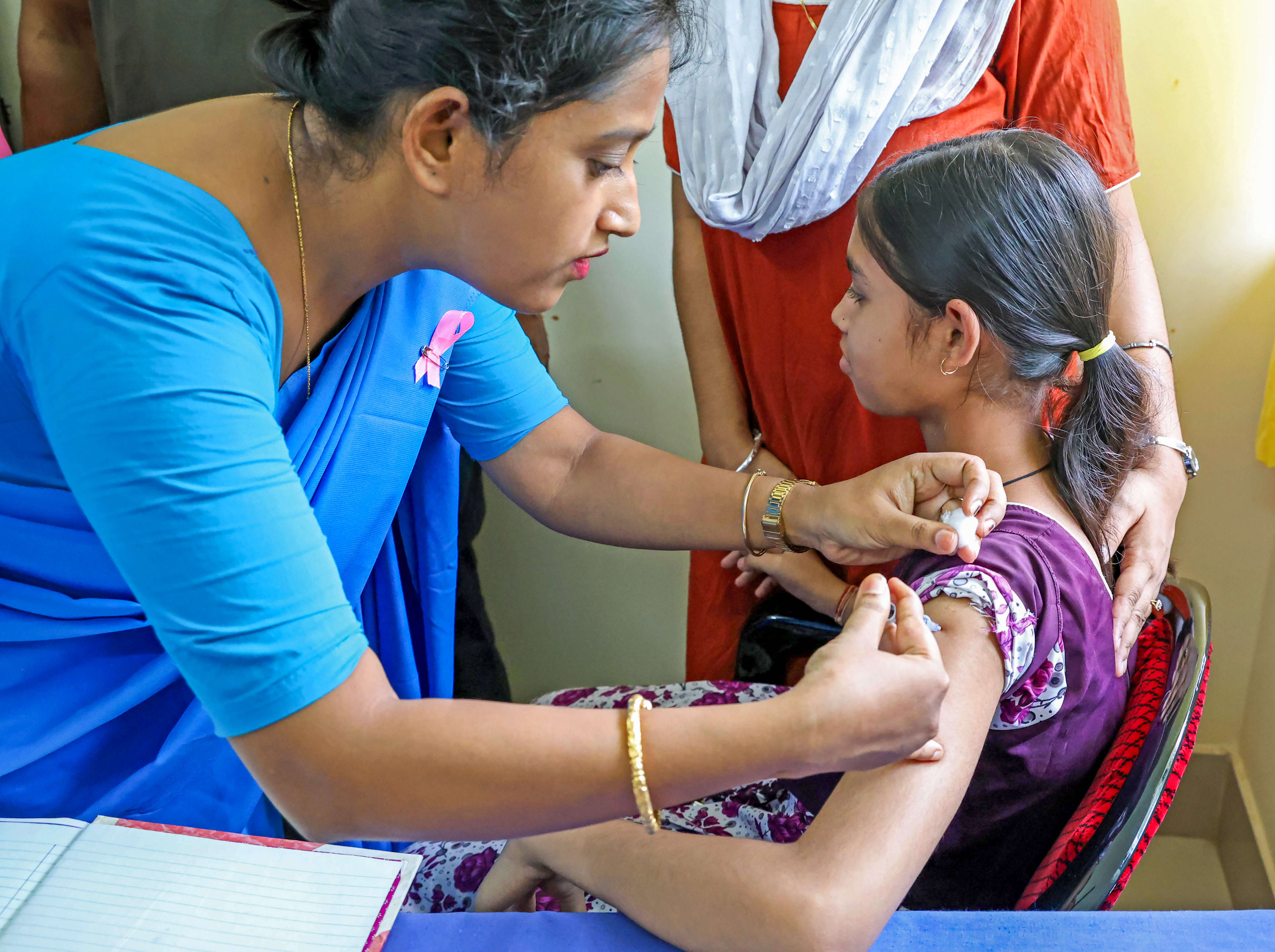
India has achieved a significant milestone in its public health initiative, administering more than 1 crore doses of the Human Papillomavirus (HPV) vaccine to 14-year-old girls in less than nine months. This accomplishment under the National HPV Vaccination Campaign covers approximately 87 per cent of the identified annual target population.
The nationwide campaign, inaugurated by Prime Minister Narendra Modi in February of this year, offers a free, voluntary, and single-dose HPV vaccination at designated government health facilities. Parental consent is a mandatory requirement for participation, ensuring informed decision-making for the young recipients.
High Coverage Rates Across States
The Health Ministry announced that six states have achieved an exceptional 100 per cent coverage of their identified target populations. These include Gujarat, Uttar Pradesh, Andhra Pradesh, Mizoram, Madhya Pradesh, and Bihar, demonstrating robust implementation and community engagement.
Several other states have also recorded high vaccination rates. Assam leads with 95.63 per cent coverage, closely followed by Telangana at 95.28 per cent. Karnataka has reached 93.16 per cent, while Uttarakhand stands at 90.17 per cent.
States like Chhattisgarh and Rajasthan have surpassed the 80 per cent mark, with coverage rates of 86.21 per cent and 85.23 per cent respectively. Other regions show varying degrees of success, with Kerala at 77.02 per cent, Tamil Nadu at 76.12 per cent, Odisha at 74.90 per cent, and the Union Territory of Dadra and Nagar Haveli and Daman and Diu at 72.99 per cent.
Uttar Pradesh Leads in Absolute Numbers
In terms of absolute numbers, Uttar Pradesh has vaccinated the highest number of girls, exceeding 29.33 lakh. Bihar follows with over 13.70 lakh vaccinations, and Gujarat has administered the vaccine to more than 7.75 lakh girls.
This substantial achievement is attributed to the coordinated efforts involving the Central government, state and Union Territory administrations, district authorities, dedicated healthcare workers, educators, parents, and local communities. Their collective commitment has been pivotal in the campaign's success.
Focus on Community Engagement and Information Dissemination
The campaign has placed a strong emphasis on community engagement and the dissemination of science-based information regarding HPV vaccination. Healthcare professionals, including paediatricians, gynaecologists, and specialists from leading institutions like AIIMS, have been actively involved in addressing concerns related to vaccine safety and effectiveness.
The U-WIN digital platform plays a crucial role in the campaign's operational framework. It facilitates real-time monitoring of vaccination progress, allows for beneficiary tracking, and maintains digital vaccination records. Parents can also utilize the platform to book vaccination slots and obtain digital certificates for their children.
HPV Vaccination: A Preventive Measure Against Cancer
The HPV vaccine is a critical preventive tool against infections caused by high-risk types of the Human Papillomavirus. These infections are widely recognized as the primary cause of the vast majority of cervical cancer cases worldwide.
Globally, over 800 million doses of the HPV vaccine have been administered, backed by nearly two decades of extensive scientific research. This cumulative experience has consistently demonstrated the vaccine's efficacy in providing protection against HPV infections and associated precancerous conditions.
Ensuring Vaccine Safety and Accessibility
All vaccination sessions under the National HPV Vaccination Campaign are conducted at designated government health facilities. These sessions are conducted under the strict supervision of trained medical officers. Comprehensive 24x7 healthcare arrangements are in place to manage any rare adverse events following immunization, ensuring the safety and well-being of the recipients.
The Ministry of Health and Family Welfare remains committed to working collaboratively with states, district administrations, healthcare professionals, educational institutions, and communities. The objective is to proactively address any coverage gaps and ensure that all eligible girls are reached. Parents and guardians of eligible 14-year-old girls are encouraged to visit their nearest designated government health facilities or utilize the U-WIN platform for further information and to book vaccination slots.