
IIT Gandhinagar's Injectable Hydrogel Revolutionizes Cancer Detection
IIT Gandhinagar develops injectable hydrogel for safer surgeries and faster tissue regeneration.
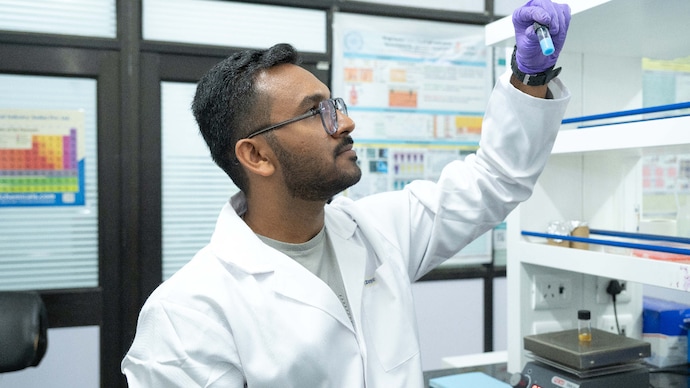
Top Summary
- What happened: IIT Gandhinagar PhD scholar Harshil Dave developed an injectable hydrogel for minimally invasive tissue delivery.
- Why it matters: The hydrogel offers a safer alternative to current methods, enhancing cancer detection and tissue regeneration.
- What changes: The technology promises improved outcomes in minimally invasive procedures and advanced drug delivery systems.
- Who is affected: Patients undergoing gastrointestinal procedures, cancer treatment, and wound healing processes.
Hydrogel Breakthrough at IIT Gandhinagar
Researchers at the Indian Institute of Technology (IIT), Gandhinagar, have achieved a significant biomedical advancement. They've developed an injectable hydrogel with promising clinical applications, securing a patent for their innovative technology.
The hydrogel is designed for minimally invasive procedures, particularly in treating gastrointestinal conditions. These include colorectal polyps, which can develop into cancer if left undetected.
Addressing Clinical Challenges
Current clinical practice often involves injecting saline beneath polyps for safe removal. However, saline is quickly absorbed, requiring repeated injections. The new hydrogel addresses this limitation.
The hydrogel flows like a liquid during injection but quickly transforms into a stable gel inside the body. This provides a more durable cushion for polyp removal.
Vikram Sarabhai Young Scientist Award
Harshil Dave, a second-year PhD scholar at IIT Gandhinagar, led the research. He has been awarded the Vikram Sarabhai Young Scientist Award 2026 for his work.
The Institute of Researchers (InRes) presented the award on February 28, 2026. InRes supports academic research through knowledge sharing and financial assistance.
Enhanced Surgical Safety
Dr. Mukesh Dhanka highlighted the hydrogel's potential to enhance procedural safety. It addresses critical challenges in cancer prevention and wound healing.
The hydrogel, made from 'diglycerolmonostearate', can be precisely injected using an endoscopic catheter. It forms a durable cushion, reducing tissue damage and bleeding during polyp removal.
Researcher's Perspective
"My research has focused on transforming innovative biomaterial concepts into technologies that can potentially improve patient care and medical treatments,"
said Harshil Dave.
"It is motivating to see that our work can contribute to solving real medical challenges. This award reinforces my commitment to developing technologies that can improve patient care and treatment outcomes,"
he added.
Tissue Regeneration and Wound Healing
The hydrogel platform also shows potential in tissue regeneration and wound healing. It creates a moisture-rich environment, promoting recovery with antibacterial, antioxidant, and anti-inflammatory properties.
Researchers believe these biomaterials could play a key role in early cancer intervention and safer surgeries.
Next Steps: Clinical Translation
The technology has shown promising results in the lab. The next goal is to translate it into practical medical solutions that can benefit patients in real clinical scenarios.
The researchers aim to advance the technology towards clinical translation, including further validation studies and preparation for human trials.
IIT Gandhinagar's Interdisciplinary Ecosystem
The work highlights IIT Gandhinagar's strong interdisciplinary research ecosystem. This allows collaboration across biological sciences, engineering, and healthcare, enabling solutions to complex medical challenges.
Access to advanced research infrastructure played a crucial role in designing, testing, and validating the hydrogel systems.
What to Watch Next
Expect to see further pre-clinical and human trials to validate the hydrogel's effectiveness. Further development aims to revolutionize minimally invasive procedures and cancer prevention strategies.