
How a farmer’s son built financial stability from a Rs 5,000 salary: A story of struggle, planning and slow growth
• What happened: A 34-year-old embedded engineer from Tamil Nadu detailed how he achieved financial stability starting with a Rs 5,000 monthly salary.• Why it...
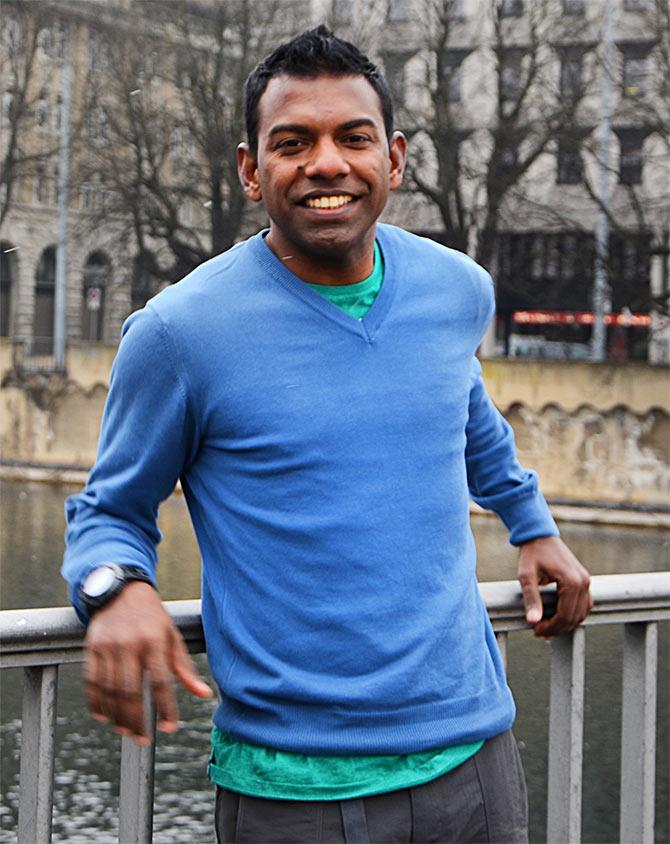
• What happened: A 34-year-old embedded engineer from Tamil Nadu detailed how he achieved financial stability starting with a Rs 5,000 monthly salary.
• Why it matters now: His journey highlights growing interest in personal finance literacy, insurance, and goal-based investing among young professionals.
• What changes for people: The story shows how structured financial planning, career mobility, and risk protection can help households build resilience despite low starting incomes.
• Who is affected: Young earners, middle-class families, rural students, and those seeking long-term financial security will find relevant insights.
A new feature story has spotlighted the financial journey of a 34-year-old engineer who grew up in a rain-dependent farming village in Tamil Nadu and worked his way to stability through insurance coverage, disciplined savings, and structured investing. The read comes at a time when many young Indians face volatile job markets, high living costs and rising pressure to plan for medical expenses, housing and children.
The story is part of a financial education initiative by freefincal, a well-known personal finance platform that publishes reader-submitted audits and journeys. The platform clarified that views expressed in such submissions are personal and not editorial endorsements. The latest account has drawn attention for its detailed portrayal of economic struggle, family support, and risk-aware planning.
From rural hardship to cybersecurity
According to the submission, the engineer grew up in a lower-middle-class farming household where rainfall was the only irrigation source. His father had left a secure government job in the 1990s to manage farmland, a decision he reportedly regretted as the family often rationed food.
After engineering college without campus placements, the narrator moved to Bengaluru for an entry role in embedded systems at Rs 5,000 per month. To cut expenses, he walked 8 km daily, shared a rented room and reduced meals. With limited income, he could not visit home for three years.
A higher-paying job later took him to Chennai, Hyderabad, Coimbatore and back to Bengaluru, where he eventually shifted into automotive cybersecurity. The transition illustrates the expanding demand for niche tech skills and the role of job switching every two years in salary growth in the private sector.
The insurance-first model
A significant portion of the journey focuses on risk protection, which financial planners widely recommend as a foundation for middle-class households. The narrator reported the following coverage:
• Health Insurance: Rs 5 lakh + Rs 3 lakh corporate cover plus Rs 10 lakh personal + Rs 90 lakh super top-up
• Term Insurance: Rs 1.1 crore corporate + Rs 1 crore personal
• Accidental Insurance: Rs 37.5 lakh corporate
Insurance experts say such layered protection has become critical in India due to rising hospitalization costs, lifestyle diseases and limited rural medical access. Financial planners also note that medical inflation outpaces general inflation, making early insurance purchases more cost-effective.
Debt repayment and family responsibilities
The engineer detailed how he repaid a Rs 2.2 lakh education loan, cleared Rs 4.2 lakh in total, and sent regular support back home. He also contributed Rs 10 lakh to build his family house in Tamil Nadu, a practice that reflects a growing trend of multi-generation financial support.
Marriage costs affected his savings in 2021, prompting him to liquidate stocks worth Rs 2 lakh to Rs 4 lakh. He labeled this as a learning point, mirroring a common problem among young couples facing high ceremonial expenses.
Passive income and goal-based investing
The turning point came in 2022, after the birth of his children, when he adopted goal-based investing through a paid robo-advisory service. The couple also created passive income by building two commercial shops on inherited land in Trivandrum, generating Rs 18,000 per month. Analysts say such income streams offer stability as salaries fluctuate and ESOP benefits remain unavailable for many embedded-sector employees.
Key financial actions listed include:
• Sovereign Gold Bonds (SGB): 32 grams
• Public Provident Fund (PPF): Rs 1.5 lakh annually from 2023
• Emergency fund: One year of expenses
• Asset allocation: 50 percent equity and 50 percent fixed income at the end of 2025
Asset listings also include 10 acres of agricultural land, a house in Tamil Nadu, and 18 cents of land in Kerala valued at around Rs 2.5 crore, all with zero EMIs.
Why this journey matters for mobile readers
Financial planners say this account is relevant because it captures emerging realities facing young professionals:
• Upward mobility now depends on skill upgrades instead of tenure
• Health and term insurance are becoming essential for middle-class stability
• Goal-based investing tools are seeing adoption beyond metros
• Passive income models are being explored to offset household expenses
Economists also point out that stories of financial discipline resonate as inflation, medical costs and urban rents squeeze younger households, especially those who lack government pensions or corporate ESOPs.
What experts say
Personal finance educators argue that stories like these highlight a shift toward self-directed planning, driven by online tools, digital brokers and financial literacy content. However, they also caution that outcomes vary widely based on sector, family support, city of work, and health events, meaning there is no one-size-fits-all model.
What the narrator aims for next
The submission outlined future goals:
• Rs 1 crore financial net worth (excluding land and gold) by December 2026
• Shift to 60:40 equity to fixed income
• Purchase of a car in mid-2026
• Buy land in Bengaluru or settle for a 3BHK apartment within three years
The journey ends with a message emphasizing slow, steady and disciplined planning rather than high-risk strategies.