
Exploding Stars Reveal 'Forbidden Gap' in Black Hole Masses: Study
Rare exploding stars offer insights into black hole formation.
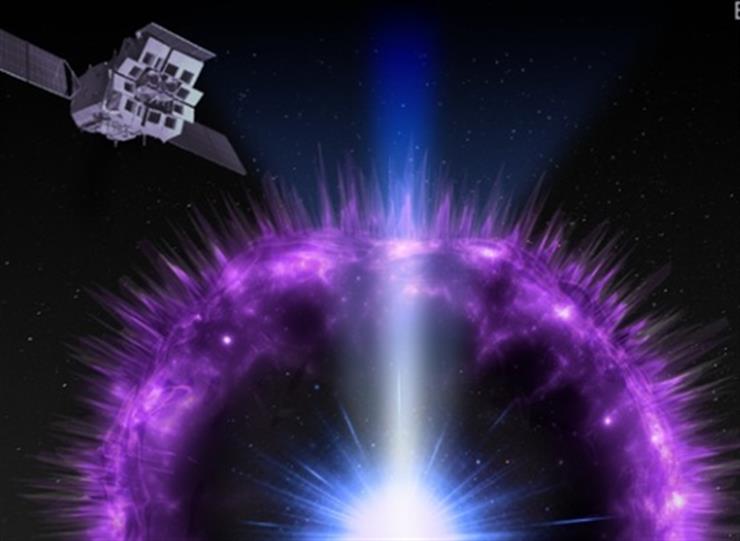
Top Summary
- What happened: An Australian-led study in Nature found evidence of pair-instability supernovae, revealing a gap in black hole masses.
- Why it matters: It confirms a predicted "forbidden gap" and helps understand how massive stars die.
- What changes for people: Offers new insight into the origin and evolution of massive stars and black holes.
- Who is affected: Astrophysicists, researchers, and anyone interested in space and the universe.
Rare Supernovae and Black Hole Mysteries
A groundbreaking study led by Australian researchers has unveiled evidence of pair-instability supernovae, a rare type of exploding star.
The research, published in Nature, investigates how the most massive stars conclude their lives.
This offers critical insights into the formation of black holes and confirms a long-theorized “forbidden gap”.
The Forbidden Mass Range
At the end of their life cycle, most massive stars collapse to form black holes, characterized by their immense gravitational pull.
However, extremely massive stars undergo a pair-instability supernova, completely destroying the star and leaving no black hole behind.
The study identifies a "forbidden range" for stellar-origin black holes with masses exceeding 45 times the Sun's mass.
Merging Black Holes Fill the Void
Tong Hui, a PhD candidate from Monash University and project lead, explains that stars seemingly don’t create black holes within this mass range.
“The only black holes in this mass range are made from merging smaller black holes, rather than directly from stars,”
Confirming the existence of this gap would settle a major question about how the most massive stars live and die, and the origin of black holes, the researchers said.
What to Watch Next
Future research will focus on further refining the models of stellar evolution and black hole formation, aiming to pinpoint the exact boundaries of the "forbidden gap." Scientists also intend to use gravitational wave observations to search for more examples of pair-instability supernovae to solidify their understanding of these cosmic events.